
Comparison Roland JUNO-DS61 vs Roland FA-08
Add to comparison | 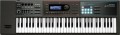 | 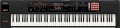 |
|---|---|---|
| Roland JUNO-DS61 | Roland FA-08 | |
| Compare prices 2 | from £1,319.48 | |
| TOP sellers | ||
Autonomous food. Phrase pad panel. Favorite mode. Microphone input. Vocoder. No built-in speakers. | ||
| Type | synthesizer (rompler) | work station |
Keys | ||
| Number of keys | 61 | 88 |
| Size | full size | full size |
| Mechanics | active | active |
| Sensitivity adjustment |  |  |
| Rigidity | semi-weighted | weighted |
Specs | ||
| Polyphony | 128 voices | 128 voices |
| Built-in timbres | 1230 шт | 2000 шт |
| Auto accompaniment | | |
| Accompaniment styles | 240 шт | |
| Metronome | | |
| Sequencer (recording) | | |
| Sampling | | |
| Mixer | | |
| Built-in compositions | | |
Effects and control | ||
| Timbres layering | | |
| Keyboard split | | |
| Octave shift | | |
| Arpeggiator | | |
| Reverberation | | |
| Chorus | | |
| Transposition | | |
| Pitch controller | | |
| Modulation controller | | |
| Vocoder | | |
| Fine tuning | | |
Connectors | ||
| Inputs | mini-Jack (3.5 mm) MIDI in USB to device (type A) | mini-Jack (3.5 mm) Jack (6.35 mm) MIDI in |
| Microphone | 1 pcs | 1 pcs |
| Connectable pedals | 2 шт | 3 шт |
| Outputs | USB to host (type B) MIDI out headphones | USB to host (type B) MIDI out headphones |
| Linear outputs | 2 | 2 |
In box | ||
| In box | PSU | PSU |
General | ||
| Display | monochrome | colour |
| Autonomous power supply | aA batteries | |
| Dimensions (WxHxD) | 1008x97x300 mm | 1415x142x340 mm |
| Weight | 5.3 kg | 16.5 kg |
| Color | ||
| Added to E-Catalog | october 2017 | august 2017 |



Compare Roland JUNO-DS61 and FA-08
Price comparison
You may be interested in
My comparisons
Roland JUNO-DS61 often compared


Roland FA-08 often compared


Glossary
Type
— Synthesizer. In this case, we are referring to classic digital synthesizers — keyboard musical instruments capable of reproducing the sound of various instruments and sound effects. The functionality of these models can vary greatly — from budget devices with minimal features to advanced instruments suitable even for professional musicians.
— Workstation. High-end synthesizers for professional use, capable of serving as not only a musical instrument but also as a control panel for recording and mixing sound. Therefore, a sequencer (see below) is a mandatory feature of such instruments. Additionally, workstations are characterized by advanced equipment appropriate to their class: it is among these instruments that you find models with full-sized hammer-action (see "Mechanics") 88-key keyboards, the user has access to a wealth of adjustments and connectors, and the sound quality and authenticity in low-cost models are good, while in advanced ones — nearly perfect. However, synthesizers of this type are quite expensive, so combined with their extensive capabilities, they are indispensable tools for composers, sound engineers, and other specialists engaged in both performance and music recording.
— Children's Synthesizer. The features of such instruments are generally clear from the name — these are synthesizers designed for children. Externally, these models differ from "adult" ones pr...imarily in the smaller number of keys (up to 49, often less) and the reduced size of the keys themselves for a child's hand. In addition, the performance characteristics and functionality of children's synthesizers are also, more often than not, more modest: for instance, the polyphony (see below) rarely exceeds 8 voices, and the overall sound authenticity is quite low. However, the educational capabilities of such instruments, on the other hand, can be very extensive, and in general, children's synthesizers are considered a good choice for initial learning.
— Analog Synthesizer. Instruments in which sound is created not through digital processing but by passing through a real electrical circuit. Very simply, the principle of operation of such an instrument can be described as follows: each key, when pressed, activates its sound generator at a certain frequency responsible for the desired note, and with additional settings (oscillators, envelope, filters), the musician gives this sound its color. From the user's perspective, the most noticeable difference in an analog synthesizer is the absence of built-in timbres — all details of the sound are manually adjusted by the musician. Analog instruments are more complex to operate, but on the other hand, they allow for effects that are not possible with "digital." Moreover, the coloration of the sound on analog synthesizers differs somewhat. Historically, instruments of this type appeared before digital ones; however, today, they are specialized solutions mainly intended for professional performers and used in specific musical directions.
— Workstation. High-end synthesizers for professional use, capable of serving as not only a musical instrument but also as a control panel for recording and mixing sound. Therefore, a sequencer (see below) is a mandatory feature of such instruments. Additionally, workstations are characterized by advanced equipment appropriate to their class: it is among these instruments that you find models with full-sized hammer-action (see "Mechanics") 88-key keyboards, the user has access to a wealth of adjustments and connectors, and the sound quality and authenticity in low-cost models are good, while in advanced ones — nearly perfect. However, synthesizers of this type are quite expensive, so combined with their extensive capabilities, they are indispensable tools for composers, sound engineers, and other specialists engaged in both performance and music recording.
— Children's Synthesizer. The features of such instruments are generally clear from the name — these are synthesizers designed for children. Externally, these models differ from "adult" ones pr...imarily in the smaller number of keys (up to 49, often less) and the reduced size of the keys themselves for a child's hand. In addition, the performance characteristics and functionality of children's synthesizers are also, more often than not, more modest: for instance, the polyphony (see below) rarely exceeds 8 voices, and the overall sound authenticity is quite low. However, the educational capabilities of such instruments, on the other hand, can be very extensive, and in general, children's synthesizers are considered a good choice for initial learning.
— Analog Synthesizer. Instruments in which sound is created not through digital processing but by passing through a real electrical circuit. Very simply, the principle of operation of such an instrument can be described as follows: each key, when pressed, activates its sound generator at a certain frequency responsible for the desired note, and with additional settings (oscillators, envelope, filters), the musician gives this sound its color. From the user's perspective, the most noticeable difference in an analog synthesizer is the absence of built-in timbres — all details of the sound are manually adjusted by the musician. Analog instruments are more complex to operate, but on the other hand, they allow for effects that are not possible with "digital." Moreover, the coloration of the sound on analog synthesizers differs somewhat. Historically, instruments of this type appeared before digital ones; however, today, they are specialized solutions mainly intended for professional performers and used in specific musical directions.
Number of keys
The greater the number of keys — the wider the range of the instrument, the lower and higher notes you can take on it right during the game, without resorting to tricks like octave shift (see below). By comparison, a full size piano keyboard has 88 keys. However, in synthesizers, such an amount is rare, because. the instrument would have turned out to be too bulky and expensive, and not every musician, even a professional one, needs such an extensive range. Thus, 88-key keyboards are used primarily in high-end workstations (see "Type"). For ordinary synthesizers, the standard is 49, 61 or 76 keys ( there are also options for 73 keys) — this is usually quite enough (while the "golden mean" option is considered to be 61 keys). And small children's models can have 32 keys.
Sensitivity adjustment
Ability to change the sensitivity of active mechanics (see above) in the synthesizer.
This function allows you to adjust the intensity of the key's response to pressing. Simply put, the higher the sensitivity, the louder and sharper the sound will be, with the same pressing force. This allows you to change the characteristics of the instrument's sound.
Also in synthesizers with this function, it is often possible to completely turn off the active mechanics and play on a “passive” keyboard. This can be useful for making certain voices, such as harpsichord or organ, sound realistic.
This function allows you to adjust the intensity of the key's response to pressing. Simply put, the higher the sensitivity, the louder and sharper the sound will be, with the same pressing force. This allows you to change the characteristics of the instrument's sound.
Also in synthesizers with this function, it is often possible to completely turn off the active mechanics and play on a “passive” keyboard. This can be useful for making certain voices, such as harpsichord or organ, sound realistic.
Rigidity
— Unweighted. Keys with a very low pressing force, literally "failing" under the fingers. This option is well suited for inexpensive synthesizers with passive mechanics (see above), but is rarely used in active models — a small resistance force makes it difficult to choose the optimal pressing force.
— Semi- weighted. Medium-strength keys, not up to the hardness of a full-fledged piano, but showing noticeably more resistance than unweighted ones. This variant is most popular among instruments with active mechanics (see above) — the force on the keys provides adequate feedback and at the same time playing such an instrument does not cause any special difficulties even for those who previously dealt only with unweighted keyboards.
— Weighted. Keys with high actuation force, comparable to that of a classical piano. Used only in professional hammer action instruments (see above) — high rigidity is a must for such mechanics (more precisely, for the response that it must provide).
— Semi- weighted. Medium-strength keys, not up to the hardness of a full-fledged piano, but showing noticeably more resistance than unweighted ones. This variant is most popular among instruments with active mechanics (see above) — the force on the keys provides adequate feedback and at the same time playing such an instrument does not cause any special difficulties even for those who previously dealt only with unweighted keyboards.
— Weighted. Keys with high actuation force, comparable to that of a classical piano. Used only in professional hammer action instruments (see above) — high rigidity is a must for such mechanics (more precisely, for the response that it must provide).
Built-in timbres
The number of built-in sounds provided in the synthesizer.
The number of timbres is often described as the number of instruments that a given model can imitate. However, this is not entirely true — rather, this parameter can be called "the number of instruments and sound effects." For example, the same instrument — an electric guitar — with different "gadgets" (distortion, overdrive) will sound differently, and in the synthesizer each such gadget will be considered a separate timbre. The “drums” timbre usually combines different types of drums and other percussion instruments — in other words, it allows you to portray both the “bass drum” and the cymbals without switching settings, just by pressing the desired keys. And some timbres may not have analogues among real instruments at all.
The more built-in timbres, the more extensive the possibilities of the synthesizer, the more diverse the sounds that can be extracted from it. At the same time, in high-end models like workstations (see "Type"), this number can reach 1000 or even more.
The number of timbres is often described as the number of instruments that a given model can imitate. However, this is not entirely true — rather, this parameter can be called "the number of instruments and sound effects." For example, the same instrument — an electric guitar — with different "gadgets" (distortion, overdrive) will sound differently, and in the synthesizer each such gadget will be considered a separate timbre. The “drums” timbre usually combines different types of drums and other percussion instruments — in other words, it allows you to portray both the “bass drum” and the cymbals without switching settings, just by pressing the desired keys. And some timbres may not have analogues among real instruments at all.
The more built-in timbres, the more extensive the possibilities of the synthesizer, the more diverse the sounds that can be extracted from it. At the same time, in high-end models like workstations (see "Type"), this number can reach 1000 or even more.
Auto accompaniment
The presence of the auto accompaniment function in the synthesizer.
This function allows the instrument to automatically play an accompaniment melody that you can play along with the main part on the keyboard. At the same time, the left hand of the musician can control the accompaniment: it is enough to take a chord on the left half of the keyboard, and the auto accompaniment will automatically “decompose” it into instrument parts that sound in accompaniment. Thus, the musician turns into a "man-orchestra": one synthesizer can replace the whole ensemble, or at least a solid part of the ensemble. Of course, the sound quality in such models can be different, and not every synthesizer with accompaniment is suitable for an event more serious than a children's party, although there are quite advanced models.
In addition, playing to accompaniment can also be useful for educational purposes: it contributes to the development of general technique, a sense of rhythm, and additional accompaniment is very convenient during improvisation exercises.
It should be taken into account that not only the sound quality, but also the number of accompaniment styles (melodies) can be different; and some models allow you to record your own melodies. See below for more details on these features.
This function allows the instrument to automatically play an accompaniment melody that you can play along with the main part on the keyboard. At the same time, the left hand of the musician can control the accompaniment: it is enough to take a chord on the left half of the keyboard, and the auto accompaniment will automatically “decompose” it into instrument parts that sound in accompaniment. Thus, the musician turns into a "man-orchestra": one synthesizer can replace the whole ensemble, or at least a solid part of the ensemble. Of course, the sound quality in such models can be different, and not every synthesizer with accompaniment is suitable for an event more serious than a children's party, although there are quite advanced models.
In addition, playing to accompaniment can also be useful for educational purposes: it contributes to the development of general technique, a sense of rhythm, and additional accompaniment is very convenient during improvisation exercises.
It should be taken into account that not only the sound quality, but also the number of accompaniment styles (melodies) can be different; and some models allow you to record your own melodies. See below for more details on these features.
Accompaniment styles
The number of auto accompaniment styles (see above) originally provided in the synthesizer, in other words, the number of accompaniment options available to the user.
The more extensive this set, the higher the probability of finding among these melodies suitable options for a particular case. At the same time, the abundance of styles in itself is not yet a 100% guarantee that among them there will be a suitable one, especially since different synthesizer models can differ markedly in a specific set of melodies. So the list does not hurt to clarify before buying. Also note that the situation can be corrected by user styles (see below) — many synthesizers with auto accompaniment support them.
The more extensive this set, the higher the probability of finding among these melodies suitable options for a particular case. At the same time, the abundance of styles in itself is not yet a 100% guarantee that among them there will be a suitable one, especially since different synthesizer models can differ markedly in a specific set of melodies. So the list does not hurt to clarify before buying. Also note that the situation can be corrected by user styles (see below) — many synthesizers with auto accompaniment support them.
Metronome
The presence of a built-in metronome in the design of the synthesizer.
A metronome is a device that produces sharp sound signals (beats) at certain short intervals specified by the user. In music, such a device is used primarily to maintain a given tempo. A metronome can be useful both for a beginner musician, for developing a sense of rhythm, and for a professional, for example, when learning a new melody, especially if it is to be played without accompaniment and you will need to maintain the rhythm yourself. In addition, the sound of the metronome can also be used as an effect in musical compositions.
A metronome is a device that produces sharp sound signals (beats) at certain short intervals specified by the user. In music, such a device is used primarily to maintain a given tempo. A metronome can be useful both for a beginner musician, for developing a sense of rhythm, and for a professional, for example, when learning a new melody, especially if it is to be played without accompaniment and you will need to maintain the rhythm yourself. In addition, the sound of the metronome can also be used as an effect in musical compositions.
Mixer
The presence of a mixer in the design of the synthesizer.
A mixer in this case is a device designed to control individual audio channels that make up the sound of a synthesizer as a whole. The list of these channels includes, in particular, the main voice, the layered voice (see “Dubbing voices”), several auto accompaniment channels (main, bass, drums, etc.). With a mixer, the musician can manually control these channels — turn some of them on and off, switch the timbre, tempo, key, etc. This greatly expands the possibilities for using the synthesizer.
A mixer in this case is a device designed to control individual audio channels that make up the sound of a synthesizer as a whole. The list of these channels includes, in particular, the main voice, the layered voice (see “Dubbing voices”), several auto accompaniment channels (main, bass, drums, etc.). With a mixer, the musician can manually control these channels — turn some of them on and off, switch the timbre, tempo, key, etc. This greatly expands the possibilities for using the synthesizer.