
Comparison DJI Osmo Plus vs DJI Osmo
Add to comparison | 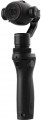 | 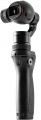 |
|---|---|---|
| DJI Osmo Plus | DJI Osmo | |
from £398.90 | from £427.22 | |
| TOP sellers | ||
4K video recording and RAW photography. Optical and digital zoom. Effective three-axis stabilizer. Shooting time-lapses and circular panoramas. Smartphone mount. External microphone included. | 4K video recording, effective three-axis stabilizer, 360° panorama shooting, smartphone mount, wide range of accessories. | |
| Type | DJI Zenmuse X3, X5 with camera | DJI Zenmuse X3, X5 with camera |
| In box | phone mount (like a screen) | phone mount (like a screen) |
Gimbal specifications | ||
| Rotation angle | ±330° | ±330° |
| Tilt angle | -50° +140° | -90° +150° |
| Bank angle | -50° +90° | -50° +90° |
| Max. controlled speed | 120 °/sec | 120 °/sec |
| Max. phone diagonal | 6 " | 6 " |
Camera and filming | ||
| HD (720p) | 1280x720 px 60 fps | |
| Full HD (1080p) | 1920x1080 px 100 fps | 1920x1080 px 100 fps |
| Quad HD | 2704x1520 px 30 fps | 2704x1520 px 30 fps |
| Ultra HD (4K) | 3840x2160 px 30 fps | 3840x2160 px 30 fps |
| Field of view | 92 ° | 94 ° |
| Digital stabilization |  | |
| Optical zoom | 3.5 | |
| Digital zoom | 2x | 2x |
| Photo megapixels | 12 | 12 |
| Photo resolution | 4000x3000 px | 4000x3000 px |
Battery | ||
| Battery model | HB02-542465 | HB01-522365 |
| Capacity | 1225 mAh | 980 mAh |
| Removable battery | | |
Shooting features | ||
| Camera control | joystick | joystick |
| Functions | camera position fixing | camera position fixing |
| Shooting modes | Time lapse selfie mode sports mode autopanorama tracking mode inversion mode | Time lapse selfie mode sports mode autopanorama tracking mode inversion mode |
General | ||
| Connection | Wi-Fi | Wi-Fi |
| Dimensions (folded) | 61.8x48.2x161.5 mm | 61.8x48.2x161.5 mm |
| Weight | 201 g | 201 g |
| Added to E-Catalog | november 2016 | march 2016 |


Compare DJI Osmo Plus and Osmo
You may be interested in
DJI Osmo Plus often compared


DJI Osmo often compared


Glossary
Tilt angle
The range of forward-backwards tilt angles relative to the vertical position supported by the stabiliser.
It can be written in different ways.
The simplest option is when one angle value is indicated in the characteristics. This may mean that the camera can deviate from the neutral position in both directions by the same angle, which is half the range.
Another option is used when the angles of tilt forward and backward are not the same. In such cases, the horizontal position of the camera on a vertical steadicam is taken as zero, the “-” sign indicates the maximum angle of camera deflection back, lens up, and the “+” sign — forward, lens down.
It can be written in different ways.
The simplest option is when one angle value is indicated in the characteristics. This may mean that the camera can deviate from the neutral position in both directions by the same angle, which is half the range.
Another option is used when the angles of tilt forward and backward are not the same. In such cases, the horizontal position of the camera on a vertical steadicam is taken as zero, the “-” sign indicates the maximum angle of camera deflection back, lens up, and the “+” sign — forward, lens down.
HD (720p)
HD (720p) video recording capabilities supported by the stabiliser's camera.
The HD (720p) standard allows the size of 1280x720 pixels. It offers a fairly decent picture quality with relatively small file sizes and low requirements for the processing power of video equipment.
Note that the quality of the video depends not only on the resolution but also on the frame rate. 30 fps gives more or less normal image quality, 60 fps is good, and higher values are usually used in slow motion which means that the camera supports this feature.
The HD (720p) standard allows the size of 1280x720 pixels. It offers a fairly decent picture quality with relatively small file sizes and low requirements for the processing power of video equipment.
Note that the quality of the video depends not only on the resolution but also on the frame rate. 30 fps gives more or less normal image quality, 60 fps is good, and higher values are usually used in slow motion which means that the camera supports this feature.
Field of view
The angle of view of the complete stabiliser camera.
Two things depend on this parameter: the width of the space that enters the frame, and the degree of zoom provided by the camera. A large viewing angle allows you to fit more of the surrounding space into the frame, but details in such a picture will look small. Conversely, a narrower angle limits the field of view but gives a greater magnification and allows you to see the details of what is still in the frame better.
Two things depend on this parameter: the width of the space that enters the frame, and the degree of zoom provided by the camera. A large viewing angle allows you to fit more of the surrounding space into the frame, but details in such a picture will look small. Conversely, a narrower angle limits the field of view but gives a greater magnification and allows you to see the details of what is still in the frame better.
Optical zoom
The degree of optical zoom provided by the stabiliser's camera.
Optical zoom is carried out due to the so-called zoom lens — a lens with a system of movable lenses that allow you to change the focal length and viewing angles. Such systems are noticeably more complicated and more expensive than electronic zoom, moreover, they are more bulky and less reliable, but they do not affect the image quality and visibility of fine details.
Optical zoom is carried out due to the so-called zoom lens — a lens with a system of movable lenses that allow you to change the focal length and viewing angles. Such systems are noticeably more complicated and more expensive than electronic zoom, moreover, they are more bulky and less reliable, but they do not affect the image quality and visibility of fine details.
Battery model
Model of the battery used in the stabiliser. This information is not very important when choosing: if you wish, knowing the battery model, you can find detailed information about it. However, the key characteristics of the battery are usually given in general information about the stabiliser. Nevertheless, model information can be useful if you plan to purchase an additional battery, or if you already have a battery and you need to evaluate its compatibility with the device.
Capacity
The capacity of the battery used in the stabiliser.
In theory, a higher capacity allows you to work longer without recharging, but the battery life of the stabiliser also depends on its power consumption. So, only models with similar performance characteristics can be compared with each other according to this indicator; and when choosing, it is better to focus not on the capacity, but on the directly claimed battery life.
In theory, a higher capacity allows you to work longer without recharging, but the battery life of the stabiliser also depends on its power consumption. So, only models with similar performance characteristics can be compared with each other according to this indicator; and when choosing, it is better to focus not on the capacity, but on the directly claimed battery life.