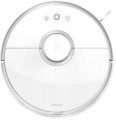
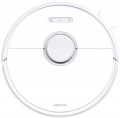
Comparison Roborock S6 vs Roborock S5
Add to comparison | ![]() | ![]() |
|---|---|---|
| Roborock S6 | Roborock S5 | |
from £402.44 | Compare prices 1 | |
| User reviews | ||
| TOP sellers | ||
Laser Cartography Map Management 3.0. Overcoming thresholds up to 2 cm. Limiting the cleaning area using a mobile application. Scheduling cleaning times for each room. 160 mL water tank. | Wet cleaning. Washable HEPA filter. Overcoming thresholds up to 20 mm. Zoning cleaning using the application on the phone. Protection against jamming under furniture. | |
| Type | robot vacuum cleaner | robot vacuum cleaner |
| Cleaning type | dry and wet | dry and wet |
| Water supply control | ||
| Dust collector | container | container |
Specs | ||
| Motor power | 58 W | 58 W |
| Suction force | 2000 Pa | 2000 Pa |
| Dust collector capacity | 0.48 L | 0.48 L |
| Water tank capacity | 0.16 L | 0.15 L |
| Smartphone connection | ||
| Power adjustment | + | + |
| Fine filter | HEPA | HEPA |
Robot vacuum cleaner | ||
| Robot features | scheduled cleaning anti-fall function obstacle sensor | scheduled cleaning anti-fall function obstacle sensor |
| Mapping system | rangefinder (laser) | rangefinder (laser) |
| Cleaning area limit | app | app |
| multi-map memory | ||
| Voice assistant | Google Assistant, Amazon Alexa | Google Assistant, Amazon Alexa |
| Crossing threshold | 20 mm | 20 mm |
Nozzles included | ||
| Nozzle functions | side brush turbobrush | side brush turbobrush |
Docking station | ||
| Charging station | + | + |
Power source | ||
| Source of power | battery | battery |
| Battery voltage | 14.4 В | 14.4 В |
| Battery type | Li-Ion | Li-Ion |
| Battery capacity | 5.2 Ah | 5.2 Ah |
| Battery run time | 150 min | 150 min |
| Charging time | 3 h | |
More specs | ||
| Cleaning area | 250 m² | 250 m² |
| Noise level | 63 dB | 67 dB |
| Dimensions (HxWxD) | 9.65x35x35.3 cm | 9.65x35x35.3 cm |
| Weight | 3.6 kg | 3.5 kg |
| Color | ||
| Added to E-Catalog | july 2019 | march 2018 |
Compare Roborock S6 and S5
Both robotic vacuum cleaners, Roborock S6 and S5, offer similar features such as dry and wet cleaning, 2000 Pa suction power, and the ability to connect to a smartphone. However, according to user reviews, the Roborock S6 stands out with better build quality and ease of use, including the ability to map the room and customize cleaning via an app. Users note that the S6 handles obstacles well and has effective wet cleaning, although its small dustbin may require frequent cleaning. Meanwhile, the Roborock S5 also receives positive feedback for good navigation and cleaning quality, but some users report issues with zonal cleaning and getting stuck. Overall, the Roborock S6 may be preferable for those seeking a more advanced model with better navigation and cleaning features.
Price comparison
You may be interested in
My comparisons
Roborock S6 often compared
Roborock S5 often compared
Glossary
Water supply control
Dosing system for the degree of wetting of the washing cloth in automatic mode. The ability to select the intensity of the water supply allows you to adjust the operation of the robotic vacuum cleaner for different types of floor coverings. For example, for parquet and laminate, the customer can set a low water flow rate, and for less whimsical tiled flooring, a high water flow rate. Also, the vacuum cleaner can turn off the water supply to avoid leaks, for example, when charging. In advanced models of robotic vacuum cleaners, the function of choosing an individual degree of wetting of the napkin for each of the rooms of the dwelling is often incorporated.
Water tank capacity
A capacity of a tank for water or detergent a vacuum cleaner with a wet cleaning function is equipped with. (see "Cleaning type").
Large capacity allows you to work longer without refilling the tank. On the other hand, an increase in capacity has a corresponding effect on the size, weight and cost of the unit. Thus, manufacturers choose this parameter taking into account the general specialization and the “weight category” of a particular model. So, in robots (see "Type"), the volume of the water tank is, by definition, small. Even in the heaviest models, it does not exceed 650 mL. But other types of vacuum cleaners can differ markedly in this parameter.
In general, for non-robot units, a capacity of 1 liter or less is considered very limited, 1 – 2 liters is small, 2 – 3 liters is average, more than 3 liters is above average. However, it much depends on the type. For example, in conventional vacuum cleaners, the capacity does not exceed 2.5 liters, and "for workshop" models this is very little — in most cases, they have a tank capacity of 3 liters or more.
Large capacity allows you to work longer without refilling the tank. On the other hand, an increase in capacity has a corresponding effect on the size, weight and cost of the unit. Thus, manufacturers choose this parameter taking into account the general specialization and the “weight category” of a particular model. So, in robots (see "Type"), the volume of the water tank is, by definition, small. Even in the heaviest models, it does not exceed 650 mL. But other types of vacuum cleaners can differ markedly in this parameter.
In general, for non-robot units, a capacity of 1 liter or less is considered very limited, 1 – 2 liters is small, 2 – 3 liters is average, more than 3 liters is above average. However, it much depends on the type. For example, in conventional vacuum cleaners, the capacity does not exceed 2.5 liters, and "for workshop" models this is very little — in most cases, they have a tank capacity of 3 liters or more.
Charging time
The time required to charge the cordless vacuum cleaner fully (see "Power supply").
Larger batteries tend to take longer to charge. On the other hand, modern batteries can use various solutions that speed up the process, so there is no strict dependence here.
Separately, we note that the speed of charging batteries is usually uneven: at first, the process is fast, then it gradually slows down. So if, for example, the specifications indicate a charging time of 2 hours, then charging from 0 to 50% will take a little less than an hour, and from 50% to 100% the remaining time.
Larger batteries tend to take longer to charge. On the other hand, modern batteries can use various solutions that speed up the process, so there is no strict dependence here.
Separately, we note that the speed of charging batteries is usually uneven: at first, the process is fast, then it gradually slows down. So if, for example, the specifications indicate a charging time of 2 hours, then charging from 0 to 50% will take a little less than an hour, and from 50% to 100% the remaining time.
Noise level
The noise level produced by the vacuum cleaner during operation. Usually, the value for normal operation at maximum engine power is indicated here. With less power, the loudness of the unit may be lower, but the key is precisely the maximum indicator.
Regarding specific numbers, keep in mind that the decibel used to measure the noise level is a non-linear quantity. Therefore, it is worth evaluating specific indicators using special comparative tables. In general, vacuum cleaners are quite noisy appliances; so in this case, models are considered quiet if this indicator does not exceed 65 dB — this is the level of a loud conversation between 2 – 3 people at a distance of 1 m. The quietest of these models give out only 40 dB — this is the average volume of a person’s speech in normal tones (and the minimum volume allowed for constant noise sources in living quarters during the day). For louder units, the comparison table looks like this:
— 66 – 70 dB — loud conversations between several groups of people at a distance of about 1 m;
— 71 – 75 dB — the volume of a cry or laughter in full voice at a distance of about 1 m;
— 76 – 80 dB — the volume of a mechanical alarm clock or the engine of an old truck;
— more than 80 dB — a very high noise level, exceeding the level of a loud scr...eam; when working with a vacuum cleaner having such specifications for a long time, it is highly desirable to use hearing protection.
Also note that the noise level largely depends on the engine power, as well as some other features (for example, it is strongly affected by the presence of an aquafilter — see "Dust collector"). At the same time, there is no hard connection here, and units with a similar set of specifications can differ markedly in actual loudness. In such cases, when choosing here, it is worth proceeding from the fact that a quieter vacuum cleaner will be more comfortable to use. However, it will most likely cost noticeably more.
Regarding specific numbers, keep in mind that the decibel used to measure the noise level is a non-linear quantity. Therefore, it is worth evaluating specific indicators using special comparative tables. In general, vacuum cleaners are quite noisy appliances; so in this case, models are considered quiet if this indicator does not exceed 65 dB — this is the level of a loud conversation between 2 – 3 people at a distance of 1 m. The quietest of these models give out only 40 dB — this is the average volume of a person’s speech in normal tones (and the minimum volume allowed for constant noise sources in living quarters during the day). For louder units, the comparison table looks like this:
— 66 – 70 dB — loud conversations between several groups of people at a distance of about 1 m;
— 71 – 75 dB — the volume of a cry or laughter in full voice at a distance of about 1 m;
— 76 – 80 dB — the volume of a mechanical alarm clock or the engine of an old truck;
— more than 80 dB — a very high noise level, exceeding the level of a loud scr...eam; when working with a vacuum cleaner having such specifications for a long time, it is highly desirable to use hearing protection.
Also note that the noise level largely depends on the engine power, as well as some other features (for example, it is strongly affected by the presence of an aquafilter — see "Dust collector"). At the same time, there is no hard connection here, and units with a similar set of specifications can differ markedly in actual loudness. In such cases, when choosing here, it is worth proceeding from the fact that a quieter vacuum cleaner will be more comfortable to use. However, it will most likely cost noticeably more.