
Comparison Ferei W152 vs Ferei W156
Add to comparison | 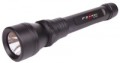 | 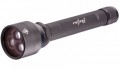 |
|---|---|---|
| Ferei W152 | Ferei W156 | |
from $100.00 up to $103.64 | from $144.94 up to $158.56 | |
| TOP sellers | ||
| Type | for diving | for diving |
Specs | ||
| Lamp type | lED with reflector | lEDs |
| Peak luminous flux | 800 lm | 800 lm |
| Lighting range | 300 m | 300 m |
| Brightness levels | 3 | 4 |
Power supply | ||
| Power source | 2x18650 | 2x18650 |
| Operating time (Low mode) | 10 h | 6 h |
In box | ||
| In box | strap | strap |
General | ||
| Shockproof |  | |
| Water protection | + | + |
| Material | metal | metal |
| Length | 22 cm | 22.2 cm |
| Weight | 273 g | 278 g |
| Color | ||
| Added to E-Catalog | november 2014 | november 2014 |


Compare Ferei W152 and W156
You may be interested in
Ferei W152 often compared


Glossary
Lamp type
The type of lamp installed in the flashlight.
Nowadays, the most widespread models on LEDs(with or without a reflector). Halogen lamps are used much less frequently (alone or in combination with LEDs), xenon lamps, krypton lamps, fluorescent lamps, and in some models you can even find classic incandescent lamps. A separate type of light source is a laser. Here is a more detailed description of the most relevant options for today:
— LEDs. They can also be referred to as LED — an abbreviation of the English name. The most advanced type of lamps today, used in the vast majority of modern flashlights. One of the key advantages of LEDs is extremely high efficiency — as a result, they provide excellent brightness with low power consumption and small size, and they practically do not heat up during operation. LEDs can be made both in the form of separate point light sources and in the form of COB panels of a fairly large area; see Diode Model for details. Also, such light sources are resistant to shock, shock and low temperatures; with all this, they are generally inexpensive and have practically no noticeable shortcomings.
— LED with reflector. In lanterns with this type of lamp, LEDs (see above about them) are installed in special-shaped recesses covered with reflective material. Thanks to...this design, the light emitted by the LED to the sides is reflected and directed forward, in the same direction as the main stream. This significantly increases the overall brightness of the flashlight, which is especially important for compact models with a single LED of relatively low brightness. Actually, most compact types (see "Type") have just such a lamp design.
— Halogen lamp. One of the most popular modifications of a classic incandescent lamp: the light source is a hot metal spiral in a sealed glass flask filled with gas with the addition of bromine or iodine vapor (these substances are so-called halogens — hence the name of the lamps themselves). This has a positive effect on efficiency and allows you to achieve a fairly high brightness; so that modern lanterns with such lamps are usually referred to as hand-held lamps. At the same time, even in such devices, such lamps are becoming less and less common, being replaced by the LEDs described above.
— LEDs / halogen lamp. The combination in the design of the two light sources described above at once; usually the "halogen" is installed in the centre, and the LEDs are around it. At one time, this combination appeared as an attempt to create sufficiently powerful lighting devices that would consume less energy than analogues with halogen lamps, while costing less than pure LED ones. In addition, such a design provided additional features for adjusting the operating mode: it could be changed simply by turning on the existing light sources together or separately. However, with the development and cheapening of LED technologies, this option has practically lost its relevance; today it is extremely rare.
— Xenon lamp. This term can mean two types of light sources: one of the modifications of an incandescent lamp, where the bulb with a spiral is filled with an inert xenon gas, or a gas discharge lamp, in which the light source is an electric arc in the same xenon medium. The first variety was used mainly in small pocket flashlights, the second — in hand lamps. At one time, xenon lamps (both varieties) had very decent indicators of efficiency and brightness, although they were not cheap. However, again, the development of LEDs made the production of flashlights with such lamps impractical.
— Incandescent lamp. In this case, we mean classic incandescent lamps that do not belong to more advanced varieties — halogen, xenon, krypton, etc. Recall that the light source in such a lamp is a hot metal spiral in a glass bulb, which is filled either with vacuum (in miniature light bulbs), or a mixture of argon and nitrogen (in larger ones). Anyway, such lamps nowadays are considered completely obsolete — primarily due to low efficiency, which results in low brightness with significant power consumption, as well as strong heating during operation. However, nowadays this option can still be found in individual lamps — mainly hand-held lamps for the construction industry, powered by standard replaceable batteries for power tools. "Gluttony" in terms of energy consumption for such lamps is not critical, and the bulbs themselves are extremely cheap.
— Laser. The laser beam itself has a high effective range, but a small thickness. Therefore, flashlights with such light sources are usually equipped with adjustable optics, with which you can scatter the beam and turn its “imprint” from a point into a fairly large spot. Typically, laser flashlights have a specific purpose: illumination and target designation when hunting at night (for this, a mount on an optical sight is often provided), giving light signals, etc. Note that when using such devices, care must be taken: if it gets into the eyes, the laser beam can not only blind, but also cause irreversible damage, even at a fairly large distance.
The remaining types of lamps nowadays are practically ousted from the market by LEDs and are found mainly in frankly outdated models. It makes no sense to describe them in detail, we note only the key features:
Nowadays, the most widespread models on LEDs(with or without a reflector). Halogen lamps are used much less frequently (alone or in combination with LEDs), xenon lamps, krypton lamps, fluorescent lamps, and in some models you can even find classic incandescent lamps. A separate type of light source is a laser. Here is a more detailed description of the most relevant options for today:
— LEDs. They can also be referred to as LED — an abbreviation of the English name. The most advanced type of lamps today, used in the vast majority of modern flashlights. One of the key advantages of LEDs is extremely high efficiency — as a result, they provide excellent brightness with low power consumption and small size, and they practically do not heat up during operation. LEDs can be made both in the form of separate point light sources and in the form of COB panels of a fairly large area; see Diode Model for details. Also, such light sources are resistant to shock, shock and low temperatures; with all this, they are generally inexpensive and have practically no noticeable shortcomings.
— LED with reflector. In lanterns with this type of lamp, LEDs (see above about them) are installed in special-shaped recesses covered with reflective material. Thanks to...this design, the light emitted by the LED to the sides is reflected and directed forward, in the same direction as the main stream. This significantly increases the overall brightness of the flashlight, which is especially important for compact models with a single LED of relatively low brightness. Actually, most compact types (see "Type") have just such a lamp design.
— Halogen lamp. One of the most popular modifications of a classic incandescent lamp: the light source is a hot metal spiral in a sealed glass flask filled with gas with the addition of bromine or iodine vapor (these substances are so-called halogens — hence the name of the lamps themselves). This has a positive effect on efficiency and allows you to achieve a fairly high brightness; so that modern lanterns with such lamps are usually referred to as hand-held lamps. At the same time, even in such devices, such lamps are becoming less and less common, being replaced by the LEDs described above.
— LEDs / halogen lamp. The combination in the design of the two light sources described above at once; usually the "halogen" is installed in the centre, and the LEDs are around it. At one time, this combination appeared as an attempt to create sufficiently powerful lighting devices that would consume less energy than analogues with halogen lamps, while costing less than pure LED ones. In addition, such a design provided additional features for adjusting the operating mode: it could be changed simply by turning on the existing light sources together or separately. However, with the development and cheapening of LED technologies, this option has practically lost its relevance; today it is extremely rare.
— Xenon lamp. This term can mean two types of light sources: one of the modifications of an incandescent lamp, where the bulb with a spiral is filled with an inert xenon gas, or a gas discharge lamp, in which the light source is an electric arc in the same xenon medium. The first variety was used mainly in small pocket flashlights, the second — in hand lamps. At one time, xenon lamps (both varieties) had very decent indicators of efficiency and brightness, although they were not cheap. However, again, the development of LEDs made the production of flashlights with such lamps impractical.
— Incandescent lamp. In this case, we mean classic incandescent lamps that do not belong to more advanced varieties — halogen, xenon, krypton, etc. Recall that the light source in such a lamp is a hot metal spiral in a glass bulb, which is filled either with vacuum (in miniature light bulbs), or a mixture of argon and nitrogen (in larger ones). Anyway, such lamps nowadays are considered completely obsolete — primarily due to low efficiency, which results in low brightness with significant power consumption, as well as strong heating during operation. However, nowadays this option can still be found in individual lamps — mainly hand-held lamps for the construction industry, powered by standard replaceable batteries for power tools. "Gluttony" in terms of energy consumption for such lamps is not critical, and the bulbs themselves are extremely cheap.
— Laser. The laser beam itself has a high effective range, but a small thickness. Therefore, flashlights with such light sources are usually equipped with adjustable optics, with which you can scatter the beam and turn its “imprint” from a point into a fairly large spot. Typically, laser flashlights have a specific purpose: illumination and target designation when hunting at night (for this, a mount on an optical sight is often provided), giving light signals, etc. Note that when using such devices, care must be taken: if it gets into the eyes, the laser beam can not only blind, but also cause irreversible damage, even at a fairly large distance.
The remaining types of lamps nowadays are practically ousted from the market by LEDs and are found mainly in frankly outdated models. It makes no sense to describe them in detail, we note only the key features:
- Fluorescent lamp. One of the names for fluorescent lamps, known colloquially as "fluorescent lamps". The luminous flux itself turns out to be scattered, so such light sources were used mainly in tourist lanterns and individual models of hand-held lamps.
- krypton lamp. An incandescent lamp with a bulb filled with krypton to increase brightness and reduce heat. Due to the high cost of the filler, such lamps were mostly made miniature and used in lanterns of the appropriate size.
Brightness levels
The number of brightness levels provided in the flashlight design. Most modern models have one level of brightness, but there are models with the ability to adjust. Several levels of brightness allow you to choose the best option for a particular case: for example, to view a small room, you can reduce the brightness and save battery power, while in a large warehouse you may need full power of the flashlight. Accordingly, the more brightness levels are provided in the design of the flashlight, the wider your options for choosing the best option will be.
Also note that in addition to step-by-step brightness adjustment, with fixed levels, modern flashlights can also be used with smooth adjustment. It is detailed below; here we note that the stepped format is technically simpler, cheaper, and therefore is used much more often. And in individual lamps, these options are combined — for them, the characteristics indicate both the number of individual brightness levels and the presence of smooth adjustment. The specific way to implement such a combination may be different. For example, a brightness control ring can have several fixed levels with clear values, and the ability to set any intermediate position between these values; the main mode of operation with smooth adjustment can be supplemented with a fixed level of reduced or increased brightness; etc.
Also note that in addition to step-by-step brightness adjustment, with fixed levels, modern flashlights can also be used with smooth adjustment. It is detailed below; here we note that the stepped format is technically simpler, cheaper, and therefore is used much more often. And in individual lamps, these options are combined — for them, the characteristics indicate both the number of individual brightness levels and the presence of smooth adjustment. The specific way to implement such a combination may be different. For example, a brightness control ring can have several fixed levels with clear values, and the ability to set any intermediate position between these values; the main mode of operation with smooth adjustment can be supplemented with a fixed level of reduced or increased brightness; etc.
Operating time (Low mode)
The operating time in Low mode indicates how long the flashlight shines at low brightness before there’s a noticeable decrease in light level according to factory tests, usually at room temperature and with the battery provided. Low is chosen for long-duration tasks: set it as a tent light, attach it with a magnetic tail under the hood, or leave it as a nightlight or marker—situations where autonomy and moderate brightness are important. In this mode, the electronics heat up less and consume power more efficiently than in Medium/High, so the stated hours often reach the tens, especially in models with 18650/21700 batteries. It's important to consider that the actual "Low mode runtime" varies depending on the quality and capacity of the battery, outdoor temperature, and driver settings (such as whether there are steps and constant brightness maintenance). Compared to "Eco/Ultralow," Low provides a more practical level of light for household and service tasks, preserving the main advantage—long autonomy without overheating and unnecessary battery resource loss.