
Comparison Magio MG-325 vs MIE Piccolo
Add to comparison | 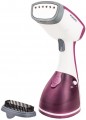 | 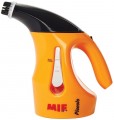 |
|---|---|---|
| Magio MG-325 | MIE Piccolo | |
| Outdated Product | from $50.00 | |
| User reviews | ||
| TOP sellers | ||
| Type | manual | manual |
| In box | brush | brush |
Technical specs | ||
| Power consumption | 1100 W | 1200 W |
| Steam flow | 20 g/min | 40 g/min |
| Water tank | 250 ml | 500 ml |
| Detachable water tank |  |  |
| Work surface coating | stainless steel | |
| Continuous operation time | 15 min | |
| Heating time | 60 с | 90 с |
| Added to E-Catalog | january 2018 | april 2014 |


Compare Magio MG-325 and MIE Piccolo
You may be interested in
Magio MG-325 often compared


MIE Piccolo often compared

Glossary
Power consumption
Rated power consumed by the device during operation. Usually, it is indicated by the maximum power consumption when used in normal mode, without abnormal situations.
In general, this parameter is secondary when choosing: manufacturers select power in such a way as to provide the necessary indicators of performance, pressure, etc. However, some practical points are also associated with power. So, with the same performance (see "Steam intensity"), a more powerful device will spend less time heating water and generating steam; it can also be provided with a more capacious boiler (see "Water boiler volume"), which is useful for long-term continuous operation. On the other hand, such devices turn out to be more expensive, and often also heavier and larger than relatively “weak” steamers, and besides, they load the mains more.
The second point related to power is just the calculations of the load on the wiring and various electrical equipment (protective automation, AVRs, generators, etc.).
In general, this parameter is secondary when choosing: manufacturers select power in such a way as to provide the necessary indicators of performance, pressure, etc. However, some practical points are also associated with power. So, with the same performance (see "Steam intensity"), a more powerful device will spend less time heating water and generating steam; it can also be provided with a more capacious boiler (see "Water boiler volume"), which is useful for long-term continuous operation. On the other hand, such devices turn out to be more expensive, and often also heavier and larger than relatively “weak” steamers, and besides, they load the mains more.
The second point related to power is just the calculations of the load on the wiring and various electrical equipment (protective automation, AVRs, generators, etc.).
Steam flow
Steam flow provided by the device. For models with power and/or humidity adjustment, this item indicates the maximum possible value.
When choosing according to this indicator, it should be borne in mind that the steam flow characterizes only the amount of water vapor produced by the device per minute. The intensity of the impact of this steam on the treated surface/product can be different, first of all, it depends on the working pressure. Therefore, only devices with similar pressure indicators can be directly compared by this indicator. When making these comparisons, it's worth assuming that higher steam flow allows to handle a large amount of work faster, but requires more powerful heaters and larger tanks – which, in turn, affects the dimensions, weight and price of the entire steamer.
When choosing according to this indicator, it should be borne in mind that the steam flow characterizes only the amount of water vapor produced by the device per minute. The intensity of the impact of this steam on the treated surface/product can be different, first of all, it depends on the working pressure. Therefore, only devices with similar pressure indicators can be directly compared by this indicator. When making these comparisons, it's worth assuming that higher steam flow allows to handle a large amount of work faster, but requires more powerful heaters and larger tanks – which, in turn, affects the dimensions, weight and price of the entire steamer.
Water tank
The water tank determines how long the steamer can operate without refilling. Small tanks up to 500 ml are installed in compact handheld models for quickly ironing one or two items. A medium capacity of 500 ml to 1.5 liters is ideal for versatile home appliances, while large tanks from 1.5 liters are suitable for long continuous operation of floor-standing systems.
Detachable water tank
Device has a water tank with a detachable design.
The detachable design makes refueling much easier. In particular, it allows to fill the tank under the tap, while with a non-detachable tank, this option is often not available. And some models with this feature can be refueled during operation, without turning off the heating and without relieving pressure in the boiler (although it still will be necessary to clarify this possibility separately). In addition, a detachable tank is much easier to clean or wash than a non-detachable one.
The detachable design makes refueling much easier. In particular, it allows to fill the tank under the tap, while with a non-detachable tank, this option is often not available. And some models with this feature can be refueled during operation, without turning off the heating and without relieving pressure in the boiler (although it still will be necessary to clarify this possibility separately). In addition, a detachable tank is much easier to clean or wash than a non-detachable one.
Work surface coating
The coating of a garment steamer’s working surface affects how smoothly it glides over fabric, the evenness of heating, scratch resistance, and ease of maintenance. The higher the quality of the material, the more easily the steamer moves over clothing, the less it catches on delicate fabrics, and the more consistently it performs with frequent use. The following types are available:
— Heat-resistant plastic. A lightweight and inexpensive option, more commonly found in compact handheld steamers. It is not as durable or “slippery” as metal or ceramic, but is suitable for basic steaming without strong pressure against the fabric.
— Aluminum. A lightweight material that heats up quickly and makes the steamer more comfortable to handle. This is convenient for handheld models, travel use, and quick tasks when you need to freshen up clothes before going out.
— Stainless steel. A durable metal surface that withstands heat, steam, and regular contact with fabric. It is long-lasting and practical for frequent household use, but may be heavier than plastic or aluminum.
— Ceramic. A smooth coating that glides well over fabric and distributes heat evenly. It is convenient for delicate items, synthetics, shirts, and dresses, but requires careful handling without impacts or abrasive cleaning.
— Metal-c...eramic. A coating with a metal base and a ceramic layer or ceramic additives. It combines rapid heating, smooth gliding, and greater wear resistance compared with conventional ceramic.
— Titanium. A durable, wear-resistant coating designed for frequent use. This surface is more resistant to scratches and retains its working properties for a long time, making it useful for frequent use, dense fabrics, and situations where the steamer is used not only with lightweight clothing but also with jackets, curtains, or outerwear.
— Heat-resistant plastic. A lightweight and inexpensive option, more commonly found in compact handheld steamers. It is not as durable or “slippery” as metal or ceramic, but is suitable for basic steaming without strong pressure against the fabric.
— Aluminum. A lightweight material that heats up quickly and makes the steamer more comfortable to handle. This is convenient for handheld models, travel use, and quick tasks when you need to freshen up clothes before going out.
— Stainless steel. A durable metal surface that withstands heat, steam, and regular contact with fabric. It is long-lasting and practical for frequent household use, but may be heavier than plastic or aluminum.
— Ceramic. A smooth coating that glides well over fabric and distributes heat evenly. It is convenient for delicate items, synthetics, shirts, and dresses, but requires careful handling without impacts or abrasive cleaning.
— Metal-c...eramic. A coating with a metal base and a ceramic layer or ceramic additives. It combines rapid heating, smooth gliding, and greater wear resistance compared with conventional ceramic.
— Titanium. A durable, wear-resistant coating designed for frequent use. This surface is more resistant to scratches and retains its working properties for a long time, making it useful for frequent use, dense fabrics, and situations where the steamer is used not only with lightweight clothing but also with jackets, curtains, or outerwear.
Continuous operation time
Approximate time that the device is able to operate without breaks. This parameter is determined primarily by the performance and capacity of the boiler/tank: when the water supply is exhausted, the work will have to pause to replenish the stock. At the same time, for models with humidity and/or power adjustment, both the average time of continuous operation (at a certain standard mode), and the longest (at minimum intensity) or the shortest (at maximum) can be indicated; these details should be clarified separately.
It is worth saying that some models allow refueling with water right in the process of operation, but it also does not hurt to clarify this possibility separately.
It is worth saying that some models allow refueling with water right in the process of operation, but it also does not hurt to clarify this possibility separately.
Heating time
Heating time until steam is generated. The duration of the heating process directly depends on the power of the device and the volume of the water tank.
We also note that in some situations the actual heating time may be less than the declared one. For example, if the main tank (boiler) is not completely filled, and the design does not provide an additional tank for cold water. For a full guarantee, you should still focus on the value directly stated in the specifications.
We also note that in some situations the actual heating time may be less than the declared one. For example, if the main tank (boiler) is not completely filled, and the design does not provide an additional tank for cold water. For a full guarantee, you should still focus on the value directly stated in the specifications.