
Comparison Galaxy Innovations Uni 2 Plus vs Galaxy Innovations Uni 2
Add to comparison | 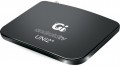 | 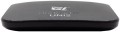 |
|---|---|---|
| Galaxy Innovations Uni 2 Plus | Galaxy Innovations Uni 2 | |
| Outdated Product | Outdated Product | |
| TOP sellers | ||
| Type | Media Player | Media Player |
| Operating system | Android (AOSP) | Android (AOSP) |
Connectivity and interfaces | ||
| Wi-Fi | Wi-Fi 4 (802.11n) | + |
| Miracast |  | |
| IPTV support | | |
Connectors | ||
| HDMI | 1 | 1 |
| USB-A 2.0 | 2 pcs | 2 pcs |
| LAN | 100 Mbps | 100 Mbps |
| AV output | | |
Hardware | ||
| CPU | Amlogic S905D | |
| CPU frequency | 1.5 GHz | 1.5 GHz |
| RAM | 2 GB | 1 GB |
| Built-in memory | 8 GB | 8 GB |
| Ultra HD 4K support | | |
| HDR support | HDR10 | HDR10 |
General | ||
| Remote control | + | + |
| Dimensions (WxHxD) | 130x15x100 mm | 130x15x100 mm |
| Added to E-Catalog | november 2019 | november 2019 |


Compare Galaxy Innovations Uni 2 Plus and Uni 2
You may be interested in
My comparisons
Galaxy Innovations Uni 2 Plus often compared


Glossary
Wi-Fi
— Wi-Fi — a technology used for wireless connection to computer networks and for direct connections between devices. In media players and tuners, it can be used both to access the Internet or a local network through a wireless router and to connect to a smartphone, tablet, etc. The AirPlay, Chromecast, and Miracast functions are also based on this technology. The specific set of Wi-Fi capabilities should be clarified separately; here, we will note that this item may also specify the particular supported version of this connection. The main current options are:
- Wi-Fi 6. A version that makes it possible to share the radio spectrum among clients more efficiently, transmit more data over the same interval, and reduce lag—critical for 4K/8K streaming, IPTV, and fast navigation through a media library. OFDMA and MU-MIMO technologies in the uplink/downlink reduce competition with neighboring devices, 1024-QAM increases peak speed, and WPA3 improves security; in everyday use, this means a more stable picture on 5 GHz even in a multi-story building and fewer “freezes” when content is loaded and applications are installed simultaneously. Compared with Wi-Fi 5, the improvement is especially noticeable in congested networks and when working with Wi-Fi 6 Mesh routers; however, the actual speed depends on the access point quality, channel width, and signal strength. For streaming from a NAS and online services, Wi-Fi 6 is often more than sufficient, while for occasional extremely large files, it is sensible to retain the wired LAN option.
- Wi-Fi 5...(802.11ac). Uses the 5 GHz band (less congested than the 2.4 GHz band used in earlier versions), which contributes to reliability and lower latency; speeds can reach 6.77 Gbit/s with multiple antennas and 1.69 Gbit/s with one antenna.
- Wi-Fi 4 (802.11n). The predecessor to the Wi-Fi 5 described above, and the first standard to introduce the 5 GHz band—here, it is used alongside the traditional 2.4 GHz band and is not supported by some devices with Wi-Fi 4. Data transfer speeds are up to 600 Mbit/s.
CPU
The model of the CPU installed in the media player.
This information is mainly of reference value: the processor is selected in such a way as to provide certain practical characteristics (maximum resolution, support for certain standards, embedded applications, etc.). So when choosing, you should focus primarily on these specifications. However, if you wish, knowing the processor model, you can find detailed data on it and evaluate the capabilities of the media centre to work with resource-consuming applications. This can be useful, in particular, if you choose an Android model (see above) and plan to use additional software intensively — the set of applications for this OS is very extensive, and some of them are quite demanding on system resources.
Also note that CPU data is often specified for advertising purposes — to emphasize that the device has a fairly advanced chip from a well-known brand. Among the most common brands of such processors are Allwinner, Amlogic, Rockchip, Realtek.
This information is mainly of reference value: the processor is selected in such a way as to provide certain practical characteristics (maximum resolution, support for certain standards, embedded applications, etc.). So when choosing, you should focus primarily on these specifications. However, if you wish, knowing the processor model, you can find detailed data on it and evaluate the capabilities of the media centre to work with resource-consuming applications. This can be useful, in particular, if you choose an Android model (see above) and plan to use additional software intensively — the set of applications for this OS is very extensive, and some of them are quite demanding on system resources.
Also note that CPU data is often specified for advertising purposes — to emphasize that the device has a fairly advanced chip from a well-known brand. Among the most common brands of such processors are Allwinner, Amlogic, Rockchip, Realtek.
RAM
The amount of RAM installed in the media player.
In general, this volume is selected by the manufacturer in such a way that the device can normally cope with the tasks that are claimed for it. On the other hand, all else being equal, more RAM usually means faster performance. This parameter is especially important if the media player runs under the Android OS (see above): such firmware allows the installation of additional applications that may have rather high requirements for RAM.
As for specific values, by modern standards, a device with more than 2 GB of RAM is considered a fast media player.
In general, this volume is selected by the manufacturer in such a way that the device can normally cope with the tasks that are claimed for it. On the other hand, all else being equal, more RAM usually means faster performance. This parameter is especially important if the media player runs under the Android OS (see above): such firmware allows the installation of additional applications that may have rather high requirements for RAM.
As for specific values, by modern standards, a device with more than 2 GB of RAM is considered a fast media player.