
Comparison JJRC X5 vs MJX Bugs 5W
Add to comparison | 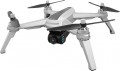 | 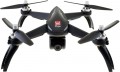 |
|---|---|---|
| JJRC X5 | MJX Bugs 5W | |
| Compare prices 1 | Outdated Product | |
| User reviews | ||
| TOP sellers | ||
Brushless motors. Many flight modes. | Automatic takeoff/landing. Follow me mode. Sensors: barometer, accelerometer, gyroscope. Live broadcast range: 200 – 300 m. Battery charging time — 5 hours. Remote control of the camera only in the vertical plane within 90 °. The maximum flight altitude is 150 m. | |
Flight specs | ||
| Maximum flight time | 18 min | 18 min |
| Horizontal speed | 60 km/h | |
Camera | ||
| Camera type | removable | removable |
| Number of megapixels | 8 MP | |
| HD filming (720p) | 1280x720 px | 1280x720 px |
| Full HD filming (1080p) | 1920x1080 px | 1920x1080 px 30 fps |
| Camera stabilization |  |  |
| Camera with control | | |
| Live video streaming | | |
| Memory card slot | | |
Flight modes and sensors | ||
| Flight modes | return "home" Follow me (tracking) Orbit mode (flying in a circle) flyby GPS points | return "home" Follow me (tracking) Orbit mode (flying in a circle) flyby GPS points |
| Sensors | GPS module heights gyroscope | GPS module heights gyroscope |
Control and transmitter | ||
| Control | remote control and smartphone | remote control and smartphone |
| Range | 600 m | 500 m |
| Control frequency | 2.4 GHz | 2.4 GHz |
| Video transmission frequency | 5 GHz (Wi-Fi) | 5 GHz (Wi-Fi) |
| Smartphone mount | | |
| Information display | | |
| Remote control power source | 4xAA | 4xAA |
Motor and chassis | ||
| Motor type | brushless | brushless |
| Motor model | 1806, 1500KV | 1500KV 1806 |
| Number of screws | 4 pcs | 4 pcs |
| Screw diameter | 152 mm | |
Battery | ||
| Battery capacity | 1.8 Ah | 1.8 Ah |
| Voltage | 7.4 В | 7.4 В |
| Battery model | 2S | 2S |
| Batteries in the set | 1 pcs | 1 pcs |
| USB charging | | |
General | ||
| Body backlight | | |
| Material | plastic | plastic |
| Dimensions | 350x350x95 mm | 350x350x95 mm |
| Weight | 400 g | 410 g |
| Color | ||
| Added to E-Catalog | july 2019 | february 2019 |



Compare JJRC X5 and MJX Bugs 5W
Price comparison
You may be interested in
My comparisons
JJRC X5 often compared


MJX Bugs 5W often compared


Glossary
Horizontal speed
The highest speed that a quadcopter can achieve in horizontal flight. It is worth considering that in most cases this parameter is indicated for optimal operating conditions: a fully charged battery, low air temperature, minimum weight, etc. However, it is quite possible to rely on it both when choosing and when comparing different models of copters with each other.
Note that quadcopters were originally designed as stable and maneuverable aerial platforms, and not as high-speed vehicles. Therefore, you should specifically look for a fast quadcopter only in cases where the ability to quickly move from place to place is critical (for example, when the device is supposed to be used for video recording of fast-moving objects over large areas).
Note that quadcopters were originally designed as stable and maneuverable aerial platforms, and not as high-speed vehicles. Therefore, you should specifically look for a fast quadcopter only in cases where the ability to quickly move from place to place is critical (for example, when the device is supposed to be used for video recording of fast-moving objects over large areas).
Number of megapixels
Resolution of the matrix in the standard camera of the quadrocopter.
Theoretically, the higher the resolution, the sharper, more detailed image the camera can produce. However, in practice, the quality of the "picture" is highly dependent on a number of other technical features - the size of the matrix, image processing algorithms, optical properties, etc. Moreover, when increasing the resolution without increasing the size of the matrix, the image quality may drop, because. significantly increases the likelihood of noise and extraneous artifacts. And for shooting video, a large number of megapixels is not required at all: for example, to shoot Full HD (1920x1080) video, which is considered a very solid format for quadrocopters, a sensor of only 2.07 megapixels is enough.
Note that high resolution is often a sign of an advanced camera with high image quality. However, this quality is not determined by the number of megapixels, but by the characteristics of the camera and the special technologies used in it. Therefore, when choosing a quadcopter with a camera, you should look not so much at the resolution as at the class and price category of the model as a whole.
Theoretically, the higher the resolution, the sharper, more detailed image the camera can produce. However, in practice, the quality of the "picture" is highly dependent on a number of other technical features - the size of the matrix, image processing algorithms, optical properties, etc. Moreover, when increasing the resolution without increasing the size of the matrix, the image quality may drop, because. significantly increases the likelihood of noise and extraneous artifacts. And for shooting video, a large number of megapixels is not required at all: for example, to shoot Full HD (1920x1080) video, which is considered a very solid format for quadrocopters, a sensor of only 2.07 megapixels is enough.
Note that high resolution is often a sign of an advanced camera with high image quality. However, this quality is not determined by the number of megapixels, but by the characteristics of the camera and the special technologies used in it. Therefore, when choosing a quadcopter with a camera, you should look not so much at the resolution as at the class and price category of the model as a whole.
Full HD filming (1080p)
The maximum resolution and frame rate supported by the aircraft camera when shooting in Full HD (1080p).
The traditional resolution of such a video is 1920x1080; this is what is most often used in drones, although occasionally there are more specific options — for example, 1280x1080. In general, this is far from the most advanced, but more than a decent high-definition video standard, such an image gives sufficient detail for most cases and looks good even on a large TV screen — 32 "and more. At the same time, achieve a high frame rate in Full HD It is relatively simple and takes up less space than higher resolution content, so Full HD shooting can be done even on aircraft that support more advanced video formats like 4K.
As for the actual frame rate, the higher it is, the smoother the video turns out, the less motion is blurred in the frame. On the other hand, the shooting speed directly affects the requirements for the power of the hardware and the volume of the finished files. In general, values up to 24 fps can be called minimal, from 24 to 30 fps — medium, from 30 to 60 fps — high, and speeds over 60 fps are used mainly for slow motion Full HD.
The traditional resolution of such a video is 1920x1080; this is what is most often used in drones, although occasionally there are more specific options — for example, 1280x1080. In general, this is far from the most advanced, but more than a decent high-definition video standard, such an image gives sufficient detail for most cases and looks good even on a large TV screen — 32 "and more. At the same time, achieve a high frame rate in Full HD It is relatively simple and takes up less space than higher resolution content, so Full HD shooting can be done even on aircraft that support more advanced video formats like 4K.
As for the actual frame rate, the higher it is, the smoother the video turns out, the less motion is blurred in the frame. On the other hand, the shooting speed directly affects the requirements for the power of the hardware and the volume of the finished files. In general, values up to 24 fps can be called minimal, from 24 to 30 fps — medium, from 30 to 60 fps — high, and speeds over 60 fps are used mainly for slow motion Full HD.
Camera stabilization
Stabilization system built directly into the complete drone camera.
Any stabilization system is designed to compensate for vibrations and shakes, thus providing a stable image, without shaking or sudden movements in the camera. This function slightly increases the cost of the device, but the video quality increases noticeably. On the other hand, stabilization makes it difficult to perform complex maneuvers, since its use worsens the feedback: changes in the camera image do not quite correspond to changes in the drone’s position in space. In light of this, in devices that have an acrobatic mode (see “Flight Modes”), such a system can be switched off.
Note that specifically in the camera, stabilization is most often carried out according to the electronic principle: reserve space is allocated at the edges of the matrix, and in the event of vibrations or shocks, the camera “pulls up” a fragment of the image from this reserve, keeping the image in the frame motionless. This format of operation somewhat reduces the useful area of the matrix, but is inexpensive, does not affect the weight of the camera and does not complicate its design. A more effective, but also more complex and expensive option is a built-in optical stabilizer, which uses a lens with a moving lens system.
In addition, another method can be used to stabilize the image - a mechanical gimbal stabilizer. However, such a gimbal is not part of the c...amera, so its presence is specified separately (see below). At the same time, some copters provide both functions at once - both built-in stabilization and gimbal; this ensures maximum efficiency.
Any stabilization system is designed to compensate for vibrations and shakes, thus providing a stable image, without shaking or sudden movements in the camera. This function slightly increases the cost of the device, but the video quality increases noticeably. On the other hand, stabilization makes it difficult to perform complex maneuvers, since its use worsens the feedback: changes in the camera image do not quite correspond to changes in the drone’s position in space. In light of this, in devices that have an acrobatic mode (see “Flight Modes”), such a system can be switched off.
Note that specifically in the camera, stabilization is most often carried out according to the electronic principle: reserve space is allocated at the edges of the matrix, and in the event of vibrations or shocks, the camera “pulls up” a fragment of the image from this reserve, keeping the image in the frame motionless. This format of operation somewhat reduces the useful area of the matrix, but is inexpensive, does not affect the weight of the camera and does not complicate its design. A more effective, but also more complex and expensive option is a built-in optical stabilizer, which uses a lens with a moving lens system.
In addition, another method can be used to stabilize the image - a mechanical gimbal stabilizer. However, such a gimbal is not part of the c...amera, so its presence is specified separately (see below). At the same time, some copters provide both functions at once - both built-in stabilization and gimbal; this ensures maximum efficiency.
Range
The range of the drone is the maximum distance from the control device at which a stable connection is maintained and the device remains controlled. For models that allow operation both from the remote control and from a smartphone (see "Control"), this item indicates the maximum value — usually achieved when using the remote control.
When choosing according to this indicator, note that the range is indicated for perfect conditions — within line of sight, without obstacles in the signal path and interference on the air. In reality, the control range may be somewhat lower; and when using a smartphone, it will also depend on the characteristics of a particular gadget. As for specific figures, they can vary from several tens of metres in low-cost models to 5 km or more in high-end equipment. At the same time, it should be said that the greater the range of communication, the higher its reliability in general, the better the control works with an abundance of interference and obstacles. Therefore, a powerful transmitter can be useful not only for long distances, but also for difficult conditions.
When choosing according to this indicator, note that the range is indicated for perfect conditions — within line of sight, without obstacles in the signal path and interference on the air. In reality, the control range may be somewhat lower; and when using a smartphone, it will also depend on the characteristics of a particular gadget. As for specific figures, they can vary from several tens of metres in low-cost models to 5 km or more in high-end equipment. At the same time, it should be said that the greater the range of communication, the higher its reliability in general, the better the control works with an abundance of interference and obstacles. Therefore, a powerful transmitter can be useful not only for long distances, but also for difficult conditions.
Motor model
The name of the engine installed in the quadcopter. Usually, knowing this name, you can easily find information about the features of the engine — both official manufacturer data and reviews from users — and determine how much you are satisfied with its characteristics. This can be very important when choosing a high-end professional model.
Screw diameter
The diameter of each individual quadcopter/multicopter propeller (it is usually the same for all propellers). In general, this indicator is of secondary importance: it is selected by the manufacturer in such a way as to provide features corresponding to the class of the machine. We only note that the noise level may depend on the size of the propellers: all other things being equal (the number of propellers, the number of blades, the weight of the apparatus, etc.), a propeller of a smaller diameter must rotate faster to provide the necessary thrust, and at high speeds the engines also run louder.