
Comparison Marshall MS4 vs Marshall MS-2
Add to comparison | 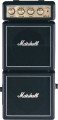 | 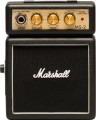 |
|---|---|---|
| Marshall MS4 | Marshall MS-2 | |
| Compare prices 3 | Compare prices 2 | |
| TOP sellers | ||
| Device type | combo amplifier | combo amplifier |
| Features | electric guitar | electric guitar |
| Type | transistor | transistor |
Specs | ||
| Power | 1 W | 1 W |
| Number of speakers | 2 | |
Effects and adjustments | ||
| Number of channels | 2 | 2 |
| Gain |  |  |
| Effects | Overdrive | Overdrive |
Connectors | ||
| Instrumental | 1 pc | 1 pc |
| Footswitch | 1 pc | |
| Headphones | Jack (6.35 mm) | |
General | ||
| Autonomous power supply | | |
| Dimensions | 250x110x60 mm | 150x120x60 mm |
| Color | ||
| Added to E-Catalog | january 2017 | january 2017 |



Compare Marshall MS4 and MS-2
Combo amplifiers Marshall MS4 and Marshall MS-2 have similar features, such as 1 W power and two channels (clean, overdrive). However, the MS4 has two speakers, which can provide a richer sound compared to the MS-2, which has only one speaker. The MS-2 also features a footswitch jack, which the MS4 lacks. Both devices have autonomous power, making them convenient for use outside the home. The MS4 is larger (250x110x60 mm) compared to the more compact MS-2 (150x120x60 mm), which might be an important factor for mobile musicians.
Price comparison
You may be interested in
Marshall MS4 often compared

Marshall MS-2 often compared


Glossary
Number of speakers
The number of speakers provided in the design of the device.
This parameter is indicated in cases where there is more than one speaker. Its meaning may vary. Thus, in some models several speakers are provided to be divided into frequency bands (see “Number of bands”); in this case, a small high-frequency emitter can be installed directly in front of the low-frequency one (the so-called coaxial circuit). In other devices, several speakers of the same type are used to provide the necessary sound power - for a number of reasons this is preferable to installing a single powerful speaker.
This parameter is indicated in cases where there is more than one speaker. Its meaning may vary. Thus, in some models several speakers are provided to be divided into frequency bands (see “Number of bands”); in this case, a small high-frequency emitter can be installed directly in front of the low-frequency one (the so-called coaxial circuit). In other devices, several speakers of the same type are used to provide the necessary sound power - for a number of reasons this is preferable to installing a single powerful speaker.
Gain
The presence in the amplifier of the regulator "Gain".
This control is responsible for adjusting the intensity of overdrive when using effects such as distortion or overdrive. Thanks to him, you can change the severity of these effects — from almost complete absence to pronounced distortion, which has little to do with a clean guitar sound.
This control is responsible for adjusting the intensity of overdrive when using effects such as distortion or overdrive. Thanks to him, you can change the severity of these effects — from almost complete absence to pronounced distortion, which has little to do with a clean guitar sound.
Footswitch
The number of connectors for connecting pedals (footswitch), provided in the design of the amplifier.
The pedal is the most convenient way to quickly change amp settings and can be used while playing the guitar. The specific functions "tied" to the pedal connectors can be different: in particular, various effects can be turned on and off in this way (see above). Also, in different models, the number of connectors for pedals may vary: in most “amps” there is only one such connector, however, there are devices that allow connection of several “foot switches” at once.
The pedal is the most convenient way to quickly change amp settings and can be used while playing the guitar. The specific functions "tied" to the pedal connectors can be different: in particular, various effects can be turned on and off in this way (see above). Also, in different models, the number of connectors for pedals may vary: in most “amps” there is only one such connector, however, there are devices that allow connection of several “foot switches” at once.
Headphones
The type of headphone output provided in the design of the amplifier.
Headphones will be useful especially in a situation where you can not make noise — for example, when practicing the guitar at a late time. And the options for their connection can be as follows:
— Mini-Jack (3.5 mm). Output for a standard 3.5 mm mini-Jack plug. This plug is equipped with most modern headphones, especially entry-level and mid-range. However, in terms of the quality and reliability of the connection, it is noticeably inferior to the larger Jack 6.35 mm (see below), so it is relatively rare in combo amplifiers.
— Jack (6.35 mm). The connector is quite large, designed mainly for stationary audio equipment. As the main connection method, it is rarely found among headphones, these are mainly professional models. At the same time, you can connect headphones with a 3.5 mm mini-Jack connector to such a jack using a simple adapter (in many “ears” such adapters are even included in the standard package); and the connection itself is tight, reliable and with a minimum of interference from the point of contact. Due to this, most "amps" use this type of connector.
Headphones will be useful especially in a situation where you can not make noise — for example, when practicing the guitar at a late time. And the options for their connection can be as follows:
— Mini-Jack (3.5 mm). Output for a standard 3.5 mm mini-Jack plug. This plug is equipped with most modern headphones, especially entry-level and mid-range. However, in terms of the quality and reliability of the connection, it is noticeably inferior to the larger Jack 6.35 mm (see below), so it is relatively rare in combo amplifiers.
— Jack (6.35 mm). The connector is quite large, designed mainly for stationary audio equipment. As the main connection method, it is rarely found among headphones, these are mainly professional models. At the same time, you can connect headphones with a 3.5 mm mini-Jack connector to such a jack using a simple adapter (in many “ears” such adapters are even included in the standard package); and the connection itself is tight, reliable and with a minimum of interference from the point of contact. Due to this, most "amps" use this type of connector.