
Comparison Cybex Eezy S Plus 2 vs Cybex Eezy S Plus
Add to comparison | 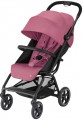 | 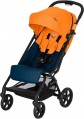 |
|---|---|---|
| Cybex Eezy S Plus 2 | Cybex Eezy S Plus | |
from £352.35 | Outdated Product | |
| TOP sellers | ||
Possibility of installing a car seat The Eezy S Plus model differs from the Eezy S in the presence of an adjustable footrest, larger wheels and an extended hood | ||
| Design | pushchairs | pushchairs |
| Type | single | single |
| Folding system | booklike type | booklike type |
Carrycot and walking unit | ||
| Backrest tilt adjustment |  | |
| Adjustable footrest | | |
| Bumper bar | |  |
| Harness type | 5-point | 5-point |
Frame and chassis | ||
| Depreciation | spring | spring |
| Number of wheels | 4 | 4 |
| Carrycot installation | | |
| Car seat installation | | |
| Handle type | classic | classic |
| Frame material | aluminum | aluminum |
Wheels | ||
| Swivel wheels | | |
| Lockable front wheels | | |
| Wheels | rubber solid | rubber solid |
| Wheels rim | plastic | plastic |
Delivery set | ||
| In box | seat unit shopping basket | seat unit shopping basket |
General | ||
| Max. weight | 22 kg | |
| Dimensions (unfolded) (LxWxH) | 82x45x105 cm | 81x45x105 cm |
| Chassis width | 45 cm | 45 cm |
| Dimensions (folded) (LxWxH) | 60x45x33 cm | 59x45x29 cm |
| Weight (complete) | 7.6 kg | 7 kg |
| Country of origin | Germany | Germany |
| Color | ||
| Added to E-Catalog | april 2022 | march 2019 |


Compare Cybex Eezy S Plus 2 and Eezy S Plus
You may be interested in
My comparisons
Cybex Eezy S Plus 2 often compared


Cybex Eezy S Plus often compared

Glossary
Bumper bar
A feature used in walking seat units where the child is sitting. The bumper bar is a horizontal handrail installed in front of the baby seat. The child can hold on to such a handrail; in addition, such a device reduces the risk of falling out of the stroller, and for additional security, the bumper bar can be supplemented with a crotch strap (see below). To make the stroller more convenient to store, transport and clean, the bumper bar is often made removable; in some models, it also serves as a carrying handle (see above).
Carrycot installation
The ability to install a carrycot on the pushchair — a characteristic basket in which the baby can lie comfortably.
Carrycots are used mainly for very young kids (up to 6 – 8 months), who can not yet sit normally in seat units. And the possibility of installing such an accessory by definition is available in all universal pushchairs (see "Design"). Also, the replacement of the seat unit on the carrycot can be provided in pushchair models. In fact, such pushchairs are also universal – but they are not initially equipped with carrycots, and therefore belong to the category of pushchairs.
Carrycots are used mainly for very young kids (up to 6 – 8 months), who can not yet sit normally in seat units. And the possibility of installing such an accessory by definition is available in all universal pushchairs (see "Design"). Also, the replacement of the seat unit on the carrycot can be provided in pushchair models. In fact, such pushchairs are also universal – but they are not initially equipped with carrycots, and therefore belong to the category of pushchairs.
Max. weight
Exceeding the recommended weight limit for pushchairs, though not immediately harmful, can eventually lead to breakdowns. Most universal pushchairs are designed for a 15 kg weight limit, suitable for a three-year-old kid. However, there are also more heavy duty pushchairs available, considering the varying weights of children and operating conditions.
Weight (complete)
The total weight of the assembled pushchair. For universal models (see "Design"), this paragraph usually indicates the weight with the seat unit installed: such an accessory is used for a longer time than the carrycot, therefore its characteristics are considered the most important. In addition, the difference in weight between cradles and walking blocks usually does not exceed 700 – 800 g (there are exceptions, but quite rarely).
Comparing similar models, a lighter pushchair may offer more convenience, but it often comes at the expense of reliability or a higher price compared to a relatively heavier counterpart. It's important to note that weight varies based on the pushchair type (refer to "Design"). Heavier pushchairs provide stability, reducing the risk of tipping over. The lightest models, weighing less than 5 kg, refer to pushchairs and single-seat ones. Models in the 6 – 10 kg are also mostly pushchairs, including variations for twins. The 11 – 15 kg range is standard for universal pushchairs and transformers. Models weighing 16 – 20 kg are notably heavy, while those exceeding 20 kg are rare and found among high-end double-seat pushchairs.
Comparing similar models, a lighter pushchair may offer more convenience, but it often comes at the expense of reliability or a higher price compared to a relatively heavier counterpart. It's important to note that weight varies based on the pushchair type (refer to "Design"). Heavier pushchairs provide stability, reducing the risk of tipping over. The lightest models, weighing less than 5 kg, refer to pushchairs and single-seat ones. Models in the 6 – 10 kg are also mostly pushchairs, including variations for twins. The 11 – 15 kg range is standard for universal pushchairs and transformers. Models weighing 16 – 20 kg are notably heavy, while those exceeding 20 kg are rare and found among high-end double-seat pushchairs.