
Comparison Aplus 1491 vs Edenberg EB-8020
Add to comparison | 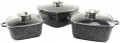 | 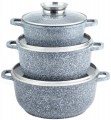 |
|---|---|---|
| Aplus 1491 | Edenberg EB-8020 | |
| Outdated Product | from £102.61 | |
| TOP sellers | ||
The lid handle has a built-in dispenser that is used to pour olive oil or wine. | The lid handle has a built-in dispenser that is used to pour olive oil or wine. | |
| Type | set of dishes | set of dishes |
| Main items | 3 | 3 |
| In box | 3 pots 3 lids | 3 pots 3 lids |
Specs | ||
| Size | 20 cm 24 cm 28 cm | 20 cm 24 cm 28 cm |
| Volume | 3.2 L 5.1 L 7.8 L | 2.6 L 4.6 L 6.7 L |
| Non-stick coating | stone (marble, granite) | stone (marble, granite) |
More features | ||
| Features | induction compatible seasoning funnel steam hole | induction compatible dishwasher compatible seasoning funnel steam hole |
| Material | aluminum | cast aluminum |
| Lid material | glass | glass |
| Handles | metal | metal |
| Country of origin | Ukraine | Poland |
| Color | ||
| Added to E-Catalog | june 2021 | april 2020 |


Compare Aplus 1491 and Edenberg EB-8020
You may be interested in
Edenberg EB-8020 often compared

Glossary
Volume
Working volume (capacity) of the pan. For sets (see "Type"), which include dishes of different sizes, values are given in this paragraph for all items.
A large volume allows you to cook a large amount of product at a time, but it affects the dimensions and weight of the pan. Therefore, the optimal capacity for different cases will also be different — depending on the amount of cooking and the type of dish. So, for classic pots, 3 – 4 L is considered a universal option: in such dishes it is convenient to cook soups and compotes for an average family. Models with a capacity of 2 – 3 liters are also popular — they are convenient for cooking side dishes, as well as small amounts of cooking (for 1 – 2 people). The smallest pans have a volume of less than 1 liter, they are suitable, in particular, for boiling eggs and heating milk. And the largest ones contain more than 10 liters, such dishes are designed mainly for catering and public events.
There are also more detailed recommendations on the choice of volume, including for other types of dishes — ladles, milk jugs, etc. (see "Type"); these recommendations can be found in special sources.
A large volume allows you to cook a large amount of product at a time, but it affects the dimensions and weight of the pan. Therefore, the optimal capacity for different cases will also be different — depending on the amount of cooking and the type of dish. So, for classic pots, 3 – 4 L is considered a universal option: in such dishes it is convenient to cook soups and compotes for an average family. Models with a capacity of 2 – 3 liters are also popular — they are convenient for cooking side dishes, as well as small amounts of cooking (for 1 – 2 people). The smallest pans have a volume of less than 1 liter, they are suitable, in particular, for boiling eggs and heating milk. And the largest ones contain more than 10 liters, such dishes are designed mainly for catering and public events.
There are also more detailed recommendations on the choice of volume, including for other types of dishes — ladles, milk jugs, etc. (see "Type"); these recommendations can be found in special sources.
Features
— Compatibility with Induction. Compatibility of a pot with induction-type electric heaters. Such heaters have specific requirements for cookware — in particular, the bottom must be flat and made of certain metals; therefore, it is best to use pots initially designed for induction.
— Dishwasher Safe. The ability to wash the pot in a dishwasher. Not all cookware is compatible with such machines due to size, material characteristics, etc.; therefore, if you plan to wash the pot in a dishwasher, it's worth ensuring compatibility separately.
— Oven Safe. The possibility of using the pot for cooking dishes in the oven — baking, simmering, etc. The main requirement in this case is resistance to high temperatures. Accordingly, pots with this feature should have metal handles (or removable handles if the handles are made of less heat-resistant materials). Non-stick coating is not a barrier to oven use, although some types require caution; see "Coating" for more details.
— Lid with Thermometer. The availability of a lid with an integrated sensor displaying the temperature inside the pot. Such a sensor facilitates monitoring the degree of product heating inside and, accordingly, helps adjust the cooking mode accurately. Drawbacks include incompatibility of such lids with ovens and, frequ...ently, dishwashers (see above). The price of pots with a thermometer increases accordingly. Note that if this function is not standardly provided, a corresponding size lid can be purchased separately.
— Rain Effect Lid. A special lid design that promotes uniform moisture distribution during cooking. It is equipped with indentations or grooves that collect condensed steam and cause it to drip back into the pot, creating a "rain" effect. This process helps keep dishes juicy, preventing them from drying out, and improves stewing by evenly distributing heat and moisture. This effect is particularly useful when cooking large pieces of meat, such as goose, as it contributes to tenderness and rich flavor.
— Spice Funnel. The presence of a spice funnel in the standard pot lid. This funnel is usually located in the center of the lid and combined with the handle. Its purpose is the even delivery of liquid seasonings (vinegar, wine, oil, etc.) into the dish being cooked: the liquid is poured into the funnel, from which it gradually drips into the pot through a small opening. Additionally, many such handle-funnels have a dual-purpose — their shape allows the lid to be placed handle down and used as a stand for hot dishes.
— Steam Vent. The presence of a steam vent in the pot lid. High steam pressure is good in pressure cookers (see "Type"), but under normal conditions, it is not always desirable, as it can lead to foam formation and product "overflow," with all the corresponding inconveniences — like stove contamination, or even extinguished gas. To avoid this, it's necessary to slightly open the lid, shifting it from the center of the pot. However, this creates another danger — the lid lies unsecured and may slip due to a misplaced position. A steam vent eliminates both inconveniences: the lid can securely remain in its designated place, yet excess pressure will still be released.
— Pouring Spout. The presence of a specific feature in the pot's design that facilitates the pouring of liquid from it. The term "spout" is quite conditional — typically, it refers to a spout or groove on the upper edge of the pot. Such a groove directs and narrows the flow of liquid, which is very useful when pouring into another container, especially if the container has a narrow neck (for example, when pouring freshly brewed compote into a bottle). In more advanced versions, there is a unique lid design: in the part of the lid opposite the spout, there are holes or a grid installed. This allows the lid to act as a strainer, letting liquid out of the pot while retaining other contents inside.
— Multi-layered Bottom. The presence of a multi-layered bottom in the pot's design. This feature is most often used in stainless steel models, occasionally in aluminium ones (see "Material"). Such a bottom usually consists of three layers: the outer and inner layers from the pot's primary material, with an intermediate layer made of another substance with higher thermal conductivity and capacity (e.g., copper). As a result, significantly faster and more even heating is ensured, and such cookware also cools down more slowly than single-layered ones.
— Capacity Scale. A special scale applied inside the pot, allowing a certain degree of accuracy in determining the volume of the contents. This feature is especially useful for those who like to cook in exact accordance with recipes.
— Removable Handles. The ability to detach the handle(s) from the pot. This feature has two main purposes. Firstly, it makes the cookware more compact, which is useful for storage and transportation. Secondly, this option is often crucial for using the cookware in an oven (see above): a long handle might simply not fit, and some materials (see "Handles") are not designed for oven use.
— Dishwasher Safe. The ability to wash the pot in a dishwasher. Not all cookware is compatible with such machines due to size, material characteristics, etc.; therefore, if you plan to wash the pot in a dishwasher, it's worth ensuring compatibility separately.
— Oven Safe. The possibility of using the pot for cooking dishes in the oven — baking, simmering, etc. The main requirement in this case is resistance to high temperatures. Accordingly, pots with this feature should have metal handles (or removable handles if the handles are made of less heat-resistant materials). Non-stick coating is not a barrier to oven use, although some types require caution; see "Coating" for more details.
— Lid with Thermometer. The availability of a lid with an integrated sensor displaying the temperature inside the pot. Such a sensor facilitates monitoring the degree of product heating inside and, accordingly, helps adjust the cooking mode accurately. Drawbacks include incompatibility of such lids with ovens and, frequ...ently, dishwashers (see above). The price of pots with a thermometer increases accordingly. Note that if this function is not standardly provided, a corresponding size lid can be purchased separately.
— Rain Effect Lid. A special lid design that promotes uniform moisture distribution during cooking. It is equipped with indentations or grooves that collect condensed steam and cause it to drip back into the pot, creating a "rain" effect. This process helps keep dishes juicy, preventing them from drying out, and improves stewing by evenly distributing heat and moisture. This effect is particularly useful when cooking large pieces of meat, such as goose, as it contributes to tenderness and rich flavor.
— Spice Funnel. The presence of a spice funnel in the standard pot lid. This funnel is usually located in the center of the lid and combined with the handle. Its purpose is the even delivery of liquid seasonings (vinegar, wine, oil, etc.) into the dish being cooked: the liquid is poured into the funnel, from which it gradually drips into the pot through a small opening. Additionally, many such handle-funnels have a dual-purpose — their shape allows the lid to be placed handle down and used as a stand for hot dishes.
— Steam Vent. The presence of a steam vent in the pot lid. High steam pressure is good in pressure cookers (see "Type"), but under normal conditions, it is not always desirable, as it can lead to foam formation and product "overflow," with all the corresponding inconveniences — like stove contamination, or even extinguished gas. To avoid this, it's necessary to slightly open the lid, shifting it from the center of the pot. However, this creates another danger — the lid lies unsecured and may slip due to a misplaced position. A steam vent eliminates both inconveniences: the lid can securely remain in its designated place, yet excess pressure will still be released.
— Pouring Spout. The presence of a specific feature in the pot's design that facilitates the pouring of liquid from it. The term "spout" is quite conditional — typically, it refers to a spout or groove on the upper edge of the pot. Such a groove directs and narrows the flow of liquid, which is very useful when pouring into another container, especially if the container has a narrow neck (for example, when pouring freshly brewed compote into a bottle). In more advanced versions, there is a unique lid design: in the part of the lid opposite the spout, there are holes or a grid installed. This allows the lid to act as a strainer, letting liquid out of the pot while retaining other contents inside.
— Multi-layered Bottom. The presence of a multi-layered bottom in the pot's design. This feature is most often used in stainless steel models, occasionally in aluminium ones (see "Material"). Such a bottom usually consists of three layers: the outer and inner layers from the pot's primary material, with an intermediate layer made of another substance with higher thermal conductivity and capacity (e.g., copper). As a result, significantly faster and more even heating is ensured, and such cookware also cools down more slowly than single-layered ones.
— Capacity Scale. A special scale applied inside the pot, allowing a certain degree of accuracy in determining the volume of the contents. This feature is especially useful for those who like to cook in exact accordance with recipes.
— Removable Handles. The ability to detach the handle(s) from the pot. This feature has two main purposes. Firstly, it makes the cookware more compact, which is useful for storage and transportation. Secondly, this option is often crucial for using the cookware in an oven (see above): a long handle might simply not fit, and some materials (see "Handles") are not designed for oven use.
Material
The following material options can be used in modern pans: aluminum, steel, cast iron, ceramics and copper. Learn more about each of them.
- Aluminum. A material familiar to many from Soviet-style pots; however, it does not lose popularity in our time. The advantages of aluminum are low weight, durability and good thermal conductivity, which ensures fast heating. Aluminum pans are well suited for vegetables and cereals; in addition, many consider this material the best choice for boiling milk: it practically does not burn during the process. At the same time, it is not recommended to cook products containing acids and alkalis (cabbage soup, jelly, compotes, etc.) in such dishes: with prolonged contact, aluminum reacts, which spoils the taste and leads to the formation of harmful substances. This material is also prone to scratches, and therefore you should not use hard brushes or abrasives when washing. If the wall thickness is small, you should also be careful with the temperature - deformation may occur if overheated.
- Steel. In the case of pans, stainless steel can be classified as a premium material: it is quite expensive, but strong, durable, heats evenly, cools fairly slowly, and most importantly, it is chemically inert and does not emit any harmful substances upon contact with foo...d. As a result, steel is very widely used in mid- and top-class models. Among the disadvantages, besides the price, it is worth noting the tendency to burn, which requires care when cooking.
- Cast iron. A kind of “kitchen classic”; It is relatively rare in pans, but continues to be used to this day. The advantages of cast iron are uniform heating, high heat capacity (such cookware retains heat for a long time) and resistance to overheating. Many consider this material ideal for “slow” cooking - stewing, simmering, etc. The large weight of cast iron can be considered both a disadvantage and an advantage - it provides stability on the stove. Obvious disadvantages are the tendency to rust (which requires careful care) and unsuitability for storing food - prolonged contact leads to oxidation and spoils the taste of the product. Additionally, cast iron pans are relatively fragile; however, this is partly compensated by the low cost of this material, and cast iron can only be split with a fairly strong blow.
- Ceramics. Ceramics based on fired clay or other similar materials. Such dishes conduct heat less well than metal ones, but they heat up very evenly and cool down slowly, making these pans ideal for “slow cooking” such as stewing and simmering. Ceramic pans are quite easy to clean; they allow the use of “harsh” detergents. Another advantage is that ceramics is chemically inert and does not affect the taste of food, even if it is stored in a pan for a long time. The main disadvantage of this material is its fragility: the pan can crack from a strong blow. Also, with ceramics, it is undesirable to allow sudden temperature changes - for example, placing heated dishes under cold water
- Copper. One of the key advantages of copper is its unusual appearance; thanks to the reddish-golden color, such dishes really look beautiful and stylish. On the practical side, this material is notable for its high thermal conductivity, thanks to which the pan heats up quickly and evenly - and this contributes to high-quality and quick cooking. Copper is not suitable for regular contact with food - this leads to oxidation and the appearance of harmful substances; however, this disadvantage is compensated for by the use of additional coatings (for example, tin or steel). But the clear disadvantage of this material is its high cost. In addition, the copper surface loses its shine literally after the first cooking, and to restore its appearance it must be washed manually with special products.
- Aluminum. A material familiar to many from Soviet-style pots; however, it does not lose popularity in our time. The advantages of aluminum are low weight, durability and good thermal conductivity, which ensures fast heating. Aluminum pans are well suited for vegetables and cereals; in addition, many consider this material the best choice for boiling milk: it practically does not burn during the process. At the same time, it is not recommended to cook products containing acids and alkalis (cabbage soup, jelly, compotes, etc.) in such dishes: with prolonged contact, aluminum reacts, which spoils the taste and leads to the formation of harmful substances. This material is also prone to scratches, and therefore you should not use hard brushes or abrasives when washing. If the wall thickness is small, you should also be careful with the temperature - deformation may occur if overheated.
- Steel. In the case of pans, stainless steel can be classified as a premium material: it is quite expensive, but strong, durable, heats evenly, cools fairly slowly, and most importantly, it is chemically inert and does not emit any harmful substances upon contact with foo...d. As a result, steel is very widely used in mid- and top-class models. Among the disadvantages, besides the price, it is worth noting the tendency to burn, which requires care when cooking.
- Cast iron. A kind of “kitchen classic”; It is relatively rare in pans, but continues to be used to this day. The advantages of cast iron are uniform heating, high heat capacity (such cookware retains heat for a long time) and resistance to overheating. Many consider this material ideal for “slow” cooking - stewing, simmering, etc. The large weight of cast iron can be considered both a disadvantage and an advantage - it provides stability on the stove. Obvious disadvantages are the tendency to rust (which requires careful care) and unsuitability for storing food - prolonged contact leads to oxidation and spoils the taste of the product. Additionally, cast iron pans are relatively fragile; however, this is partly compensated by the low cost of this material, and cast iron can only be split with a fairly strong blow.
- Ceramics. Ceramics based on fired clay or other similar materials. Such dishes conduct heat less well than metal ones, but they heat up very evenly and cool down slowly, making these pans ideal for “slow cooking” such as stewing and simmering. Ceramic pans are quite easy to clean; they allow the use of “harsh” detergents. Another advantage is that ceramics is chemically inert and does not affect the taste of food, even if it is stored in a pan for a long time. The main disadvantage of this material is its fragility: the pan can crack from a strong blow. Also, with ceramics, it is undesirable to allow sudden temperature changes - for example, placing heated dishes under cold water
- Copper. One of the key advantages of copper is its unusual appearance; thanks to the reddish-golden color, such dishes really look beautiful and stylish. On the practical side, this material is notable for its high thermal conductivity, thanks to which the pan heats up quickly and evenly - and this contributes to high-quality and quick cooking. Copper is not suitable for regular contact with food - this leads to oxidation and the appearance of harmful substances; however, this disadvantage is compensated for by the use of additional coatings (for example, tin or steel). But the clear disadvantage of this material is its high cost. In addition, the copper surface loses its shine literally after the first cooking, and to restore its appearance it must be washed manually with special products.
Country of origin
The country of origin of the brand under which the pan (or set) is marketed. Usually, it is indicated by the "homeland" of the manufacturing company or by the location of its headquarters.
There are many stereotypes associated with the “nationality” of brands and products, but most of them have no basis nowadays. First, the actual place of production is often different from the brand's country of origin. Secondly, the quality of the goods depends not so much on geography, but on the policy of a particular company and how carefully this very quality is controlled in it. Therefore, you should pay attention to the country of origin of the brand only if you fundamentally want or (do not want) to support a manufacturer from a certain state. Quality is best judged by the reputation of a particular brand and the general price category.
There are many stereotypes associated with the “nationality” of brands and products, but most of them have no basis nowadays. First, the actual place of production is often different from the brand's country of origin. Secondly, the quality of the goods depends not so much on geography, but on the policy of a particular company and how carefully this very quality is controlled in it. Therefore, you should pay attention to the country of origin of the brand only if you fundamentally want or (do not want) to support a manufacturer from a certain state. Quality is best judged by the reputation of a particular brand and the general price category.