
Comparison DJI Mini 2 SE vs DJI Mini 2
Add to comparison | 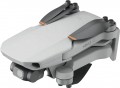 | 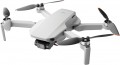 |
|---|---|---|
| DJI Mini 2 SE | DJI Mini 2 | |
from £344.47 | Compare prices 1 | |
| User reviews | ||
| TOP sellers | ||
Flight and video transmission range up to 10 km (according to FCC standard). Possibility to download the recorded video via Wi-Fi and quick editing in the application. Panorama shooting modes. Shooting in 2.7K 30 fps. The remote control supports smartphones up to 180x86x10 mm There is no "Follow me" mode. The main difference from the DJI Mini 2 is the maximum video resolution of 2.7K (instead of 4K). | Flight and video transmission range up to 10 km (in FCC mode). Possibility to download the recorded video via Wi-Fi and quick editing in the application. Panorama shooting modes. Shooting in 4K 30 fps. Compact and lightweight. MicroSD support up to 256 GB UHS-I Speed Class 3 and above. There is no "Follow me" mode. | |
Flight specs | ||
| Range of flight | 15.7 km | 15.7 km |
| Maximum flight time | 31 min | 31 min |
| Horizontal speed | 58 km/h | 58 km/h |
| Ascent / descent speed | 18 km/h | 18 km/h |
| Wind impedance | 11 m/s | 11 m/s |
Camera | ||
| Camera type | built-in | built-in |
| Matrix size | 1/2.3" | 1/2.3" |
| Aperture | f/2.8 | f/2.8 |
| Number of megapixels | 12 MP | 12 MP |
| Photo resolution | 4000x3000 px | 4000x3000 px |
| Full HD filming (1080p) | 1920x1080 px 60 fps | 1920x1080 px 60 fps |
| Quad HD filming | 2720x1530 px 30 fps | 2720x1530 px 30 fps |
| Ultra HD (4K) | 3840x2160 px 30 fps | |
| Viewing angles | 83° | 83° |
| Mechanical stabilizer suspension |  | |
| Camera with control | | |
| Live video streaming | | |
| Memory card slot | | |
Flight modes and sensors | ||
| Flight modes | return "home" Dronie (distance) Rocket (distance up) Orbit mode (flying in a circle) Helix (spiral flight) | return "home" Dronie (distance) Rocket (distance up) Orbit mode (flying in a circle) Helix (spiral flight) |
| Sensors | GPS module heights optic gyroscope | GPS module heights optic gyroscope |
| Obstacle sensors | bottom | bottom |
Control and transmitter | ||
| Control | remote control only | remote control only |
| Range | 6000 m | 6000 m |
| Control frequency | 2.4 and 5.8 GHz | 2.4 and 5.8 GHz |
| Video transmission frequency | 2.4 and 5.8 GHz (Wi-Fi) | 2.4 and 5.8 GHz (Wi-Fi) |
| Smartphone mount | | |
| Remote control power source | battery | battery |
Motor and chassis | ||
| Motor type | brushless | brushless |
| Number of screws | 4 pcs | 4 pcs |
| Foldable design | | |
Battery | ||
| Battery capacity | 2.25 Ah | 2.25 Ah |
| Voltage | 7.7 В | 7.7 В |
| Battery model | 2S | 2S |
| Batteries in the set | 1 pcs | 1 pcs |
General | ||
| Body backlight | | |
| Material | plastic | plastic |
| Dimensions | 289x245x56 mm | 289x245x56 mm |
| Dimensions (folded) | 138x81x58 mm | 138x81x58 mm |
| Weight | 246 g | 249 g |
| Color | ||
| Added to E-Catalog | february 2023 | november 2020 |


Compare DJI Mini 2 SE and Mini 2
Price comparison
You may be interested in
DJI Mini 2 SE often compared


DJI Mini 2 often compared


Glossary
Ultra HD (4K)
Maximum resolution and frame rate supported by the aircraft camera (built-in or bundled) when shooting in Ultra HD (4K)
UHD is a much more advanced video standard than Quad HD and even more so Full HD. Such a frame is approximately 2 times larger than a FullHD frame on each side and, accordingly, 4 times larger in terms of the total number of pixels. In this case, specific resolutions may be different; in copters, 3840x2160 and 4096x2160 are the most popular. Thus, shooting in this standard gives excellent detail; on the other hand, it puts forward rather high demands on the hardware of the camera and the amount of memory. Therefore, 4K support is an unmistakable sign of a high-end built-in camera. At the same time, we note that in modern drones you can also find more solid resolutions — see “Shooting above 4K”.
As for the actual frame rate, the higher it is, the smoother the video turns out, the less motion is blurred in the frame. On the other hand, the shooting speed directly affects the requirements for the power of the hardware and the volume of the finished files. In general, values up to 24 fps can be called minimal, from 24 to 30 fps — average, from 30 to 60 fps — above average, and a speed of 60 fps already allows us to talk about high-speed shooting UltraHD. However for full-fledged high-speed shooting, which allows you to create slow-motion videos, an even higher frame rate...is desirable, which is not yet found in copter cameras; however, modern technologies are developing rapidly, and the situation may change in the near future.
UHD is a much more advanced video standard than Quad HD and even more so Full HD. Such a frame is approximately 2 times larger than a FullHD frame on each side and, accordingly, 4 times larger in terms of the total number of pixels. In this case, specific resolutions may be different; in copters, 3840x2160 and 4096x2160 are the most popular. Thus, shooting in this standard gives excellent detail; on the other hand, it puts forward rather high demands on the hardware of the camera and the amount of memory. Therefore, 4K support is an unmistakable sign of a high-end built-in camera. At the same time, we note that in modern drones you can also find more solid resolutions — see “Shooting above 4K”.
As for the actual frame rate, the higher it is, the smoother the video turns out, the less motion is blurred in the frame. On the other hand, the shooting speed directly affects the requirements for the power of the hardware and the volume of the finished files. In general, values up to 24 fps can be called minimal, from 24 to 30 fps — average, from 30 to 60 fps — above average, and a speed of 60 fps already allows us to talk about high-speed shooting UltraHD. However for full-fledged high-speed shooting, which allows you to create slow-motion videos, an even higher frame rate...is desirable, which is not yet found in copter cameras; however, modern technologies are developing rapidly, and the situation may change in the near future.