
Comparison ZTE MF920 vs Huawei E8372
Add to comparison | 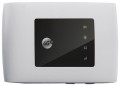 | 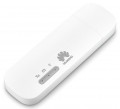 |
|---|---|---|
| ZTE MF920 | Huawei E8372 | |
| Compare prices 7 | from £54.99 | |
| User reviews | ||
| TOP sellers | ||
Works as a USB tethering and Wi-Fi hotspot. Support for up to 10 connected devices. Slot for microSD memory card. Functional mobile application. Two connectors for connecting external antennas. Powered by USB only. | ||
| Device type | portable router | USB modem |
| Wi-Fi | ||
| Connected devices, up to | 32 | 10 |
Connection | ||
| Communication generation | 2G 3G 4G (LTE) | 2G 3G 4G (LTE) |
| 4G (LTE) | Cat.4 (150/50 Mbps) | Cat.4 (150/50 Mbps) |
| Transmission technology | GPRS EDGE W-CDMA HSUPA HSDPA HSPA+ LTE | GPRS EDGE W-CDMA HSUPA HSDPA HSPA+ LTE |
| Ports | microUSB | USB |
Features | ||
| External antenna connector |  |  |
| MIMO antenna connection | | |
| Memory card slot | | |
| SIM card slot | | |
| Display | | |
General | ||
| Built-in battery | | |
| Battery capacity | 2000 mAh | |
| Operating time (internet browsing) | 6 h | |
| Operating time (standby) | 120 h | |
| Dimensions | 107.5x63.7x14.8 mm | 94x30x14 mm |
| Weight | 40 g | |
| Added to E-Catalog | may 2016 | august 2015 |





Compare ZTE MF920 and Huawei E8372
Price comparison
You may be interested in
ZTE MF920 often compared


Huawei E8372 often compared


Glossary
Device type
— USB modem. Modems in the form factor of a USB stick that is connected to a computer, laptop or other devices via an unoccupied USB port. These can be either the simplest devices for servicing one client device (to which the modem is directly connected), or more advanced models with support for Wi-Fi networks and the ability to wirelessly distribute the Internet to several gadgets. To access the World Wide Web, USB modems provide a slot for a SIM card.
— Portable router. Mobile routers for Internet access, necessarily with a built-in Wi-Fi module. Wi-Fi modems are capable of simultaneously working with several connected devices; in addition, they are battery-powered and can be used completely autonomously - without the need to connect to a computer and an outlet. It is advisable to use portable routers in cases where a fixed connection to the Internet is difficult or completely absent (at the dacha, outdoor recreation, as backup equipment for accessing the global network).
— Portable router. Mobile routers for Internet access, necessarily with a built-in Wi-Fi module. Wi-Fi modems are capable of simultaneously working with several connected devices; in addition, they are battery-powered and can be used completely autonomously - without the need to connect to a computer and an outlet. It is advisable to use portable routers in cases where a fixed connection to the Internet is difficult or completely absent (at the dacha, outdoor recreation, as backup equipment for accessing the global network).
Connected devices, up to
The largest number of devices that can be simultaneously connected to the modem via Wi-Fi (see "Connection").
The presence of this limitation is due to the fact that processing network requests from several devices at once requires a fairly large amount of computing resources, and there are not so many of them in miniature electronics like wireless modems. However, even inexpensive models can support about 5 – 6 devices, which is more than enough for most cases; and in more advanced modems, this number can reach 10.
The presence of this limitation is due to the fact that processing network requests from several devices at once requires a fairly large amount of computing resources, and there are not so many of them in miniature electronics like wireless modems. However, even inexpensive models can support about 5 – 6 devices, which is more than enough for most cases; and in more advanced modems, this number can reach 10.
Ports
— USB plug. The presence in the design of the modem of its own USB plug, which allows you to connect the device to a computer directly. Such a connection provides a device with a USB port with Internet access, and the power necessary for the operation of the modem is also supplied via USB.
— microUSB. A smaller version of the USB connector (see above), used primarily in Wi-Fi modems (see "Type") that can work autonomously and do not require a constant connection to another device. At the same time, in 3G/4G modems, microUSB usually looks like a socket, not a plug, and a special cable is used to connect. This interface usually plays the role of a general-purpose service connector: the battery is charged through it, and it is also connected to a PC or other device to manage settings, update firmware, etc.
— USB. Wired interface, the most common and universal modern standard used to connect peripheral equipment to various electronic devices, ranging from computers to smartphones and even wireless modems. In this case, the full-size version of the USB connector is meant. It is usually installed in classic modems (see "Type") and has the form of a plug, with which the modem is connected to a control device (PC, laptop, tablet, etc.). Power is usually supplied through the same connector.
— USB-C.... Connector, in its functional features similar to the paragraph above. With the exception of the symmetrical form factor and the use of more modern technologies.
— LAN (RJ45). Classic wired connection via a cable with an RJ-45 connector. Also known as "LAN". Nowadays, it is one of the most common methods of wired Internet connection, and is also widely used in local networks. With it, you can connect a laptop or PC directly to the modem via a cable and not bother with a Wi-Fi connection. In addition, such a connection can be faster (depending on the speed of the LAN).
— ExpressCard. A connection interface mainly used in laptops. Peripheral devices of this standard, including wireless modems, have the form of cards, when connected, they are installed in a special slot in the device. It should be taken into account that there are two ExpressCard form factors — 54 mm and 34 mm, and 34 mm cards can be used without restrictions with 54 mm slots, but not vice versa. Therefore, when choosing such a modem, it is worth clarifying the correspondence of its form factor to the planned slot. However, this standard is gradually disappearing from the scene, being replaced by more advanced interfaces — in particular, USB 3.0.
— microUSB. A smaller version of the USB connector (see above), used primarily in Wi-Fi modems (see "Type") that can work autonomously and do not require a constant connection to another device. At the same time, in 3G/4G modems, microUSB usually looks like a socket, not a plug, and a special cable is used to connect. This interface usually plays the role of a general-purpose service connector: the battery is charged through it, and it is also connected to a PC or other device to manage settings, update firmware, etc.
— USB. Wired interface, the most common and universal modern standard used to connect peripheral equipment to various electronic devices, ranging from computers to smartphones and even wireless modems. In this case, the full-size version of the USB connector is meant. It is usually installed in classic modems (see "Type") and has the form of a plug, with which the modem is connected to a control device (PC, laptop, tablet, etc.). Power is usually supplied through the same connector.
— USB-C.... Connector, in its functional features similar to the paragraph above. With the exception of the symmetrical form factor and the use of more modern technologies.
— LAN (RJ45). Classic wired connection via a cable with an RJ-45 connector. Also known as "LAN". Nowadays, it is one of the most common methods of wired Internet connection, and is also widely used in local networks. With it, you can connect a laptop or PC directly to the modem via a cable and not bother with a Wi-Fi connection. In addition, such a connection can be faster (depending on the speed of the LAN).
— ExpressCard. A connection interface mainly used in laptops. Peripheral devices of this standard, including wireless modems, have the form of cards, when connected, they are installed in a special slot in the device. It should be taken into account that there are two ExpressCard form factors — 54 mm and 34 mm, and 34 mm cards can be used without restrictions with 54 mm slots, but not vice versa. Therefore, when choosing such a modem, it is worth clarifying the correspondence of its form factor to the planned slot. However, this standard is gradually disappearing from the scene, being replaced by more advanced interfaces — in particular, USB 3.0.
External antenna connector
The presence of a connector for an external removable antenna in the modem design. The meaning of all external antennas is described above; here we note that the connector makes it possible to use rather large antennas with the modem, which significantly exceed the capabilities of stock antennas (both internal and external non-removable ones). In addition, the user can choose the antenna at his discretion.
MIMO antenna connection
The ability to connect the MIMO antenna (the antenna itself, usually, must be purchased separately).
MIMO technology is used in Wi-Fi communications, as well as in 4G LTE networks (starting with Cat.2). Its general principle is to split the transmitted signal into several transmitting and receiving antennas; at the same time, each of the transmitting antennas broadcasts a signal to all receiving antennas at once (or at least to several of them). This format of operation allows more efficient use of the frequency range, increases the actual data transfer rate, and also increases resistance to interference. But antennas for MIMO are rather bulky, in the case of modems it is difficult to make them built-in; and such feature is required not so often. Therefore, separate external antennas are used to work with this technology.
Note that even in portable Wi-Fi hotspots (see "Type"), this feature is used exclusively for 4G/LTE; Wi-Fi connection is provided by built-in antennas.
MIMO technology is used in Wi-Fi communications, as well as in 4G LTE networks (starting with Cat.2). Its general principle is to split the transmitted signal into several transmitting and receiving antennas; at the same time, each of the transmitting antennas broadcasts a signal to all receiving antennas at once (or at least to several of them). This format of operation allows more efficient use of the frequency range, increases the actual data transfer rate, and also increases resistance to interference. But antennas for MIMO are rather bulky, in the case of modems it is difficult to make them built-in; and such feature is required not so often. Therefore, separate external antennas are used to work with this technology.
Note that even in portable Wi-Fi hotspots (see "Type"), this feature is used exclusively for 4G/LTE; Wi-Fi connection is provided by built-in antennas.
Memory card slot
The presence of a slot for memory card in the design of the modem. Memory cards are very popular in modern electronics as removable storage media; in wireless modems, there are two main options for working with them. The first one provides use as an external card reader, for exchanging information between the card and the device to which the modem is connected via USB (see below); Simply put, installing a card turns the modem into a "flash drive" with removable storage. And in models with Wi-Fi (see "Type"), it may also be possible to work as a server that provides access to the contents of the memory card to all wireless devices connected to the modem. As for the types of cards, the most common support for the microSD standard is that they are small enough to be easily combined with compact wireless modem cases. Note that even within the same standard of memory cards there are several varieties, and before buying it's worth to clarify which of them the device is compatible with.
Display
The presence of a display in the design of the modem. Even the simplest screens used in modern modems are very versatile and capable of displaying almost any service information about the operation of the device (and sometimes not only purely service information). Due to this, this feature provides much more opportunities to inform the user than various indicators. At the same time, we note that this feature is found only in Wi-Fi modems (see above) designed for stand-alone use. This is due to the fact that in models that are connected to another device via USB, the screen of the external device is used for displaying this information, and it simply does not make sense to equip the modem with its own display.
Built-in battery
The presence of a built-in battery in the modem. Relevant for models with Wi-Fi support. Such modems are designed to be used as stand-alone equipment and do not require a wired connection to a control or power device such as a PC or laptop. This ensures maximum mobility. On the other hand, the battery charge is not infinite: it usually lasts for several hours (see paragraphs about the operating time in different modes), after which the battery still needs to be charged. In addition, the presence of built-in batteries significantly affects the dimensions, weight, and most importantly, the price of modems.
Battery capacity
The capacity of the battery installed in the modem with the corresponding type of power supply (see below).
The higher the capacity, the longer the battery is able to work without recharging, all other things being equal. However, note that the situation of "other things being equal" is almost not found in modern wireless modems. First, different data transmission technologies (see above) have different power consumption; secondly, even models supporting the same standards can differ in power consumption (and battery life) due to design differences. Therefore, this indicator in most cases is purely reference information, and even very similar models can only be compared approximately. When choosing, it is worth focusing primarily on the claimed specs of the battery life (see below).
The higher the capacity, the longer the battery is able to work without recharging, all other things being equal. However, note that the situation of "other things being equal" is almost not found in modern wireless modems. First, different data transmission technologies (see above) have different power consumption; secondly, even models supporting the same standards can differ in power consumption (and battery life) due to design differences. Therefore, this indicator in most cases is purely reference information, and even very similar models can only be compared approximately. When choosing, it is worth focusing primarily on the claimed specs of the battery life (see below).