
Comparison Huawei E8372 vs Huawei EC315
Add to comparison | 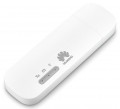 | 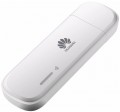 |
|---|---|---|
| Huawei E8372 | Huawei EC315 | |
from £54.99 | from $41.40 up to $64.92 | |
| User reviews | ||
| TOP sellers | ||
Works as a USB tethering and Wi-Fi hotspot. Support for up to 10 connected devices. Slot for microSD memory card. Functional mobile application. Two connectors for connecting external antennas. Powered by USB only. | ||
| Device type | USB modem | USB modem |
| Wi-Fi | Wi-Fi 3 (802.11g) | |
| Connected devices, up to | 10 | 5 |
| Effective range | 10 m | |
Connection | ||
| Communication generation | 2G 3G 4G (LTE) | 3G |
| 4G (LTE) | Cat.4 (150/50 Mbps) | |
| Transmission technology | GPRS EDGE W-CDMA HSUPA HSDPA HSPA+ LTE | |
| Ports | USB | USB |
Features | ||
| External antenna connector |  | |
| MIMO antenna connection | |  |
| Memory card slot | | |
| SIM card slot | | |
| R-UIM card slot | | |
General | ||
| Dimensions | 94x30x14 mm | 90.6x28.6x12.6 mm |
| Weight | 40 g | 50 g |
| Added to E-Catalog | august 2015 | january 2015 |


Compare Huawei E8372 and EC315
You may be interested in
Huawei E8372 often compared


Huawei EC315 often compared


Glossary
Wi-Fi
Wi-Fi generation and frequency bands over which the modem shares mobile internet. The 2.4 GHz frequency provides greater range and penetrates walls better, 5 GHz usually offers higher speeds and less interference, while 6 GHz provides additional free channels but requires compatible devices and penetrates obstacles less effectively. At the same time, newer Wi-Fi does not speed up the mobile network itself: the final speed also depends on the modem’s capabilities, the operator’s coverage, and the connected equipment.
— Wi-Fi 3 (802.11g). An outdated standard operating in the 2.4 GHz band with a theoretical speed of up to 54 Mbps. Suitable for basic internet access, but it can noticeably limit the speed of a modern LTE connection.
— Wi-Fi 4 (2.4 GHz). A widespread 802.11n standard with good range and broad compatibility. Suitable for everyday use, although the single 2.4 GHz band is more susceptible to interference and may limit the capabilities of fast LTE or 5G.
— Wi-Fi 5 (2.4 + 5 GHz). A dual-band option that allows 2.4 GHz to be used for better coverage or 5 GHz for higher speeds and less congested spectrum. This is a balanced solution for home use, travel, and connecting multiple devices simultaneously.
— Wi-Fi 6 (2.4 + 5 GHz). A modern 802.11ax standard that distributes traffic among connected devices more efficiently and operates...more stably under load. Well suited for sharing fast LTE or 5G with several smartphones, laptops, and other equipment.
— Wi-Fi 6 (2.4 GHz). A version of Wi-Fi 6 operating exclusively on the 2.4 GHz frequency. It combines modern traffic management mechanisms with good coverage range, but falls short of dual-band models in speed and resistance to interference.
— Wi-Fi 6E (2.4 + 5 + 6 GHz). A tri-band evolution of Wi-Fi 6 with the additional 6 GHz frequency, where there is usually less interference and more free channels are available. The benefits of the new band are realized only with compatible equipment, while other devices connect via 2.4 or 5 GHz.
— Wi-Fi 7 (2.4 + 5 GHz). The latest generation of wireless communication without support for the 6 GHz band. It provides more efficient data transmission and can use several bands simultaneously, but does not support the widest 320 MHz channels available to tri-band models.
— Wi-Fi 7 (2.4 + 5 + 6 GHz). A tri-band version of Wi-Fi 7 designed for maximum throughput and minimal latency. When supported by the modem and connected device, it can use several bands simultaneously and channels up to 320 MHz wide in the 6 GHz frequency.
— Wi-Fi 3 (802.11g). An outdated standard operating in the 2.4 GHz band with a theoretical speed of up to 54 Mbps. Suitable for basic internet access, but it can noticeably limit the speed of a modern LTE connection.
— Wi-Fi 4 (2.4 GHz). A widespread 802.11n standard with good range and broad compatibility. Suitable for everyday use, although the single 2.4 GHz band is more susceptible to interference and may limit the capabilities of fast LTE or 5G.
— Wi-Fi 5 (2.4 + 5 GHz). A dual-band option that allows 2.4 GHz to be used for better coverage or 5 GHz for higher speeds and less congested spectrum. This is a balanced solution for home use, travel, and connecting multiple devices simultaneously.
— Wi-Fi 6 (2.4 + 5 GHz). A modern 802.11ax standard that distributes traffic among connected devices more efficiently and operates...more stably under load. Well suited for sharing fast LTE or 5G with several smartphones, laptops, and other equipment.
— Wi-Fi 6 (2.4 GHz). A version of Wi-Fi 6 operating exclusively on the 2.4 GHz frequency. It combines modern traffic management mechanisms with good coverage range, but falls short of dual-band models in speed and resistance to interference.
— Wi-Fi 6E (2.4 + 5 + 6 GHz). A tri-band evolution of Wi-Fi 6 with the additional 6 GHz frequency, where there is usually less interference and more free channels are available. The benefits of the new band are realized only with compatible equipment, while other devices connect via 2.4 or 5 GHz.
— Wi-Fi 7 (2.4 + 5 GHz). The latest generation of wireless communication without support for the 6 GHz band. It provides more efficient data transmission and can use several bands simultaneously, but does not support the widest 320 MHz channels available to tri-band models.
— Wi-Fi 7 (2.4 + 5 + 6 GHz). A tri-band version of Wi-Fi 7 designed for maximum throughput and minimal latency. When supported by the modem and connected device, it can use several bands simultaneously and channels up to 320 MHz wide in the 6 GHz frequency.
Connected devices, up to
The largest number of devices that can be simultaneously connected to the modem via Wi-Fi (see "Connection").
The presence of this limitation is due to the fact that processing network requests from several devices at once requires a fairly large amount of computing resources, and there are not so many of them in miniature electronics like wireless modems. However, even inexpensive models can support about 5 – 6 devices, which is more than enough for most cases; and in more advanced modems, this number can reach 10.
The presence of this limitation is due to the fact that processing network requests from several devices at once requires a fairly large amount of computing resources, and there are not so many of them in miniature electronics like wireless modems. However, even inexpensive models can support about 5 – 6 devices, which is more than enough for most cases; and in more advanced modems, this number can reach 10.
Effective range
The greatest distance at which the modem's built-in router is capable of providing communication via the Wi-Fi interface (see "Connection").
It should be taken into account that in fact the range strongly depends on a number of factors that are not related to the main specs of the modem: the presence of interference and obstacles in the signal path, the specs of the Wi-Fi module of the connected device, the battery charge in this device or the modem itself, etc. Therefore, the actual range indicators can be noticeably lower than the claimed ones: for example, when working through a wall, they are noticeably reduced. However, this spec quite clearly describes the overall range of the device, and comparisons of different models on it are quite acceptable.
Also note that it does not always make sense to purchase a device with a maximum range — although a long range provides additional convenience, it requires high transmitter power, which significantly increases the size and price of the modem. Therefore, when choosing, it is worth proceeding primarily from the intended scenarios of use. For example, if you need a 3G connection to access the Internet on the road from your tablet, a range of several metres will be enough. But for installation in a large private house, it makes sense to look for a model with increased effective range.
It should be taken into account that in fact the range strongly depends on a number of factors that are not related to the main specs of the modem: the presence of interference and obstacles in the signal path, the specs of the Wi-Fi module of the connected device, the battery charge in this device or the modem itself, etc. Therefore, the actual range indicators can be noticeably lower than the claimed ones: for example, when working through a wall, they are noticeably reduced. However, this spec quite clearly describes the overall range of the device, and comparisons of different models on it are quite acceptable.
Also note that it does not always make sense to purchase a device with a maximum range — although a long range provides additional convenience, it requires high transmitter power, which significantly increases the size and price of the modem. Therefore, when choosing, it is worth proceeding primarily from the intended scenarios of use. For example, if you need a 3G connection to access the Internet on the road from your tablet, a range of several metres will be enough. But for installation in a large private house, it makes sense to look for a model with increased effective range.
Communication generation
The generation(s) of mobile networks supported by the modem.
Note that this spec is rather conditional and generalized, since one generation usually includes several data transmission technologies (see below), and the set of these technologies may vary in different mobile networks and in different modems. Therefore, it is possible to evaluate the compatibility of a device with a specific cellular network using this parameter only approximately. Nevertheless, generation data may well come in handy at the preliminary selection stage: they allow you to at least select the generation you are interested in and then search further among models that are compatible with it.
As for specific generations, today they are as follows:
— 2g. Communication standards of the second generation implemented through mobile networks of the GSM standard. Support GPRS and EDGE transmission technologies. Due to low bandwidth, today they are considered obsolete and are gradually being replaced by the next generations of communication. However, this process is uneven, and in some countries 2G is still the main mobile standard (although everything is moving towards changing this situation). Also note that even the introduction of newer standards does not mean the replacement of GSM — many operators keep this technology as a spare and intended for the simplest mobile phone models. Actually, the second generation in its pure form is pract...ically never found in cellular modems — it complements more advanced standards.
— 3G. Communication technologies of the third generation. Includes W-CDMA, HSUPA, HSDPA, and HSPA+ technologies, and in CDMA networks, EV-DO Rev.A and Rev.B. Significantly outperforms second-generation standards in terms of both pure throughput and additional features. And the data transfer speed itself can be comparable to that of a fixed wired Internet connection, which allows you not only to comfortably browse the web, but also use video calls, listen to streaming audio, etc. However, in fact, the quality of communication depends both on the specific technologies used, on the signal level, and the workload of base stations, etc.
— 4G. The fourth generation of communication, the most advanced to date. It includes WiMAX and LTE technologies, which significantly exceed not only 3G standards in terms of data transfer speed, but also the usual fixed wired Internet connection via Ethernet. However such a connection is not cheap.
Note that this spec is rather conditional and generalized, since one generation usually includes several data transmission technologies (see below), and the set of these technologies may vary in different mobile networks and in different modems. Therefore, it is possible to evaluate the compatibility of a device with a specific cellular network using this parameter only approximately. Nevertheless, generation data may well come in handy at the preliminary selection stage: they allow you to at least select the generation you are interested in and then search further among models that are compatible with it.
As for specific generations, today they are as follows:
— 2g. Communication standards of the second generation implemented through mobile networks of the GSM standard. Support GPRS and EDGE transmission technologies. Due to low bandwidth, today they are considered obsolete and are gradually being replaced by the next generations of communication. However, this process is uneven, and in some countries 2G is still the main mobile standard (although everything is moving towards changing this situation). Also note that even the introduction of newer standards does not mean the replacement of GSM — many operators keep this technology as a spare and intended for the simplest mobile phone models. Actually, the second generation in its pure form is pract...ically never found in cellular modems — it complements more advanced standards.
— 3G. Communication technologies of the third generation. Includes W-CDMA, HSUPA, HSDPA, and HSPA+ technologies, and in CDMA networks, EV-DO Rev.A and Rev.B. Significantly outperforms second-generation standards in terms of both pure throughput and additional features. And the data transfer speed itself can be comparable to that of a fixed wired Internet connection, which allows you not only to comfortably browse the web, but also use video calls, listen to streaming audio, etc. However, in fact, the quality of communication depends both on the specific technologies used, on the signal level, and the workload of base stations, etc.
— 4G. The fourth generation of communication, the most advanced to date. It includes WiMAX and LTE technologies, which significantly exceed not only 3G standards in terms of data transfer speed, but also the usual fixed wired Internet connection via Ethernet. However such a connection is not cheap.
4G (LTE)
The 4G (LTE) mobile connection speed supported by the modem.
All modern LTE equipment is assigned one or another category (Cat.3, Cat.4, Cat.6, Cat.7, Cat.9, Cat.12, Cat.13, Cat.16, Cat.18, Cat.19, Cat.20, Cat.22), on which the transmission speed directly depends. This paragraph specifies both this category and specific speed indicators, moreover, in two parameters — for reception and for transmission. The transmission speed is always much lower, but given the specifics of mobile Internet access, this is usually not critical.
Note that equipment with different speed categories will be quite compatible with each other, however, the throughput will be limited by the capabilities of the slower device. It is also worth saying that this paragraph indicates the theoretical maximum; practical amounts can be noticeably lower (depending on the quality of the network coverage and the features of specific electronics). However, a modem with a higher speed category will perform faster in fact.
All modern LTE equipment is assigned one or another category (Cat.3, Cat.4, Cat.6, Cat.7, Cat.9, Cat.12, Cat.13, Cat.16, Cat.18, Cat.19, Cat.20, Cat.22), on which the transmission speed directly depends. This paragraph specifies both this category and specific speed indicators, moreover, in two parameters — for reception and for transmission. The transmission speed is always much lower, but given the specifics of mobile Internet access, this is usually not critical.
Note that equipment with different speed categories will be quite compatible with each other, however, the throughput will be limited by the capabilities of the slower device. It is also worth saying that this paragraph indicates the theoretical maximum; practical amounts can be noticeably lower (depending on the quality of the network coverage and the features of specific electronics). However, a modem with a higher speed category will perform faster in fact.
Transmission technology
Data transfer technologies supported by the modem.
— GPRS. The oldest communication technology in use today. It was developed as a standard for GSM cellular networks, allowing data to be transmitted in parallel with voice communications and text messages, as well as charging network access by the amount of data transmitted, and not by connection time (as in the previous CSD standard). At the time of its creation, it was very progressive, but now it is considered completely obsolete and is used only in cases where more advanced standards cannot be used.
— EDGE. A technology created as a modification of the GPRS described above, which would increase the channel throughput and improve communication reliability. Otherwise, this standard is completely similar to GPRS in terms of its main practical features.
— W-CDMA. One of the early third generation ( 3G) communication standards. Used in UMTS networks. One of the main advantages of such networks is the ability to build networks based on the existing GSM infrastructure. Therefore, UMTS, and specifically W-CDMA, is being used by many mobile operators in the early stages of their transition from 2G to 3G.
— HSUPA. Third generation (3G) communication technology, an evolution of W-CDMA described above. The name stands for "Hi...gh-Speed Uplink Packet Access" — high-speed packet data transmission in the "from the subscriber" direction. This, in fact, describes the purpose of this technology: it increases the speed of data transfer from the modem to the base station, which can be useful for some specific tasks — for example, video communications.
— HSDPA. Further, after HSUPA, improvement of the W-CDMA standard (see above). It belongs to third generation (3G) networks, but is considered an “extended” standard, which is why HSUPA-enabled networks can be referred to as 3.5G, 3G+, etc. The name itself — "High-Speed Downlink Packet Access" — translates as "high-speed packet data transmission from the base station to the device."
— HSPA+. Today's most advanced third-generation communication standard based on UMTS networks (W-CDMA). Thanks to a number of improvements, it allows to achieve higher speeds than the options described above, approaching fourth-generation networks in terms of capabilities; therefore, sometimes conventionally referred to as 3.75G.
— WiMAX. Initially, WiMAX was created in two versions — "mobile" and "stationary"; the vast majority of modern cellular modems use the second option. It belongs to the fourth generation standards — 4G (whereas "mobile" was a competitor to 3G technologies, although sometimes it is also referred to as a 4th generation connection for marketing purposes). Some time ago, WiMAX was actively promoted as an alternative to wired broadband Internet connection (in particular, as the best option for areas, where it is difficult to reach the cable). However, now this standard is gradually losing popularity — in particular, in connection with the development and promotion of a more advanced LTE (which also does not have a division into "mobile" and "stationary" varieties).
— LTE (up to 173 Mbps). The fourth generation cellular communication standard, the most popular 4G technology today — in particular, due to the fact that it is a further development of W-CDMA/UMTS and can be implemented by improving existing networks (both UMTS and CDMA2000). Another reason for the popularity is the same convenience for both stationary and mobile equipment. On the other hand, when choosing a modem of this standard, you should keep in mind that LTE bands and channels may differ in different countries, so the support of this technology does not guarantee compatibility with a particular network. It should also be taken into account that in some countries LTE networks are only at the deployment stage, and in some they are not available at all.
When evaluating the capabilities of a modem, note that the speed values given for each technology are the maximum, which in fact is achievable only under perfect conditions. The actual values of the speed, usually, are lower than the potential ones; they may depend both on the specs of the network, signal strength and other technical issues, and on the policy of the operator and the conditions of a particular tariff.
— GPRS. The oldest communication technology in use today. It was developed as a standard for GSM cellular networks, allowing data to be transmitted in parallel with voice communications and text messages, as well as charging network access by the amount of data transmitted, and not by connection time (as in the previous CSD standard). At the time of its creation, it was very progressive, but now it is considered completely obsolete and is used only in cases where more advanced standards cannot be used.
— EDGE. A technology created as a modification of the GPRS described above, which would increase the channel throughput and improve communication reliability. Otherwise, this standard is completely similar to GPRS in terms of its main practical features.
— W-CDMA. One of the early third generation ( 3G) communication standards. Used in UMTS networks. One of the main advantages of such networks is the ability to build networks based on the existing GSM infrastructure. Therefore, UMTS, and specifically W-CDMA, is being used by many mobile operators in the early stages of their transition from 2G to 3G.
— HSUPA. Third generation (3G) communication technology, an evolution of W-CDMA described above. The name stands for "Hi...gh-Speed Uplink Packet Access" — high-speed packet data transmission in the "from the subscriber" direction. This, in fact, describes the purpose of this technology: it increases the speed of data transfer from the modem to the base station, which can be useful for some specific tasks — for example, video communications.
— HSDPA. Further, after HSUPA, improvement of the W-CDMA standard (see above). It belongs to third generation (3G) networks, but is considered an “extended” standard, which is why HSUPA-enabled networks can be referred to as 3.5G, 3G+, etc. The name itself — "High-Speed Downlink Packet Access" — translates as "high-speed packet data transmission from the base station to the device."
— HSPA+. Today's most advanced third-generation communication standard based on UMTS networks (W-CDMA). Thanks to a number of improvements, it allows to achieve higher speeds than the options described above, approaching fourth-generation networks in terms of capabilities; therefore, sometimes conventionally referred to as 3.75G.
— WiMAX. Initially, WiMAX was created in two versions — "mobile" and "stationary"; the vast majority of modern cellular modems use the second option. It belongs to the fourth generation standards — 4G (whereas "mobile" was a competitor to 3G technologies, although sometimes it is also referred to as a 4th generation connection for marketing purposes). Some time ago, WiMAX was actively promoted as an alternative to wired broadband Internet connection (in particular, as the best option for areas, where it is difficult to reach the cable). However, now this standard is gradually losing popularity — in particular, in connection with the development and promotion of a more advanced LTE (which also does not have a division into "mobile" and "stationary" varieties).
— LTE (up to 173 Mbps). The fourth generation cellular communication standard, the most popular 4G technology today — in particular, due to the fact that it is a further development of W-CDMA/UMTS and can be implemented by improving existing networks (both UMTS and CDMA2000). Another reason for the popularity is the same convenience for both stationary and mobile equipment. On the other hand, when choosing a modem of this standard, you should keep in mind that LTE bands and channels may differ in different countries, so the support of this technology does not guarantee compatibility with a particular network. It should also be taken into account that in some countries LTE networks are only at the deployment stage, and in some they are not available at all.
When evaluating the capabilities of a modem, note that the speed values given for each technology are the maximum, which in fact is achievable only under perfect conditions. The actual values of the speed, usually, are lower than the potential ones; they may depend both on the specs of the network, signal strength and other technical issues, and on the policy of the operator and the conditions of a particular tariff.
MIMO antenna connection
The ability to connect the MIMO antenna (the antenna itself, usually, must be purchased separately).
MIMO technology is used in Wi-Fi communications, as well as in 4G LTE networks (starting with Cat.2). Its general principle is to split the transmitted signal into several transmitting and receiving antennas; at the same time, each of the transmitting antennas broadcasts a signal to all receiving antennas at once (or at least to several of them). This format of operation allows more efficient use of the frequency range, increases the actual data transfer rate, and also increases resistance to interference. But antennas for MIMO are rather bulky, in the case of modems it is difficult to make them built-in; and such feature is required not so often. Therefore, separate external antennas are used to work with this technology.
Note that even in portable Wi-Fi hotspots (see "Type"), this feature is used exclusively for 4G/LTE; Wi-Fi connection is provided by built-in antennas.
MIMO technology is used in Wi-Fi communications, as well as in 4G LTE networks (starting with Cat.2). Its general principle is to split the transmitted signal into several transmitting and receiving antennas; at the same time, each of the transmitting antennas broadcasts a signal to all receiving antennas at once (or at least to several of them). This format of operation allows more efficient use of the frequency range, increases the actual data transfer rate, and also increases resistance to interference. But antennas for MIMO are rather bulky, in the case of modems it is difficult to make them built-in; and such feature is required not so often. Therefore, separate external antennas are used to work with this technology.
Note that even in portable Wi-Fi hotspots (see "Type"), this feature is used exclusively for 4G/LTE; Wi-Fi connection is provided by built-in antennas.
SIM card slot
The presence of a slot for a SIM card in the design of the modem. The abbreviation SIM stands for Subscriber Identification Module, and this is the main purpose of these cards — binding the device to a specific subscriber account (personal account, mobile number, etc.). Note that in this case, the term SIM refers to both the original cards of this standard used in GSM networks, and USIM used in 3G W-CDMA networks (with all relevant add-ons, see "Transmission Technologies"). The presence of a SIM slot is mandatory for modems that support the mentioned communication technologies — they practically do not use firmware for binding to the operator's network.
R-UIM card slot
The presence of a slot for an R-UIM card in the modem design. The purpose of such cards is similar to the SIM cards described above, but they are used in networks based on CDMA (and, accordingly, in modems with EV-DO support, see "Transmission Technologies"). Note that, unlike devices for GSM and UMTS networks, for CDMA modems a slot for this type of card is not a mandatory element of equipment — many such devices are tied to the network by changing the firmware, which is why operators of such communication may not use R-UIM at all. Therefore, although in general the use of cards is simpler and more convenient for the user than flashing, however, the choice of the presence or absence of an R-UIM slot depends on the requirements of the network with which the modem is planned to be used.