
Comparison Hator Gravity X TKL vs GamePro MK180
Add to comparison |  | 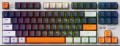 |
|---|---|---|
| Hator Gravity X TKL | GamePro MK180 | |
| Outdated Product | Outdated Product | |
| User reviews | ||
| TOP sellers | ||
| Connection | wired | wired |
| Cable length | 1.8 m | 1.8 m |
| Type | for game | for game |
| Form factor | 80% (TKL, without Numpad) | 80% (TKL, without Numpad) |
| Layout | ANSI | ANSI |
Keyboard | ||
| Key profile | high | high |
| Key type | classic type | classic type |
| Switch technology | mechanical | mechanical |
| Switches | Hator Aurum Orange rev.2.0 (Linear) | Outemu Red (Linear) |
| Actuation force | 50 g | |
| Trigger path | 1.9 mm | |
| Total travel | 4 mm | |
| Switch resource | 70 million clicks | 50 million clicks |
| Polling rate | 1000 Hz (1 ms) | |
| Hot Swap |  |  |
| Additional keys | 2 | |
| Anti-Ghosting | | |
| #KRO | N-KRO | N-KRO |
| Fn key | | |
Features | ||
| Cyrillic colour | transparent | transparent |
| Application of symbols (Latin) | double-shot | |
| Application of symbols (Cyrillic) | double-shot | |
| Volume control | fn | wheel |
| Game mode | | |
| Lighting | RGB | RGB |
| Lighting effects | + | + |
Connection and power supply | ||
| Cable | USB-A removable braided | USB-A removable |
| Port on the device | USB C | USB C |
General | ||
| Skeleton keyboard | | |
| Inner metal plate | | |
| Plate mounting | Gasket Mount | Gasket Mount |
| Case noise reduction | 2 layers | |
| Size | 364x136x35 mm | 365x138x40 mm |
| Weight | 740 g | 800 g |
| Added to E-Catalog | october 2024 | july 2024 |


Compare Hator Gravity X TKL and GamePro MK180
Keyboards Hator Gravity X TKL and GamePro MK180 have similar features such as wired connection, compact form without a numpad, and high key travel with mechanical construction. However, Hator uses Aurum Orange switches with a lifespan of 70 million presses, whereas GamePro is equipped with Outemu Red switches with a lifespan of 50 million. Hator offers a metal construction and a detachable braided cable, while GamePro lacks a metal case and a braided cable. Both keyboards feature RGB backlighting with effects and a gaming mode, but GamePro includes a volume adjustment wheel.
You may be interested in
My comparisons
Hator Gravity X TKL often compared


GamePro MK180 often compared


Glossary
Switches
Actuation force
The force required for the complete actuation of the switch under the key. This parameter is measured in grams and directly affects the feel of typing or gaming. Light switches with a force of about 35 – 45 grams require minimal pressure and are suitable for fast typing, while heavier ones — 55 – 80 grams — provide a precise response and prevent accidental presses. Actuation force is considered one of the key characteristics of mechanical keyboards, as it determines user comfort and individual preferences.
Trigger path
The distance a key travels from its original position to the point where a keystroke is registered, usually measured in millimeters. The smaller the value, the sooner the command is executed, which is particularly useful in fast-paced games; however, a setting that is too sensitive may increase the number of accidental presses. Mechanical and optical keyboards often have a fixed actuation point, while magnetic switches frequently allow for adjustment within a specified range.
This parameter should not be confused with the total key travel, which includes further movement to the bottom.
This parameter should not be confused with the total key travel, which includes further movement to the bottom.
Total travel
The total distance that a key travels from its top position to the switch base. Usually, the total travel ranges from 3.5 to 4 mm for classic mechanical keys and can be less in low-profile models. This factor affects the depth of the press and overall feel of operation: a short travel allows for quicker responses and reduces fatigue, while a longer travel provides a distinct tactile feedback and the sensation of a "full" click. The choice of optimal total travel depends on the typing style and preferences of the user.
Switch resource
Keyboard switch durability is measured by the number of presses the keys can withstand before they begin to show signs of wear or malfunction. Switches can have a lifespan of several million to tens of millions of clicks. In laboratory conditions, this parameter is checked using special testing machines, which diligently press the keys the required number of times, on the basis of which a verdict is made regarding the approximate service life of the switches.
Polling rate
The frequency with which the computer polls the keyboard to determine which keys are currently being pressed. The parameter is measured in Hertz (Hz) - they show how many requests are executed per second. Higher Hertz means keystrokes are detected and registered faster. This can provide an advantage in games and tasks that require the highest possible input speed.
As for specific values, for most ordinary users the standard polling rate of 125 Hz will be quite sufficient. Gaming keyboards can have a frequency from 1000 Hz (keystrokes in this version are recorded every 1 ms), and advanced models for true e-sportsmen - up to 8000 Hz (the reaction time is 0.125 ms).
As for specific values, for most ordinary users the standard polling rate of 125 Hz will be quite sufficient. Gaming keyboards can have a frequency from 1000 Hz (keystrokes in this version are recorded every 1 ms), and advanced models for true e-sportsmen - up to 8000 Hz (the reaction time is 0.125 ms).
Hot Swap
"Hot" replacement of mechanical keyboard switches without the procedure of disassembling and soldering the manipulator. Hot Swap technology allows you to change one switch for another in a matter of seconds. This is convenient both when the switches fail, and when using the keyboard in different scenarios. Most often, the technology is used in advanced gaming devices.
Additional keys
The number of additional keys provided in the design of the keyboard.
Such keys do not belong to the standard layout and are intended for quick access to specific functions or individual applications — for example, to control the media player or open mail with one click. This function is convenient because commands from additional keys are usually recognized by the system regardless of what is on the screen — thanks to this, for example, you do not have to close the text editor to switch tracks in the player.
Note that in this case we are talking about individual keys that have a strictly defined purpose and corresponding markings. Programmable buttons, the Fn key (see below) and the functions of the main keys implemented through Fn are not taken into account in this paragraph.
Such keys do not belong to the standard layout and are intended for quick access to specific functions or individual applications — for example, to control the media player or open mail with one click. This function is convenient because commands from additional keys are usually recognized by the system regardless of what is on the screen — thanks to this, for example, you do not have to close the text editor to switch tracks in the player.
Note that in this case we are talking about individual keys that have a strictly defined purpose and corresponding markings. Programmable buttons, the Fn key (see below) and the functions of the main keys implemented through Fn are not taken into account in this paragraph.
Application of symbols (Latin)
Legend application indicates how the Latin characters on the keys are made and how well they will survive years of heavy typing.
— Double-shot. The keycap is molded from two different plastics: the main “body” and a separate legend insert are formed together in a single mold, so the letters don’t wear off or fade at all. This method is ideal for RGB backlighting: if the legend layer is semi-transparent, light passes through the symbols without halos. ABS double-shot is more common (bright glow, pleasantly smooth feel), while the pricier PBT double-shot is rarer and offers higher surface wear resistance. Compared to laser engraving, the lifespan is an order of magnitude higher, and it beats the dye-sub method for backlighting (dye-sub doesn’t shine through). Downsides include cost and sometimes visible seams/thick walls that can affect the click’s sound profile. In practice, these keycaps are in demand for mechanical gaming keyboards, esports arenas, developers, and frequent hotkey typing—where double-shot keeps legends readable for years.
— Sublimation. A method of applying Latin symbols to keycaps where, under heat and pressure, the dye penetrates the top layer of plastic, creating a durable, “absorbed” legend. The print won’t rub off from fingers, resists household cleaners and UV light, preserves a matte texture, and maintains high contrast on light backgrounds, but it doesn’t let RGB shine through the symbols and is limited in palette. Compared to laser...engraving, it offers higher lifespan and readability, and versus double-shot it only loses in shine-through effects. Typical use cases include mechanical keyboards for typing, developers, and office work, where durability, the tactile matte PBT feel, and stable readability over years matter.
— Laser engraving. Burning/removing the top coating layer with a beam to form highly precise symbols. Legends last for years, but over time the fill paint can wear and contrast can drop in high-contact areas. Advantages include thin typefaces, clean contours, RGB compatibility, and low cost. Compared to double-shot, engraving is cheaper and more flexible in design, but not “forever”; versus dye-sub it wins on backlighting, but loses in tactile uniformity and longevity. Typical applications are mass-market office and gaming models with backlighting.
— Double-shot. The keycap is molded from two different plastics: the main “body” and a separate legend insert are formed together in a single mold, so the letters don’t wear off or fade at all. This method is ideal for RGB backlighting: if the legend layer is semi-transparent, light passes through the symbols without halos. ABS double-shot is more common (bright glow, pleasantly smooth feel), while the pricier PBT double-shot is rarer and offers higher surface wear resistance. Compared to laser engraving, the lifespan is an order of magnitude higher, and it beats the dye-sub method for backlighting (dye-sub doesn’t shine through). Downsides include cost and sometimes visible seams/thick walls that can affect the click’s sound profile. In practice, these keycaps are in demand for mechanical gaming keyboards, esports arenas, developers, and frequent hotkey typing—where double-shot keeps legends readable for years.
— Sublimation. A method of applying Latin symbols to keycaps where, under heat and pressure, the dye penetrates the top layer of plastic, creating a durable, “absorbed” legend. The print won’t rub off from fingers, resists household cleaners and UV light, preserves a matte texture, and maintains high contrast on light backgrounds, but it doesn’t let RGB shine through the symbols and is limited in palette. Compared to laser...engraving, it offers higher lifespan and readability, and versus double-shot it only loses in shine-through effects. Typical use cases include mechanical keyboards for typing, developers, and office work, where durability, the tactile matte PBT feel, and stable readability over years matter.
— Laser engraving. Burning/removing the top coating layer with a beam to form highly precise symbols. Legends last for years, but over time the fill paint can wear and contrast can drop in high-contact areas. Advantages include thin typefaces, clean contours, RGB compatibility, and low cost. Compared to double-shot, engraving is cheaper and more flexible in design, but not “forever”; versus dye-sub it wins on backlighting, but loses in tactile uniformity and longevity. Typical applications are mass-market office and gaming models with backlighting.