
Comparison Meizu EP52 vs 1More iBFree
Add to comparison | 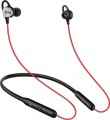 | 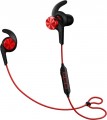 |
|---|---|---|
| Meizu EP52 | 1More iBFree | |
| Outdated Product | from £25.74 | |
| TOP sellers | ||
4 colour solutions. Waterproof body. aptx support. No multipoint support. | ||
Connection and design | ||
| Features | for active sports | |
| Design | in-ear neck strap | in-ear |
| Connection type | wireless | wireless |
| Connection | Bluetooth v4.1 | Bluetooth v4.1 |
| Range | 10 m | 10 m |
| Cable type | round | round |
Specs | ||
| Impedance | 32 Ohm | 32 Ohm |
| Frequency range | 20 – 20000 Hz | 20 – 20000 Hz |
| Sensitivity | 93 dB | 100 dB |
| Speaker size | 10 mm | |
| Emitter type | dynamic | dynamic |
Microphone specs | ||
| Microphone | in the mount | on cable |
Features | ||
| Volume control |  | |
| Codec support | aptX | aptX |
Power supply | ||
| Power source | battery | battery |
| Headphone battery capacity | 130 mAh | 90 mAh |
| Charging time | 2 h | |
| Operating time (music) | 8 h | 8 h |
General | ||
| Material | metal | metal |
| Waterproof | IPX5 | IPX4 |
| Weight | 22 g | 14 g |
| In box | silicone tips case | silicone tips |
| Color | ||
| Added to E-Catalog | august 2017 | march 2017 |


Compare Meizu EP52 and 1More iBFree
Headphones Meizu EP52 and 1More iBFree have similar features, such as wireless connectivity and a frequency range of 20 Hz to 20 kHz. However, in user reviews, key differences are noticeable. Meizu EP52 stand out for their good sound quality and long battery life (up to 8 hours), but some users note issues with disconnection when paused. On the other hand, 1More iBFree receive positive feedback for active noise cancellation and a secure fit in the ears, making them more suitable for active sports. Overall, the choice between these models may depend on your usage preferences.
You may be interested in
My comparisons
Meizu EP52 often compared


1More iBFree often compared


Glossary
Features
This parameter is specified only for specialized models, not related to general-purpose earphones. Nowadays, headphones can be found with such specializations as: gaming, for active sports, office, monitor (aka studio), for DJs, for children, for sleeping. Here is a more detailed description of these varieties:
— Gaming. Headphones mainly intended for use in games, primarily with PCs and laptops (a separate variety is produced for consoles, see more about it below). They stand out externally primarily by their design, which is usually quite bright and aggressive. Most of these models have an overhead design, most often the full-size “Over Ear” format (see “Design”), which provides the maximum immersive effect in the game. Other designs are also available, though much less frequently. A microphone is practically an obligatory feature for voice communication in online games. Additionally, most multi-channel models belong to this category (see “Sound”), as such sound is particularly important for games.
— For active sports. Headphones well-suited for sports activities. Firstly, such devices must have additional fixation in the ears or on the head to keep their position during intense moveme...nts; secondly, they should be resistant to sweat (ideally to rain, snow, and other atmospheric conditions). With rare exceptions, sports headphones are wireless to avoid inconvenience during movement. Sport models usually refer to in-ear, earbuds, and some on-ear headphones. Their key common traits are a secure fit and some level of IP water resistance (see “Protection level (IP)”).
— Office. Office headphones are intended for consultants, support operators, and other employees who frequently engage in voice communication via phone or Internet. Therefore, one of the main features of such models is the presence of a microphone. Among office headphones, models for one ear (see “Sound — mono”) are quite popular, allowing the user to hear both the conversation and the surrounding environment simultaneously. Many of these headphones connect via USB (see “Connection”), considering that inexpensive office computers may lack specialized audio outputs. A small control panel for IP telephony may be included on the USB plug, allowing functions such as accepting and rejecting calls. There are also wireless models (usually connecting via a radio channel, less often via Bluetooth) and specialized solutions for connecting to telephones with specific connectors.
— Monitor (studio). Headphones designed for professional sound recording and sound equipment tuning. They are wired only. However, the key feature of these models lies elsewhere: they have a flat frequency response, providing nearly equal loudness across all frequency bands, and a wide working range, often exceeding the limits of the human-audible frequency range. As a result, these headphones can clearly reveal any audio signal flaws, including details unnoticeable with traditional headphones; these capabilities are invaluable in professional sound work. On the other hand, for this reason, there's no point in using monitor models for everyday music listening: they not only reveal different recording flaws but also impart a sound coloration that is unusual and even unpleasant for the average user.
— For DJs. Headphones initially designed for professional DJs to use when mixing tracks. They are quite similar to the monitor models described above - particularly featuring a very flat frequency response for accurate sound reproduction and a wide frequency range. In addition, DJ headphones are usually closed-back and generally have high sound isolation quality, ensuring good audibility even in quite noisy environments.
— For kids. They differ from “adult” models mainly in appearance - both in smaller sizes and (in most models) in distinctive bright designs. Additionally, children's hearing is more sensitive to loud sounds, and excessively high volume is highly undesirable for a child (including psychological reasons). In this light, children's headphones may have specific features - for instance, slightly reduced sensitivity to prevent high sound levels or a volume limiter that only adults can control.
— For sleeping. Miniature headphones with a special anatomical design, allowing comfortable sleep while lying on your side without ear discomfort. To reduce surrounding noise, passive noise cancellation is typically included in their design. Such headphones can be used for listening to music, broadcasting white noise, nature sounds, or waves. Advanced models also monitor sleep quality, and the alarm clock function plays a melody for waking up at a set time. These headphones are frequently called electronic earplugs.
— Gaming. Headphones mainly intended for use in games, primarily with PCs and laptops (a separate variety is produced for consoles, see more about it below). They stand out externally primarily by their design, which is usually quite bright and aggressive. Most of these models have an overhead design, most often the full-size “Over Ear” format (see “Design”), which provides the maximum immersive effect in the game. Other designs are also available, though much less frequently. A microphone is practically an obligatory feature for voice communication in online games. Additionally, most multi-channel models belong to this category (see “Sound”), as such sound is particularly important for games.
— For active sports. Headphones well-suited for sports activities. Firstly, such devices must have additional fixation in the ears or on the head to keep their position during intense moveme...nts; secondly, they should be resistant to sweat (ideally to rain, snow, and other atmospheric conditions). With rare exceptions, sports headphones are wireless to avoid inconvenience during movement. Sport models usually refer to in-ear, earbuds, and some on-ear headphones. Their key common traits are a secure fit and some level of IP water resistance (see “Protection level (IP)”).
— Office. Office headphones are intended for consultants, support operators, and other employees who frequently engage in voice communication via phone or Internet. Therefore, one of the main features of such models is the presence of a microphone. Among office headphones, models for one ear (see “Sound — mono”) are quite popular, allowing the user to hear both the conversation and the surrounding environment simultaneously. Many of these headphones connect via USB (see “Connection”), considering that inexpensive office computers may lack specialized audio outputs. A small control panel for IP telephony may be included on the USB plug, allowing functions such as accepting and rejecting calls. There are also wireless models (usually connecting via a radio channel, less often via Bluetooth) and specialized solutions for connecting to telephones with specific connectors.
— Monitor (studio). Headphones designed for professional sound recording and sound equipment tuning. They are wired only. However, the key feature of these models lies elsewhere: they have a flat frequency response, providing nearly equal loudness across all frequency bands, and a wide working range, often exceeding the limits of the human-audible frequency range. As a result, these headphones can clearly reveal any audio signal flaws, including details unnoticeable with traditional headphones; these capabilities are invaluable in professional sound work. On the other hand, for this reason, there's no point in using monitor models for everyday music listening: they not only reveal different recording flaws but also impart a sound coloration that is unusual and even unpleasant for the average user.
— For DJs. Headphones initially designed for professional DJs to use when mixing tracks. They are quite similar to the monitor models described above - particularly featuring a very flat frequency response for accurate sound reproduction and a wide frequency range. In addition, DJ headphones are usually closed-back and generally have high sound isolation quality, ensuring good audibility even in quite noisy environments.
— For kids. They differ from “adult” models mainly in appearance - both in smaller sizes and (in most models) in distinctive bright designs. Additionally, children's hearing is more sensitive to loud sounds, and excessively high volume is highly undesirable for a child (including psychological reasons). In this light, children's headphones may have specific features - for instance, slightly reduced sensitivity to prevent high sound levels or a volume limiter that only adults can control.
— For sleeping. Miniature headphones with a special anatomical design, allowing comfortable sleep while lying on your side without ear discomfort. To reduce surrounding noise, passive noise cancellation is typically included in their design. Such headphones can be used for listening to music, broadcasting white noise, nature sounds, or waves. Advanced models also monitor sleep quality, and the alarm clock function plays a melody for waking up at a set time. These headphones are frequently called electronic earplugs.
Design
This item primarily specifies the way headphones are mounted on the ears; by this parameter, modern headphones are divided into over-ear, in-ear, earbuds, open-ear types. For over-ear models, it may also specify the acoustic design (closed, semi-open, open), as well as the presence of features such as over-ear construction (in the absence of this feature such headphones are called on-ear, or just "on-ear"), swivel cups, auto headband adjustment or even the popular mid-2021 trend — Cat Ear Headphones (headphones with cat ears). Details such as a rigid band, over-the-ear mounting, neck mounting, and folding ability, can be combined with almost any method of ear placement (with some exceptions — for example, on-ear models cannot be worn on the neck).
Here is a more detailed description of different ear placement options:
— On-ear. On-ear headphones are placed outside the auditory pinnae, covering the ear from the side ("usual" on-ear models) or completely (full-size Over-Ear — see below). In any case, such models are fairly large. This, on the one hand, simplifies the creation of headphones w...ith advanced audio characteristics, and also allows using some specific tricks without much difficulty — for example, multiple drivers or multichannel surround sound support. On the other hand, the size of the "ears" complicates transportation and use on the go. Moreover, it should be noted that most on-ear models feature a headband, making them less compatible with complex hairstyles and some headgear. This disadvantage is absent in models with rigid bands and over-the-ear mounts, but they also have their specifics (see below).
On-ear headphones can have different acoustic designs:
— In-ear with a rigid band. In-ear headphones are placed inside the ear canals, allowing them to be most securely fixed in the ear and not fall out. The presence of a rigid band further increases the reliability of the headphones' fixation. This type of headphones is well-suited for sports. The rigid band and in-ear design of sound emitters allows the headphones to stay securely in place even during intensive running.
— Earbuds. Also colloquially known as "pills." Similar to in-ear models, such headphones are small and placed in the auditory pinna — but not deep in the ear canal, just at its entrance, almost outside. As a result, earbuds are somewhat simpler in construction and cheaper, but achieving rich sound and advanced acoustic characteristics is more challenging with them. Such models provide quite low sound isolation, but this can be either a downside or an advantage — depending on the situation. Some headphones of this type have an elongated shape, allowing them to sit deeper in the ears and approaching in-ear models in capabilities.
It is worth noting separately that in-ear models and earbuds don't use headbands — the headphones are made either completely separate or connected by a device such as a rigid band or neck mount. Thus, such headphones can easily be worn with almost any hairstyle or headgear.
— Earbuds with a rigid band. Earbuds are simply inserted into the ear canal entrance, not penetrating deeply. This is not the most reliable way to fix the headphones, but due to the presence of a rigid band, earbuds gain secure placement and reliable fixation. The headphones themselves have an open sound path design, which reproduces audio with noticeable distortion to the original sound signal. However, the open acoustic scheme allows clear hearing of the surrounding environment.
As for additional design features, they can be such:
— Full-size Over-Ear. On-ear headphones (see above) in which each cup completely covers the ear and fits tightly against the head. Cups in such models are made fairly large and equipped with characteristic soft "borders" along the inner side's perimeter — these borders fit tightly against the head, so the ear pinna is effectively inside the cup. The main advantage of such a design is that the headphones (with the right size) practically do not touch the user's ears and do not press on them — this is particularly comfortable for extended use. Furthermore, Over-Ear models facilitate achieving high-quality sound isolation (although among them it is possible to find models with semi-open and even completely open acoustic design). The main disadvantage of such devices is bulkiness and inconvenience in transport and on-the-go use. Additionally, when wearing glasses, Over-Ear cups usually press on the frames' sides — this can cause discomfort.
— Open-ear. A special variety of wireless true wireless headphones with open acoustic design. Unlike earbuds and in-ear models, open-ear headphones do not suggest partial or full closure of the auricle — this provides better perception of surrounding sounds. This is handy during walks and outdoor runs. Most often, such headphones have over-the-ear mounts (see below), and the drivers in their construction are directed straight into the ear canals but remain outside. Passive noise isolation in open-ear headphones is practically absent, and the playing music and phone conversations may be heard by those nearby — keep this in mind.
— Auto headband adjustment. A headband capable of automatically adjusting to the user's head size. Such a headband usually consists of two parts — a rigid, usually metallic, base and a soft inner part that fits directly against the head. The inner part is capable of stretching, and the user just needs to place the cups on the ears comfortably — and the headband will automatically adjust to the needed size.
— Rigid band. A band made of rigid material, connecting the two headphones and worn on the back of the head; in some models, it can also serve as a neck mount (see below). The advantage of such a device over a classic headband is that the band can be used with almost any hairstyle and headgear. On the other hand, in in-ear models and earbuds (see above), this feature makes the headphones bulkier, and in on-ear models, it makes sense to use it only with regular models, not belonging to full-size Over Ear. Consequently, for a range of reasons, the band is not particularly popular nowadays.
— Over-the-ear mounting. A mount that allows fixing each headphone directly on the auricle; it generally has the form of a characteristic band. This feature appears in all types of modern "ears," except Over Ear (see above), and its specific meaning depends primarily on the main method of placing the headphone on the ear. For in-ear models and earbuds, over-the-ear mounting provides additional retention reliability: the likelihood of the headphone falling out of the ear is practically reduced to zero due to such a mount. In on-ear "ears," this feature appears significantly less often, and its main purpose is to do without a headband or rigid band — in some cases, these construction elements are unnecessary.
— Neck mounting. A feature found exclusively in wireless and combined models (see "Connection Type") — and only in in-ear and earbuds (see above). Both headphones in such models are connected by either a regular wire with a thickened part or a special horseshoe-shaped band (to each end of this band, an individual "ear" is connected via a wire). In any case, during use, this wire or band is located behind the user's neck, ensuring additional convenience: removed from the ears (or fallen out), headphones do not drop to the ground but remain hanging on the mount. Some models also feature special magnets, enabling the removed headphones to "stick" together, turning the entire structure into a ring — reducing the risk of dropping the device even further.
— Folding ability. The ability to compactly fold headphones for storage and transportation. Note that this feature is listed only for on-ear models (see above) — in-ear headphones and earbuds are already quite portable by themselves, without a special folding design.
— Swivel cups. A design feature found in on-ear headphones (see above). Swivel means cups that, in working position, can rotate at a certain angle around the vertical axis. This allows headphones to further adjust to the user's head size and shape — thereby increasing comfort, especially during prolonged wear. On the other hand, the swivel mount slightly complicates the headphones' construction, increases the cost, and somewhat reduces reliability.
Here is a more detailed description of different ear placement options:
— On-ear. On-ear headphones are placed outside the auditory pinnae, covering the ear from the side ("usual" on-ear models) or completely (full-size Over-Ear — see below). In any case, such models are fairly large. This, on the one hand, simplifies the creation of headphones w...ith advanced audio characteristics, and also allows using some specific tricks without much difficulty — for example, multiple drivers or multichannel surround sound support. On the other hand, the size of the "ears" complicates transportation and use on the go. Moreover, it should be noted that most on-ear models feature a headband, making them less compatible with complex hairstyles and some headgear. This disadvantage is absent in models with rigid bands and over-the-ear mounts, but they also have their specifics (see below).
On-ear headphones can have different acoustic designs:
- Closed. Models with a high degree of sound isolation, maximally shielding the user from external sounds. This design contributes to rich sound (especially in the bass range) and provides a very powerful immersion effect, making it suitable for home use (including computer games) and noisy environments. However, using such "ears" on the street is not recommended: full isolation from surrounding sounds in such conditions can be unsafe. Besides, it is believed that a fully closed design slightly worsens sound fidelity.
- Open. Headphones with minimal sound isolation, allowing most external sounds through. They are less powerful and rich in sound compared to closed models and less effective in noisy environments; also, the sound from such headphones is easily heard by those around. On the other hand, open models generally provide more authentic sound and are better suited for situations where it's necessary to monitor the surrounding environment — for example, for use on the street.
- Semi-open. A kind of compromise between the above-described options: headphones with better sound isolation than open models but still not reaching the level of closed "ears." For some users, this intermediate option may be more comfortable. Additionally, semi-open headphones are valued in professional sound work: they retain bass richness and at the same time do not create the distortions characteristic of a fully closed design.
- With a rigid band. A rigid band allows the earbuds to be reliably fixed to the auditory pinnae. A close analogue of the rigid band is the headband of full-size headphones, but unlike that, the band is worn on the back of the head, not the top. For this reason, rigid bands are mostly made without soft padding, from bare plastic/metal. Headphones with a rigid band most often have a sporting focus, as being on the back of the head, they will not slip even during intense running. On-ear headphones are closely pressed to the auditory pinnae, but the speakers themselves are placed outside the ear canals.
- Cat Ear ("ears"). On-ear headphones in an interesting design — with imitation cat ears on the headband. This addition does not affect working characteristics but looks unusual and can be a great addition to the owner's vibrant, original style. Cat Ear Headphones are particularly popular among teenagers.
— In-ear with a rigid band. In-ear headphones are placed inside the ear canals, allowing them to be most securely fixed in the ear and not fall out. The presence of a rigid band further increases the reliability of the headphones' fixation. This type of headphones is well-suited for sports. The rigid band and in-ear design of sound emitters allows the headphones to stay securely in place even during intensive running.
— Earbuds. Also colloquially known as "pills." Similar to in-ear models, such headphones are small and placed in the auditory pinna — but not deep in the ear canal, just at its entrance, almost outside. As a result, earbuds are somewhat simpler in construction and cheaper, but achieving rich sound and advanced acoustic characteristics is more challenging with them. Such models provide quite low sound isolation, but this can be either a downside or an advantage — depending on the situation. Some headphones of this type have an elongated shape, allowing them to sit deeper in the ears and approaching in-ear models in capabilities.
It is worth noting separately that in-ear models and earbuds don't use headbands — the headphones are made either completely separate or connected by a device such as a rigid band or neck mount. Thus, such headphones can easily be worn with almost any hairstyle or headgear.
— Earbuds with a rigid band. Earbuds are simply inserted into the ear canal entrance, not penetrating deeply. This is not the most reliable way to fix the headphones, but due to the presence of a rigid band, earbuds gain secure placement and reliable fixation. The headphones themselves have an open sound path design, which reproduces audio with noticeable distortion to the original sound signal. However, the open acoustic scheme allows clear hearing of the surrounding environment.
As for additional design features, they can be such:
— Full-size Over-Ear. On-ear headphones (see above) in which each cup completely covers the ear and fits tightly against the head. Cups in such models are made fairly large and equipped with characteristic soft "borders" along the inner side's perimeter — these borders fit tightly against the head, so the ear pinna is effectively inside the cup. The main advantage of such a design is that the headphones (with the right size) practically do not touch the user's ears and do not press on them — this is particularly comfortable for extended use. Furthermore, Over-Ear models facilitate achieving high-quality sound isolation (although among them it is possible to find models with semi-open and even completely open acoustic design). The main disadvantage of such devices is bulkiness and inconvenience in transport and on-the-go use. Additionally, when wearing glasses, Over-Ear cups usually press on the frames' sides — this can cause discomfort.
— Open-ear. A special variety of wireless true wireless headphones with open acoustic design. Unlike earbuds and in-ear models, open-ear headphones do not suggest partial or full closure of the auricle — this provides better perception of surrounding sounds. This is handy during walks and outdoor runs. Most often, such headphones have over-the-ear mounts (see below), and the drivers in their construction are directed straight into the ear canals but remain outside. Passive noise isolation in open-ear headphones is practically absent, and the playing music and phone conversations may be heard by those nearby — keep this in mind.
— Auto headband adjustment. A headband capable of automatically adjusting to the user's head size. Such a headband usually consists of two parts — a rigid, usually metallic, base and a soft inner part that fits directly against the head. The inner part is capable of stretching, and the user just needs to place the cups on the ears comfortably — and the headband will automatically adjust to the needed size.
— Rigid band. A band made of rigid material, connecting the two headphones and worn on the back of the head; in some models, it can also serve as a neck mount (see below). The advantage of such a device over a classic headband is that the band can be used with almost any hairstyle and headgear. On the other hand, in in-ear models and earbuds (see above), this feature makes the headphones bulkier, and in on-ear models, it makes sense to use it only with regular models, not belonging to full-size Over Ear. Consequently, for a range of reasons, the band is not particularly popular nowadays.
— Over-the-ear mounting. A mount that allows fixing each headphone directly on the auricle; it generally has the form of a characteristic band. This feature appears in all types of modern "ears," except Over Ear (see above), and its specific meaning depends primarily on the main method of placing the headphone on the ear. For in-ear models and earbuds, over-the-ear mounting provides additional retention reliability: the likelihood of the headphone falling out of the ear is practically reduced to zero due to such a mount. In on-ear "ears," this feature appears significantly less often, and its main purpose is to do without a headband or rigid band — in some cases, these construction elements are unnecessary.
— Neck mounting. A feature found exclusively in wireless and combined models (see "Connection Type") — and only in in-ear and earbuds (see above). Both headphones in such models are connected by either a regular wire with a thickened part or a special horseshoe-shaped band (to each end of this band, an individual "ear" is connected via a wire). In any case, during use, this wire or band is located behind the user's neck, ensuring additional convenience: removed from the ears (or fallen out), headphones do not drop to the ground but remain hanging on the mount. Some models also feature special magnets, enabling the removed headphones to "stick" together, turning the entire structure into a ring — reducing the risk of dropping the device even further.
— Folding ability. The ability to compactly fold headphones for storage and transportation. Note that this feature is listed only for on-ear models (see above) — in-ear headphones and earbuds are already quite portable by themselves, without a special folding design.
— Swivel cups. A design feature found in on-ear headphones (see above). Swivel means cups that, in working position, can rotate at a certain angle around the vertical axis. This allows headphones to further adjust to the user's head size and shape — thereby increasing comfort, especially during prolonged wear. On the other hand, the swivel mount slightly complicates the headphones' construction, increases the cost, and somewhat reduces reliability.
Sensitivity
Rated headphone sensitivity. Technically, this is the volume at which they sound when a certain standard signal from the amplifier is connected to them. Thus, sensitivity is one of the parameters that determine the overall volume of the headphones: the higher it is, the louder the sound will be with the same input signal level and other things being equal. However, we must not forget that the volume level also depends on the resistance (impedance, see above); moreover, it is worth choosing “ears” for a specific device first by impedance, and only then by sensitivity. In this case, one parameter can be compensated for by another: for example, a model with high resistance and high sensitivity can work even on a relatively weak amplifier.
As for specific figures, headphones with indicators of 100 dB or less are designed mainly for use in a quiet environment (in some similar models, the sensitivity does not exceed 90 dB). For use on the street, in transport and other similar conditions, it is desirable to have more sensitive headphones — about 101 – 105 dB, or even 110 dB. And in some models, this figure can reach 116 – 120 dB. and even more.
It is also worth noting that this parameter is relevant only for a wired connection according to the analogue standard — for example, via a 3.5 mm mini-...jack. When using digital interfaces like USB and wireless channels like Bluetooth, the sound is processed in the built-in headphone converter, and if you plan to mainly use this kind of application, you can not pay much attention to sensitivity.
As for specific figures, headphones with indicators of 100 dB or less are designed mainly for use in a quiet environment (in some similar models, the sensitivity does not exceed 90 dB). For use on the street, in transport and other similar conditions, it is desirable to have more sensitive headphones — about 101 – 105 dB, or even 110 dB. And in some models, this figure can reach 116 – 120 dB. and even more.
It is also worth noting that this parameter is relevant only for a wired connection according to the analogue standard — for example, via a 3.5 mm mini-...jack. When using digital interfaces like USB and wireless channels like Bluetooth, the sound is processed in the built-in headphone converter, and if you plan to mainly use this kind of application, you can not pay much attention to sensitivity.
Speaker size
The diameter of the speaker installed in the headphones; models with multiple drivers (see "Number of drivers"), usually, the size of the largest speaker is taken into account, other dimensions can be specified in the notes.
In general, this parameter is relevant primarily for over-ear headphones (see "Design"). In them, emitters can have different sizes; the larger it is, the more saturated the sound is and the better the speaker reproduces the bass, however, large emitters have a corresponding effect on the dimensions, weight and price of the headphones. But in-ear "ears" and earbuds, by definition, have very small speakers, and rich bass in them is achieved due to other design features.
In general, this parameter is relevant primarily for over-ear headphones (see "Design"). In them, emitters can have different sizes; the larger it is, the more saturated the sound is and the better the speaker reproduces the bass, however, large emitters have a corresponding effect on the dimensions, weight and price of the headphones. But in-ear "ears" and earbuds, by definition, have very small speakers, and rich bass in them is achieved due to other design features.
Microphone
The location of the microphone, which the headphones are equipped with (if available, of course).
— On the cable. A microphone installed on the headphone connection wire (or on the connection cable in non-TWS wireless headphones). Can be combined with volume control. This option allows you to separate the microphone and headphones, reducing the weight and dimensions of the "ears" themselves; on the other hand, the microphone when worn is often quite far from the face, which can be inconvenient. Therefore, this design is mainly used among earbuds and in-ear headphones, where the size of the "ears" is critical.
— Built into the body. A microphone located in the housing of one of the headphones. This arrangement is convenient because there are no extra protruding parts outside (as in headphones without a microphone), while the microphone is close to the face, and in some models it is also able to perceive sound according to the principle of bone conduction. However installation in close proximity to the speaker gives additional interference and may degrade the quality of voice transmission. However, these shortcomings are not critical: interference can be compensated, and the built-in headphone microphones, in fact, do not need perfect sound transmission accuracy. Therefore, this option is quite popular nowadays, and it is fo...und not only in miniature models, for which the absence of unnecessary details on the outside is important, but also in rather large overhead "ears".
— On the bow. A microphone mounted on a small boom that is attached to one of the headphones. The microphone on the bow is the most popular among overhead headphones: a large cup can be supplemented with a boom without sacrificing convenience, and the microphone itself is located far from the headphones, which has a positive effect on the purity of the sound. The boom often has a swivel or detachable mount, which allows you to remove the microphone from the face until it is needed (by lifting the boom vertically along the headband).
— Retractable on the bow. Headband microphone (see above) with a retractable design: the headband can be pulled out of the cup when needed and can be tucked back inside when not in use. These headphones are more compact and have a neater appearance than models with a headband on a swivel mount: in a hidden position, the microphone takes up almost no space outside. The retractable microphone design is especially popular in gaming models (see “Intended Use”): in single-player games where you do not need to communicate with comrades, the microphone can be folded compactly.
— Removable on the shackle. Headband microphone (see above), which can be completely detached from the headphones if desired. Such a design can be useful, for example, if the “ears” are used both as gaming and as “marching and musical”: in a multiplayer game, the microphone is indispensable, and for listening to music outside the home, it can be removed so as not to carry extra equipment (which besides, you can lose).
— At the receiver. A variant used in wireless headphones with a separate receiver. In terms of design and use, it is similar to the microphone on the cable described above: on the one hand, the headphones themselves can be very light and tiny, on the other hand, the microphone may not be located close enough to the face, and when talking it will have to be brought closer.
— In the mount. In this case, most often means a microphone mounted on a neck mount (see below). This option is found mainly among wireless headphones, which have a signal receiver in the same mount. Such a microphone is located close to the neck, which allows you to achieve good speech intelligibility and at the same time cut off extraneous sounds even without any special additional tricks.
— On the cable and in the case. Headphones equipped with two microphones — one in the case, the other on the cable. The features of these variants are described in detail above. Here we note that their combination is extremely rare, mainly among high-quality "ears" with a combined connection (see "Type of connection"). In such models, when working via a wireless channel, a microphone in the case is used, and when connecting a wire, a microphone on a cable is used, which is less susceptible to interference.
— On cable and removable. Another kind of headphones with two microphones, also quite rare. One microphone in such models is mounted on a cable, the second — on a detachable bow. See above for more on each of these options, and combining them allows you to tailor the headphones to the specific situation. For example, the bow is very convenient for voice communication at home or office computers, but on the street and in transport it is better to remove it and use the microphone on the cable.
— In the case and removable. A rather rare and non-standard option is the combination of a microphone in the case and a microphone on a detachable bow. See above for more details on each of these varieties, and their combination is used quite rarely — in separate premium gaming models with a combined connection. The main point in this case is that it is more convenient to use a removable microphone in one place, with a wired connection, and in the “mobile” wireless mode it is better to remove it and get by with the built-in microphone. However, such features are fundamental mainly for the most demanding users, so this option has not gained distribution.
— On the cable. A microphone installed on the headphone connection wire (or on the connection cable in non-TWS wireless headphones). Can be combined with volume control. This option allows you to separate the microphone and headphones, reducing the weight and dimensions of the "ears" themselves; on the other hand, the microphone when worn is often quite far from the face, which can be inconvenient. Therefore, this design is mainly used among earbuds and in-ear headphones, where the size of the "ears" is critical.
— Built into the body. A microphone located in the housing of one of the headphones. This arrangement is convenient because there are no extra protruding parts outside (as in headphones without a microphone), while the microphone is close to the face, and in some models it is also able to perceive sound according to the principle of bone conduction. However installation in close proximity to the speaker gives additional interference and may degrade the quality of voice transmission. However, these shortcomings are not critical: interference can be compensated, and the built-in headphone microphones, in fact, do not need perfect sound transmission accuracy. Therefore, this option is quite popular nowadays, and it is fo...und not only in miniature models, for which the absence of unnecessary details on the outside is important, but also in rather large overhead "ears".
— On the bow. A microphone mounted on a small boom that is attached to one of the headphones. The microphone on the bow is the most popular among overhead headphones: a large cup can be supplemented with a boom without sacrificing convenience, and the microphone itself is located far from the headphones, which has a positive effect on the purity of the sound. The boom often has a swivel or detachable mount, which allows you to remove the microphone from the face until it is needed (by lifting the boom vertically along the headband).
— Retractable on the bow. Headband microphone (see above) with a retractable design: the headband can be pulled out of the cup when needed and can be tucked back inside when not in use. These headphones are more compact and have a neater appearance than models with a headband on a swivel mount: in a hidden position, the microphone takes up almost no space outside. The retractable microphone design is especially popular in gaming models (see “Intended Use”): in single-player games where you do not need to communicate with comrades, the microphone can be folded compactly.
— Removable on the shackle. Headband microphone (see above), which can be completely detached from the headphones if desired. Such a design can be useful, for example, if the “ears” are used both as gaming and as “marching and musical”: in a multiplayer game, the microphone is indispensable, and for listening to music outside the home, it can be removed so as not to carry extra equipment (which besides, you can lose).
— At the receiver. A variant used in wireless headphones with a separate receiver. In terms of design and use, it is similar to the microphone on the cable described above: on the one hand, the headphones themselves can be very light and tiny, on the other hand, the microphone may not be located close enough to the face, and when talking it will have to be brought closer.
— In the mount. In this case, most often means a microphone mounted on a neck mount (see below). This option is found mainly among wireless headphones, which have a signal receiver in the same mount. Such a microphone is located close to the neck, which allows you to achieve good speech intelligibility and at the same time cut off extraneous sounds even without any special additional tricks.
— On the cable and in the case. Headphones equipped with two microphones — one in the case, the other on the cable. The features of these variants are described in detail above. Here we note that their combination is extremely rare, mainly among high-quality "ears" with a combined connection (see "Type of connection"). In such models, when working via a wireless channel, a microphone in the case is used, and when connecting a wire, a microphone on a cable is used, which is less susceptible to interference.
— On cable and removable. Another kind of headphones with two microphones, also quite rare. One microphone in such models is mounted on a cable, the second — on a detachable bow. See above for more on each of these options, and combining them allows you to tailor the headphones to the specific situation. For example, the bow is very convenient for voice communication at home or office computers, but on the street and in transport it is better to remove it and use the microphone on the cable.
— In the case and removable. A rather rare and non-standard option is the combination of a microphone in the case and a microphone on a detachable bow. See above for more details on each of these varieties, and their combination is used quite rarely — in separate premium gaming models with a combined connection. The main point in this case is that it is more convenient to use a removable microphone in one place, with a wired connection, and in the “mobile” wireless mode it is better to remove it and get by with the built-in microphone. However, such features are fundamental mainly for the most demanding users, so this option has not gained distribution.
Headphone battery capacity
The capacity of the battery installed in the headphones of the corresponding design (see "Power").
Theoretically, a higher capacity allows to achieve greater battery life, but in fact, the operating time also depends on the power consumption of the headphones — and it can be very different, depending on the characteristics and design features. So this parameter is secondary, and when choosing it is worth paying attention not so much to the battery capacity, but to the directly claimed operating time (see below).
Theoretically, a higher capacity allows to achieve greater battery life, but in fact, the operating time also depends on the power consumption of the headphones — and it can be very different, depending on the characteristics and design features. So this parameter is secondary, and when choosing it is worth paying attention not so much to the battery capacity, but to the directly claimed operating time (see below).
Charging time
The time required to fully charge the battery in properly powered headphones (see above).
In this case, we mean the battery charging time from 0 to 100% when using a standard charger (or a third-party charger with identical characteristics). Accordingly, in fact, this indicator may differ from the claimed one, depending on the specifics of the situation. However, in general, it is quite possible to evaluate different models and compare them with each other: headphones with a shorter claimed charging time will in fact charge faster (ceteris paribus).
Also note that an increase in battery capacity (and headphone battery life) inevitably implies an increase in charging time. To compensate for this moment, special fast charging technologies can be used — however, they affect the cost and require the use of specialized charger.
In this case, we mean the battery charging time from 0 to 100% when using a standard charger (or a third-party charger with identical characteristics). Accordingly, in fact, this indicator may differ from the claimed one, depending on the specifics of the situation. However, in general, it is quite possible to evaluate different models and compare them with each other: headphones with a shorter claimed charging time will in fact charge faster (ceteris paribus).
Also note that an increase in battery capacity (and headphone battery life) inevitably implies an increase in charging time. To compensate for this moment, special fast charging technologies can be used — however, they affect the cost and require the use of specialized charger.
Waterproof
The headphones have special protection against moisture and dust; also, this clause may specify the level of such protection according to the IP standard.
Not all waterproof headphones allow complete immersion in water, but in this case this is usually not required — water protection is mainly intended for safe operation in the rain (or during sports activities when the user sweats a lot). But the specific degree of such protection in different models can vary markedly, and here it is most convenient to evaluate it by IP marking. This marking consists of the letters IP and two numbers; moisture resistance is described by the second, last digit, and in modern headphones you can find the following options:
— 2. Protection against vertical drops of water in the working position and when the device deviates up to 15 ° from this position. The minimum indicator that allows us to talk about resistance to rain (however, without strong winds).
— 3. Protection against splashes falling vertically or at an angle up to 60° from the vertical. Provides resistance to moderate rain and strong winds.
— 4. Splash proof from any direction. With such headphones, rain of medium intensity is not terrible, regardless of the strength of the wind.
— 5. Protected against water jets from any direction. Allows you to transfer already a combination of strong wind w...ith a downpour.
— 6. Protection against strong water jets. It is considered the minimum level that allows you to swim safely (with your head above the surface of the water) wearing headphones.
— 7. Possibility of short-term (less than half an hour) immersion under water to a shallow depth (less than 1 m); continuous operation in immersed mode is not expected. In such headphones, you can no longer only swim, but also dive under water to a shallow depth (plunge with your head), but they are not suitable for full-fledged diving.
— 8. The highest level of water protection actually found in modern headphones (although theoretically there is a higher level, level 9). Allows long-term (more than 30 minutes) immersion under water to a depth of 1 m or more, and even permanent work in a submerged position. And although the latter is not particularly relevant for headphones, however, this degree of protection makes it possible to swim and even dive safely. However, note that specific restrictions on use in such headphones may be different, they must be clarified according to the instructions.
As for protection against dust (it is indicated by the first digit in the IP marking), its level in modern “ears” is indicated mainly in cases where it corresponds to level 4 (protection against objects 1 mm thick or more), 5 (allowed a small amount of dust that does not affect the operation of the device) or 6 (complete protection against dust). Also note that this number can be replaced by the letter "X" — for example, IPX7; this means that no official dust certification has been carried out for this model. However, this resistance in many cases can be assessed by the degree of protection against moisture: for example, devices with a moisture resistance of 7 or 8, by definition, do not let water through — which means that they are also not afraid of dust.
Not all waterproof headphones allow complete immersion in water, but in this case this is usually not required — water protection is mainly intended for safe operation in the rain (or during sports activities when the user sweats a lot). But the specific degree of such protection in different models can vary markedly, and here it is most convenient to evaluate it by IP marking. This marking consists of the letters IP and two numbers; moisture resistance is described by the second, last digit, and in modern headphones you can find the following options:
— 2. Protection against vertical drops of water in the working position and when the device deviates up to 15 ° from this position. The minimum indicator that allows us to talk about resistance to rain (however, without strong winds).
— 3. Protection against splashes falling vertically or at an angle up to 60° from the vertical. Provides resistance to moderate rain and strong winds.
— 4. Splash proof from any direction. With such headphones, rain of medium intensity is not terrible, regardless of the strength of the wind.
— 5. Protected against water jets from any direction. Allows you to transfer already a combination of strong wind w...ith a downpour.
— 6. Protection against strong water jets. It is considered the minimum level that allows you to swim safely (with your head above the surface of the water) wearing headphones.
— 7. Possibility of short-term (less than half an hour) immersion under water to a shallow depth (less than 1 m); continuous operation in immersed mode is not expected. In such headphones, you can no longer only swim, but also dive under water to a shallow depth (plunge with your head), but they are not suitable for full-fledged diving.
— 8. The highest level of water protection actually found in modern headphones (although theoretically there is a higher level, level 9). Allows long-term (more than 30 minutes) immersion under water to a depth of 1 m or more, and even permanent work in a submerged position. And although the latter is not particularly relevant for headphones, however, this degree of protection makes it possible to swim and even dive safely. However, note that specific restrictions on use in such headphones may be different, they must be clarified according to the instructions.
As for protection against dust (it is indicated by the first digit in the IP marking), its level in modern “ears” is indicated mainly in cases where it corresponds to level 4 (protection against objects 1 mm thick or more), 5 (allowed a small amount of dust that does not affect the operation of the device) or 6 (complete protection against dust). Also note that this number can be replaced by the letter "X" — for example, IPX7; this means that no official dust certification has been carried out for this model. However, this resistance in many cases can be assessed by the degree of protection against moisture: for example, devices with a moisture resistance of 7 or 8, by definition, do not let water through — which means that they are also not afraid of dust.
Weight
The total weight of the headphones; for true wireless models (see "Cable Type"), the weight of each individual earbud is listed.
This parameter is directly related to the design (see above) and some features of the functionality. Thus, the mentioned true wireless devices are very light, their weight does not exceed 25 g. More traditional in-ears and in-ears can be noticeably heavier, up to 50g for in-ears and up to 100g for most in-ears. Overhead models, for the most part, are quite massive: among them there are many models weighing 200 – 250 g, 250 – 300 g and even more than 300 g. It should be noted that a significant weight for false ears is often not a disadvantage, but an advantage: it allows them to stay on the head more securely, creates an impression of solidity and reliability, and most often does not create significant inconvenience.
This parameter is directly related to the design (see above) and some features of the functionality. Thus, the mentioned true wireless devices are very light, their weight does not exceed 25 g. More traditional in-ears and in-ears can be noticeably heavier, up to 50g for in-ears and up to 100g for most in-ears. Overhead models, for the most part, are quite massive: among them there are many models weighing 200 – 250 g, 250 – 300 g and even more than 300 g. It should be noted that a significant weight for false ears is often not a disadvantage, but an advantage: it allows them to stay on the head more securely, creates an impression of solidity and reliability, and most often does not create significant inconvenience.