
Comparison Doogee V30T 256 GB vs Doogee S100 256 GB
Add to comparison |  | 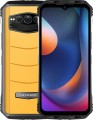 |
|---|---|---|
| Doogee V30T 256 GB | Doogee S100 256 GB | |
from £199.99 | Compare prices 1 | |
| User reviews | ||
| TOP sellers | ||
RAM expansion function up to 15 GB. Customizable side button. | 8 GB RAM expansion function. Customizable side button. | |
| Operating system | Android 12.0 | Android 12.0 |
Display | ||
| Main display | 6.58 " 2408х1080 (20:9) 401 ppi IPS 120 Hz Gorilla Glass v5 | 6.58 " 2408х1080 (20:9) 401 ppi IPS 120 Hz Gorilla Glass v5 |
| Brightness | 480 nit | 480 nit |
| Display-to-body ratio | 71 % | 70 % |
Hardware | ||
| Processor (graphics) | Dimensity 1080 (Mali-G68) | Helio G99 (Mali-G57) |
| CPU frequency | 2.4 GHz | 2.2 GHz |
| CPU cores | 8 | 8 |
| Processor rating AnTuTu | 25 | 19 |
| RAM | 12 GB | 12 GB |
| RAM type | LPDDR5 | LPDDR4X |
| Memory storage | 256 GB | 256 GB |
| Storage type | UFS 3.1 | UFS 2.2 |
| Memory card slot | microSD | microSD |
| Max. memory card storage | 2048 GB | 2048 GB |
| Liquid cooling |  |  |
Test results | ||
| AnTuTu Benchmark Test | 506 000 points | 387 000 points |
| Geekbench Test | 2303 points | 1997 points |
| 3DMark Gamer's Benchmark | 1222 points | |
| Sling Shot Extreme (OpenGL ES 3.1 / METAL) | 4188 points | 2584 points |
Main camera | ||
| Lenses | 3 modules | 3 modules |
| Main lens | 108 MP f/1.8 90 ° Samsung S5KHM2SP03 | 108 MP f/1.8 90 ° Samsung S5KHM2SP03 |
| Ultra wide lens | 16 MP f/2.2 130 ° | 16 MP f/2.2 130 ° |
| Additional lens | night vision, 20 MP, f/1.8, Sony IMX350 | |
| Full HD (1080p) | 30 fps | 30 fps |
| 4K video recording | 30 fps | |
| Flash | | |
Front camera | ||
| Form factor | teardrop | teardrop |
| Main selfie lens | 32 MP | 32 MP |
| Aperture | f/2.0 | f/2.0 |
| Field of view | 90 ° | 90 ° |
| Full HD (1080p) | 30 fps | 30 fps |
| Ultra HD (4K) | 30 fps | |
Connections and communication | ||
| Cellular technology | 5G CDMA | 4G (LTE) CDMA |
| SIM card type | nano+e-SIM | nano-SIM |
| SIM slots | 2 SIM | SIM + SIM/microSD |
| Connectivity technology | Wi-Fi 6 (802.11ax) Bluetooth v5.2 NFC | Wi-Fi 6 (802.11ax) Bluetooth v5.0 NFC |
| Inputs & outputs | USB-C | USB-C |
Features and navigation | ||
| Features | side fingerprint scanner stereo FM receiver notification indicator gyroscope light sensor | side fingerprint scanner stereo FM receiver notification indicator gyroscope light sensor |
| Navigation | aGPS GPS module Dual GPS GLONASS Galileo digital compass | aGPS GPS module Dual GPS GLONASS Galileo digital compass |
Power supply | ||
| Battery capacity | 10800 mAh | 10800 mAh |
| Battery type | Li-ion (graphite) | Li-ion (graphite) |
| Battery life (PCMark) | 16.82 h | 18.25 h |
| Fast charging technology | Power Delivery 3.0 | Power Delivery 3.0 |
| Charger power | 66 W | 66 W |
| Fast charging time | 20% in 10 min, 35% in 15 min, 55% in 30 min | 60% in 30 min |
| Wireless charging technology | Qi EPP (up to 15 W) | |
| Wireless charging | 15 W | |
General | ||
| Waterproof | IP68/IP69K | IP68/IP69K |
| Shockproof | MIL-STD-810 | MIL-STD-810 |
| Bezel/back cover material | plastic/leather | plastic |
| What's in the box? | screen protector charger | screen protector charger |
| Dimensions (HxWxD) | 178.4x83.1x18.3 mm | 178.5x83.1x17.9 mm |
| Weight | 376 g | |
| Color | ||
| Added to E-Catalog | july 2023 | february 2023 |


Compare Doogee V30T and S100
Comparing the Doogee V30T and Doogee S100, it can be noted that both smartphones have similar features, such as a 6.58-inch display with a resolution of 2408x1080 and a 120 Hz refresh rate, as well as a 108 MP main camera. However, the V30T is equipped with a Dimensity 1080 processor with higher performance (506,000 points in AnTuTu), while the S100 uses the Helio G99 (387,000 points). Both devices have 12 GB of RAM, but the V30T supports faster UFS 3.1 memory compared to the UFS 2.2 in the S100. In terms of battery, both phones have a capacity of 10800 mAh and support fast charging at 66W, but the S100 offers slightly longer runtime according to tests. Water and shock resistance are also present in both models, making them suitable for active use. Overall, the V30T appears to be the more performance-oriented option, while the S100 may offer a bit more battery life.
Price comparison
You may be interested in
Doogee V30T often compared


Doogee S100 often compared


Glossary
Display-to-body ratio
The ratio of the screen area to the total front panel area of the phone. Simply put, this spec describes how much of the front panel is occupied by the screen; the rest is the bezels.
This indicator is given exclusively for smartphones with touch screens — it is for them that it is most relevant. The larger the percentage of the body is occupied by the screen, the thinner are the bezels, the neater the smartphone looks and the more convenient it is to work with it with one hand. As for specific numbers, the average values are 80 – 85 %, the higher values allow us to talk about a thin bezel, and more than 90 % — about a “bezel less” design.
Separately, we note that this parameter has nothing to do with the aspect ratio of the screen. The aspect ratio describes only the display itself — its proportions, the ratio between the larger and smaller side of the rectangle.
This indicator is given exclusively for smartphones with touch screens — it is for them that it is most relevant. The larger the percentage of the body is occupied by the screen, the thinner are the bezels, the neater the smartphone looks and the more convenient it is to work with it with one hand. As for specific numbers, the average values are 80 – 85 %, the higher values allow us to talk about a thin bezel, and more than 90 % — about a “bezel less” design.
Separately, we note that this parameter has nothing to do with the aspect ratio of the screen. The aspect ratio describes only the display itself — its proportions, the ratio between the larger and smaller side of the rectangle.
Processor (graphics)
The most popular nowadays are chips from Qualcomm and MediaTek, CPUs from Unisoc are slightly less common. Qualcomm has several processors of each series, namely Snapdragon 7 Gen 1, Snapdragon 7+ Gen 2, Snapdragon 7s Gen 2, Snapdragon 7 Gen 3, Snapdragon 7+ Gen 3, Snapdragon 7s Gen 4, Snapdragon 7 Gen 4, Snapdragon 8 Gen 1, Snapdragon 8+ Gen 1, Snapdragon 8 Gen 2, Snapdragon 8 Gen 3, Snapdragon 8s Gen 3, Snapdragon 8s Gen 4,Snapdragon 8 Elite. And Mediatek has a low cost series MediaTek Helio P and a line of advanced chipsets MediaTek Dimensity (Dimensity 1000, Dimensity 7000, Dimensity 8000, Dimensity 9000).
Knowing the name of the CPU model installed in the smartphone, you can find detailed dat...a on a particular CPU and evaluate its level and general capabilities. This is especially true in light of the fact that these capabilities depend not only on the number of cores and clock speed, but also on the specific nuances of the design.
The model of GPU used in the mobile phone is listed in parentheses. This module is responsible for all tasks related to graphics; accordingly, its specs directly affect the efficiency of processing a particular picture. This is especially noticeable in the example of modern 3D games. Therefore, the presence of a powerful video adapter is especially important for gaming smartphones. And knowing the model of the GPU, you can find detailed data about it and evaluate its capabilities.
Knowing the name of the CPU model installed in the smartphone, you can find detailed dat...a on a particular CPU and evaluate its level and general capabilities. This is especially true in light of the fact that these capabilities depend not only on the number of cores and clock speed, but also on the specific nuances of the design.
The model of GPU used in the mobile phone is listed in parentheses. This module is responsible for all tasks related to graphics; accordingly, its specs directly affect the efficiency of processing a particular picture. This is especially noticeable in the example of modern 3D games. Therefore, the presence of a powerful video adapter is especially important for gaming smartphones. And knowing the model of the GPU, you can find detailed data about it and evaluate its capabilities.
CPU frequency
The clock frequency of the CPU that the device is equipped with. For multi-core processors, which are standard in modern smartphones, the frequency of each individual core is implied; and if the processor has cores with different frequencies (see "Number of cores") — usually, the maximum indicator is given.
In general, high performance smartphones have high frequency of the processor. However, note that this parameter itself is not directly related to the capabilities of the CPU: many other features of the chip affect the actual performance, and often a low cost solution with a higher clock speed turns out to be less performant than an expensive one, and at the same time, presumably, more "slow" processor. In addition, the overall performance of the system directly depends on a whole set of other factors — primarily the amount of RAM. Therefore, when evaluating a smartphone, it is worth focus not so much on the frequency of the processor, but on the general specs of the system and visual indicators like the results in tests (see below).
In general, high performance smartphones have high frequency of the processor. However, note that this parameter itself is not directly related to the capabilities of the CPU: many other features of the chip affect the actual performance, and often a low cost solution with a higher clock speed turns out to be less performant than an expensive one, and at the same time, presumably, more "slow" processor. In addition, the overall performance of the system directly depends on a whole set of other factors — primarily the amount of RAM. Therefore, when evaluating a smartphone, it is worth focus not so much on the frequency of the processor, but on the general specs of the system and visual indicators like the results in tests (see below).
Processor rating AnTuTu
End-to-end processor rating (regardless of chipset manufacturer) for Android smartphones. It is based on a set of maximum performance indicators of the processor itself, the memory bus, the graphics core, etc. Processor ratings can be useful to enable comparison and easy selection of similar models.
RAM type
The type of random access memory (RAM) installed in the smartphone.
All modern devices use LPDDR format RAM ( LPDDR4, LPDDR4x, LPDDR5, LPDDR5x, LPDDR5T). In addition to its miniature size, it differs from regular computer RAM by supporting special data transfer formats (16- and 32-bit memory buses). But the versions of such memory can be different:
— LPDDR3. The earliest generation of LPDDR of the current ones — presented in 2012, implemented in devices since 2013. Standardly operates at speeds up to 1600 MT/s (megatransactions per second) and a frequency of up to 933 MHz; the “enhanced” version supports speeds up to 2133 MT/s. Nowadays, this standard is rare, mainly among outdated mobile devices.
— LPDDR4. The successor to LPDDR3, officially presented in August 2014 (although the first hardware developments were released back in late 2013). The operating speed, compared to its predecessor, has doubled — up to 3200 MT/s; the frequency has grown to 1600 MHz; and the power consumption has decreased by 40%. In addition, the data transfer format has changed — in particular, two 16-bit buses are used instead of one 32-bit, and some security improvements have been introduced into the standard. This memory can be found in some mid-range smartphones. — LPDDR4x. An improved version...of LPDDR4 with reduced power consumption — the standard uses a voltage of 0.6 V instead of 1.1 V. In addition, some improvements have been implemented in this type of RAM, aimed at increasing the speed (it reaches 4266 MT/s) and general optimization of operation — for example, a single-channel mode has appeared for undemanding applications. Thanks to such characteristics, this version of memory has become much more widespread than the original LPDDR4. It can be found in mid-range and top-end devices.
— LPDDR5. Further development of "mobile" RAM, officially announced in early 2019. The operating speed in this version has been increased to 6400 MT/s, a differential signal format has been introduced to improve resistance to interference and errors, and dynamic frequency and voltage control has been implemented to reduce power consumption. The use of such memory modules is typical mainly for high-end smartphones.
— LPDDR5x. A more energy-efficient and faster version of LPDDR5 RAM. Its data transfer rate has been increased to 8533 MT/s, and the peak throughput indicator is up to 8.5 Gbps. The number of memory banks per channel in LPDDR5x is always 16. RAM of this standard is typical for advanced smartphones of the highest grade.
— LPDDR5T. T — means "turbo". The operating speed of the LPDDR5T standard "RAM" has been increased to 9600 MT/s, and devices with such memory modules are approximately 13% faster compared to LPDDR5X. The memory operates in the low voltage range from 1.01 to 1.12 V. The corresponding modules are aimed at use in top mobile devices.
All modern devices use LPDDR format RAM ( LPDDR4, LPDDR4x, LPDDR5, LPDDR5x, LPDDR5T). In addition to its miniature size, it differs from regular computer RAM by supporting special data transfer formats (16- and 32-bit memory buses). But the versions of such memory can be different:
— LPDDR3. The earliest generation of LPDDR of the current ones — presented in 2012, implemented in devices since 2013. Standardly operates at speeds up to 1600 MT/s (megatransactions per second) and a frequency of up to 933 MHz; the “enhanced” version supports speeds up to 2133 MT/s. Nowadays, this standard is rare, mainly among outdated mobile devices.
— LPDDR4. The successor to LPDDR3, officially presented in August 2014 (although the first hardware developments were released back in late 2013). The operating speed, compared to its predecessor, has doubled — up to 3200 MT/s; the frequency has grown to 1600 MHz; and the power consumption has decreased by 40%. In addition, the data transfer format has changed — in particular, two 16-bit buses are used instead of one 32-bit, and some security improvements have been introduced into the standard. This memory can be found in some mid-range smartphones. — LPDDR4x. An improved version...of LPDDR4 with reduced power consumption — the standard uses a voltage of 0.6 V instead of 1.1 V. In addition, some improvements have been implemented in this type of RAM, aimed at increasing the speed (it reaches 4266 MT/s) and general optimization of operation — for example, a single-channel mode has appeared for undemanding applications. Thanks to such characteristics, this version of memory has become much more widespread than the original LPDDR4. It can be found in mid-range and top-end devices.
— LPDDR5. Further development of "mobile" RAM, officially announced in early 2019. The operating speed in this version has been increased to 6400 MT/s, a differential signal format has been introduced to improve resistance to interference and errors, and dynamic frequency and voltage control has been implemented to reduce power consumption. The use of such memory modules is typical mainly for high-end smartphones.
— LPDDR5x. A more energy-efficient and faster version of LPDDR5 RAM. Its data transfer rate has been increased to 8533 MT/s, and the peak throughput indicator is up to 8.5 Gbps. The number of memory banks per channel in LPDDR5x is always 16. RAM of this standard is typical for advanced smartphones of the highest grade.
— LPDDR5T. T — means "turbo". The operating speed of the LPDDR5T standard "RAM" has been increased to 9600 MT/s, and devices with such memory modules are approximately 13% faster compared to LPDDR5X. The memory operates in the low voltage range from 1.01 to 1.12 V. The corresponding modules are aimed at use in top mobile devices.
Storage type
The type of the phone's storage.
The specification determines, first of all, the speed of the memory, and, accordingly, the performance of the device as a whole (especially when working with large amounts of data or resource-intensive applications). Nowadays, there are two basic specifications — eMMC and UFS; each of them has several versions. In general, storages with UFS 3.1 and UFS 4.0 are the fastest and most advanced today, but they cost accordingly, and therefore are used mainly in premium smartphones. A more detailed description of these standards looks like this:
— eMMC. One of the simplest and most affordable standards for solid state memory — for example, this specification is used by most flash drives. In smartphones and other portable gadgets, this standard was generally accepted until 2016, when the introduction of UFS began; however, even now it is very popular — mainly due to its low cost and low power consumption. But the speeds of eMMC are noticeably lower than those of UFS. So, in the latest version of eMMC 5.1A (2019), the read speed is up to 400 MB/s, and the earlier and more common version of eMMC 5.1 provides up to 250 MB/s in read mode, up to 125 MB/s in sequential write mode and all only up to 7.16 MB/s with random writes (in other words, in application mode).
— UFS. A solid state drive standard designed to be a faster, more advanced successor to eMM...C. In addition to the increased data exchange speeds, the format of work has also been changed in UFS — it is fully duplex, that is, reading and writing can be performed simultaneously (whereas in eMMC these processes were performed in turn). Also, efficiency in random read and write mode has been significantly improved, which has a positive effect on the quality of work with applications. Specific data exchange rates and features of work depend on the version of UFS, nowadays you can find the following options:
The specification determines, first of all, the speed of the memory, and, accordingly, the performance of the device as a whole (especially when working with large amounts of data or resource-intensive applications). Nowadays, there are two basic specifications — eMMC and UFS; each of them has several versions. In general, storages with UFS 3.1 and UFS 4.0 are the fastest and most advanced today, but they cost accordingly, and therefore are used mainly in premium smartphones. A more detailed description of these standards looks like this:
— eMMC. One of the simplest and most affordable standards for solid state memory — for example, this specification is used by most flash drives. In smartphones and other portable gadgets, this standard was generally accepted until 2016, when the introduction of UFS began; however, even now it is very popular — mainly due to its low cost and low power consumption. But the speeds of eMMC are noticeably lower than those of UFS. So, in the latest version of eMMC 5.1A (2019), the read speed is up to 400 MB/s, and the earlier and more common version of eMMC 5.1 provides up to 250 MB/s in read mode, up to 125 MB/s in sequential write mode and all only up to 7.16 MB/s with random writes (in other words, in application mode).
— UFS. A solid state drive standard designed to be a faster, more advanced successor to eMM...C. In addition to the increased data exchange speeds, the format of work has also been changed in UFS — it is fully duplex, that is, reading and writing can be performed simultaneously (whereas in eMMC these processes were performed in turn). Also, efficiency in random read and write mode has been significantly improved, which has a positive effect on the quality of work with applications. Specific data exchange rates and features of work depend on the version of UFS, nowadays you can find the following options:
- 2.0. The earliest of the versions found in modern smartphones; was released back in 2013. Provides data transfer rates up to 1.2 GB/s, the maximum available in this version. The newer version 2.1 has the same speeds, but it is supplemented with a number of important innovations. Therefore, UFS 2.0 memory is rarely used in mobile phones.
- 2.1. The first of the versions that are widely used in smartphones; was released in 2016. In terms of speed, it does not differ from version 2.0 described above, and the main differences are in some improvements. In particular, UFS 2.1 introduced storage status indicator (“health”), the ability to remotely update the firmware, as well as a number of solutions aimed at improving overall reliability.
- 2.2. An evolution of the UFS 2.x standard introduced in Summer 2020. A key improvement is the introduction of the WriteBooster feature (originally introduced in UFS 3.1); this feature allows you to significantly increase the write speed and, accordingly, the overall performance in tasks like running applications.
- 3.0. A version released in 2018 and implemented in hardware a year later. The throughput was increased to 2.9 GB/s per two lines (1.45 GB/s per one), new versions of the M-PHY electronic protocol (physical layer) and UniPro based on it were introduced, the reliability of working with data and the temperature mode of operation of the controllers has been expanded (theoretically, it can range from -40 °С to 105 °С). UFS 3.0 is used mainly in fairly advanced smartphones, although in the future we can expect this specification to be extended to more modest models.
- 3.1. The successor to the UFS 3.0 standard, officially introduced in early 2020. It is positioned as a specification created specifically for high-performance mobile devices and aimed at increasing speed while minimizing power consumption. To do this, UFS 3.1 has a number of innovations: a non-volatile Write Booster cache to speed up writing; special DeepSleep power saving mode for relatively simple and inexpensive systems; as well as the Performance Throttling Notification feature, which allows the drive to send overheating signals to the control system. In addition, this standard may additionally provide support for the HPB extension, which improves reading speed.
- 4.0. UFS 4.0 doubled the throughput per lane (23.2 Gbps per lane) and improved energy efficiency by about 46% (compared to the previous 3.1 specification). UFS 4.0 standard memory modules provide maximum read speed up to 4200 MB/s, write speed up to 2800 MB/s. The high bandwidth makes the memory standard ideal for 5G smartphones.
Liquid cooling
The water cooling system of the smartphone is designed to increase the efficiency of heat dissipation. Good cooling allows the smartphone to perform properly at peak loads, without freezes or lags. The use of a liquid radiator makes it possible to improve cooling by an average of 4-6 °C compared to passive coolers. Water cooling is used in high-performance smartphones equipped with a performant CPU and GPU and multiple artificial intelligence co-processors.
Water cooling of a smartphone can have various design implementations. The concept of a radiator filled with refrigerant has gained the greatest popularity. In such a cooler, the liquid evaporates as it heats up and condenses in a separate heat exchanger, after which the liquid again enters the cooling radiator. Of course, if you want to increase cooling efficiency, that will increase the dimensions of the smartphone.
Test results
The test results are specified either by a younger model in a line or a particular model, made for a better understanding performance of phone models if you compare phones against these parameters. For example, the 128 GB model has test results, and the 256 GB model has no information on the network, and in both models you will see the same value that will give an understanding of the overall performance of the device. But if the editorial office has information for each model individually, then each model will have its test results filled out, and the model with bigger RAM will have bigger values.
AnTuTu Benchmark Test
The result shown by a device when undergoing a performance test (benchmark) in AnTuTu Benchmark.
AnTuTu Benchmark is a comprehensive test designed specifically for mobile devices, primarily smartphones and tablets. It evaluates the efficiency of the processor, memory, graphics, and input/output systems, providing a clear impression of the system's capabilities. The higher the performance, the more points are awarded. Smartphones that score over 1.5M points are considered high-performance according to the AnTuTu ranking.
Like any benchmark, this test does not provide absolute precision: the same device can show different results, usually with deviations within 5-7%. These deviations depend on various factors unrelated to the system itself, such as the device's load from third-party programs and the ambient temperature during testing. Therefore, significant differences between two models can only be noted when the gap in their scores exceeds this margin of error.
AnTuTu Benchmark is a comprehensive test designed specifically for mobile devices, primarily smartphones and tablets. It evaluates the efficiency of the processor, memory, graphics, and input/output systems, providing a clear impression of the system's capabilities. The higher the performance, the more points are awarded. Smartphones that score over 1.5M points are considered high-performance according to the AnTuTu ranking.
Like any benchmark, this test does not provide absolute precision: the same device can show different results, usually with deviations within 5-7%. These deviations depend on various factors unrelated to the system itself, such as the device's load from third-party programs and the ambient temperature during testing. Therefore, significant differences between two models can only be noted when the gap in their scores exceeds this margin of error.