Hiking Backpack Tips

We independently test the products and technologies that we recommend.
In fact, the choice of a backpack largely depends on the consumer himself - what is very good and convenient for one person is completely unsuitable for another. For this reason, it is impossible to write a universal article suitable for all occasions. But some advice can still be given.
 |
|
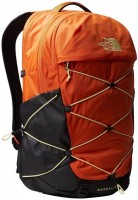
The optimal volume of the backpack depends on the trip: for a walk without an overnight stay, 30 liters is enough, the expedition will require more than 100 |
Types of backpacks
All models on the market can be divided into three main types:
- For hikes. The name of this category determines its purpose. It includes such subtypes as tourist for amateur hikes, and expeditionary for professionals.
- Sports. The most simple and lightweight models used for sports shoes and uniforms. May specialize in certain sports (e.g. cycling backpacks). Often this category also includes ordinary urban models used to carry textbooks, electronics, etc.
- Specialized. This category includes various backpacks for hunting or fishing. They are sometimes distinguished by the presence of very specific additions. So, a fishing backpack can be used as a folding chair.
Further in the article we will talk mainly about tourist backpacks.
Backpack size
The backpack should not be allowed to be too small. However, it should not be excessively large either, since along with the size, the weight also increases. Mostly it depends on what kind of trip you are going on.
- For a simple walk or bike ride without an overnight stay, a backpack of 30-40 liters is enough (the so-called city backpack is also suitable);
- Hiking for several days already requires 50-60 liters;
- For difficult hikes, about 70-80 liters are required;
- For expeditions, really roomy solutions are required, with a volume of more than 100 liters.
The data is very approximate. Much depends on the build of the tourist, his age, gender and endurance, on the design and shape of the backpack itself. Specially designed for children and women, backpacks differ in shape and volume from men's models.
Moreover, different manufacturers sometimes indicate the volume in different ways. In some cases, additional pockets are taken into account, in others they are not. There are models of backpacks with a design that provides for the possibility of changing the volume. The last option may not be superfluous at all - by reducing the volume of the backpack, you can more correctly distribute the load in the case when its volume is small.
Belt system
Some manufacturers equip their backpacks with a chest strap, which is designed to fix the straps. It prevents them from falling off the shoulders and allows you to transfer part of the load to the chest. But if the backpack is chosen correctly, then the straps will not fall off, but the chest strap may well pull the chest and interfere with breathing. Anyway, it should not be tightened too tightly.
The straps themselves should be soft and wide, but not too much. It is generally accepted that for an adult, the width of the straps should range from 5 to 7 cm. It is better if they taper towards the bottom and are attached not to the corners on the bottom, but somewhat higher, in the same area as the waist belt.
 |
| The classic layout of the belts, straps and buckles of the backpack |
But the waist belt may not be superfluous at all, since it significantly reduces the load, redistributing it to the hips and not allowing the backpack to twitch. But it should be remembered that the belt should be soft, not too narrow and not too wide. The buckle on it should be easy to unfasten with one hand. Experienced tourists are advised to make sure that it is safe and sound. It’s even better to take one replacement with you, since a lap belt buckle that breaks on the road can be a tangible nuisance.
Important Points
 |
|
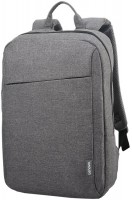
A stylish urban backpack can serve as a good solution for short trips without overnight stay |
Some attention should be paid to all kinds of useful additions, such as equipment loops or back ventilation. With a long hike, any such trifle can make life much easier. Also, a good backpack has a back that is soft on the outside, but hard on the inside. By the way, most modern models are distinguished by the presence of an anatomical back, which facilitates long-term wearing, reducing the load on the back.
The bottom of a good backpack should be durable. No matter how carefully you treated your backpack, at least sometimes you have to put it on the ground. A durable bottom is the key to a long service life.
A good backpack should have double seams or seams covered with tape. But overlock stitching can do a disservice, since the fabric in such places sometimes begins to split (especially often this happens with inexpensive models). In fact, problems with seams spreading during a campaign are much more common than we would like.
The material from which the backpack is made is a very important parameter. However, it should be remembered that sometimes there is confusion in the names and different manufacturers call the same material differently. However, usually the more expensive the backpack, the better materials are used in its manufacture.
The handle on the backpack, located above the shoulder straps, can be very useful when using public transport. Large backpacks may have two - top and bottom. Sometimes handles are also placed on the sides.
Some attention should be paid to the colour of the backpack. So, if you go hiking in the forest, it is better to take a bright enough model - in which case it will be easy to find it. If you are hitchhiking, then on the contrary, it is not very good when the backpack is too conspicuous and attracts too much attention.
Top flap and additional pockets
At its core, the top flap is just an extra pocket located at the top of the backpack. Its advantage is, first of all, in a rather large size, as well as in the possibility of the fastest access to content. It is better if the top valve is not just firmly attached to the back, but is held on the straps. This design allows you to adjust the volume of the backpack under certain conditions. When choosing the volume and shape of the valve, decide for what purposes you will use it and what to put - a camera or a hatchet.
Some experienced travelers believe that additional pockets only complicate the design of the backpack and reduce its water resistance. Things without pockets can be folded so that everything is at hand at the right time. But this is already aerobatics, acquired with experience. For beginners, it is still better to start with pockets. However, one should not get carried away either - as practice shows, most of the various "secret" or specialized pockets are usually never used.
Useful extras
A bottle pocket is useful in that it will always have drinking water on hand. The included rain cover can perfectly protect your load in very heavy downpours. Mounts for special equipment make it easy to carry a variety of ice axes, axes or walking poles.
But with the presence of a drinking system output, the situation is not clear. While some users claim that it is very convenient, others argue otherwise. Perhaps it all depends on personal preference.
 |
|
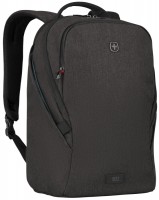
Many people think that extra pockets only complicate design of the backpack and reduce its water resistance |
But in general, it should be remembered that you should not get too carried away with all kinds of additions. After all, some of them may not be useful at all, but they raise the cost of a backpack significantly. For example, the presence of wheels for transportation usually not only does not help, but can also interfere. Also, a first-aid kit that comes “as a gift” from the manufacturer looks no less senseless addition. No, of course, a first-aid kit is necessary on a hike. It's just better to collect it with your own hands.
Last tip
Ideally, before making a choice, it makes sense to load the backpack and try it on your back. It should be easy to open, providing maximum access to the things put in it. So that on a hike you can relatively quickly get even what lies at the very bottom, without pulling out other things for this. If the backpack is at least somewhat uncomfortable already in the store, then on a long hike it will be even more uncomfortable. And if there is even the slightest doubt, then it is better to refuse the purchase.
And finally, I would like to note that you should not really hope that you will be able to purchase a really very comfortable and suitable backpack for your needs from the very first time. This is within the power of an experienced traveler, but not a beginner. Those who have solid experience, such texts and advice are simply not needed.
Read also:
How to pack for a hike?
Everything you need to put in your backpack for a successful hike. Tips from experienced travelers
How to choose a camping stove?
On a hike, you will undoubtedly face the question of cooking, it is better to prepare for this in advance.
How to choose a sleeping bag?
Choosing the right sleeping bag is essential for a comfortable hike.

Articles, reviews, useful tips
All materials