
Comparison Mora Robust vs Ganzo G101H
Add to comparison | 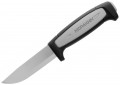 | 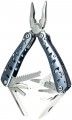 |
|---|---|---|
| Mora Robust | Ganzo G101H | |
from $10.04 up to $14.96 | from £18.74 | |
| TOP sellers | ||
| Type | knife | multitool |
| Suitable for | outdoor (hunting / fishing) | |
| Number of functions | 12 pcs | |
Specs | ||
| Design | fixed blade | folding |
| Blade profile | normal blade (classic) | sheepsfoot |
| Main blade type | smooth | smooth |
| Blade material | steel | steel |
| Steel grade | 440C | |
| Hardness | 58 HRC | |
| Blade length | 91 mm | |
| Blade thickness | 3.2 mm | |
| Length | 206 mm | |
| Length (folded) | 105 mm | |
| Weight | 140 g | 210 g |
| Handle material | rubber | aluminum |
| More features | plastic scabbard | fabric case |
Tool | ||
| Features | can-opener bottle opener additional blade crosshead screwdriver slotted screwdriver scissors file pliers wire cutters wire stripper sewing awl bit adapter | |
| Country of origin | Sweden | China |
| Color | ||
| Added to E-Catalog | january 2016 | october 2014 |


Compare Mora Robust and Ganzo G101H
You may be interested in
My comparisons
Mora Robust often compared


Ganzo G101H often compared


Glossary
Type
— Knife. The main category of classic knives with a single working blade that do not belong to separate specialized types. It includes both folding pocket models and fixed-blade knives, so the carrying method, durability, and ease of use depend on the design of the specific product. These knives can be used at home, while traveling, or outdoors—the appropriate use case is specified further under “Purpose”.
— Swiss Army knife. A compact folding knife whose single handle houses a blade along with bottle openers, screwdrivers, scissors, a file, a corkscrew, and other tools. It is convenient for everyday tasks, travel, and outdoor activities, as it replaces several basic tools while remaining compact. Unlike a classic multitool, a Swiss Army knife has one handle and is usually not built around full-size folding pliers.
— Multitool. Combines several full-size tools in one folding body, usually pliers, cutters, a knife, screwdrivers, and openers. The two handles provide a comfortable grip when using the pliers, while the other tools fold inward. A multitool is useful for minor repairs and maintaining gear, a car, or a bicycle, but its versatile design usually makes it less convenient and capable of handling lower loads than dedicated tools.
— Keychain multitool. A reduced-size version of a multitool designed to be carried...constantly with keys or in a small pocket. It may include a miniature knife, screwdriver, opener, scissors, or other simple tools useful in everyday situations. Compactness is its main advantage, but the short handles and small tools are not intended for serious loads.
— Machete. A knife with a long, wide blade designed primarily for chopping motions. A machete is convenient for clearing dense vegetation, cutting branches, and performing rough camp tasks that an ordinary knife would handle more slowly. At the same time, its large size and weight make it inconvenient for precise cutting and continuous everyday carry.
— Butterfly knife. A folding knife with a handle made of two pivoting halves that completely conceal the blade when closed. This design allows the knife to be opened quickly and used for various spinning techniques, which is why models of this type are also popular for flipping. For safer practice, it is better to choose dedicated training versions without a sharpened cutting edge.
— Push dagger. A compact knife with a transverse or T-shaped handle, held so that the blade is positioned between the fingers. This design was created primarily for self-defense: it provides a secure grip and allows a short, powerful strike without a complicated holding technique. A push dagger is inconvenient for food preparation, working with wood, and prolonged everyday cutting, so it should not be considered a universal model.
— Karambit. A knife with a claw-shaped curved blade and a ring at the end of the handle, originally associated with household work in Southeast Asia. Today it is more often used in martial arts, training, and as a specialized self-defense tool, while the blade shape is also suitable for pulling cuts through ropes, straps, and packaging materials. The ring helps keep the knife in the hand, but the pronounced curve makes sharpening more difficult and makes a karambit less convenient for ordinary outdoor and household tasks.
— Throwing knife. Its shape, balance, and structural strength are designed for repeated throwing at a designated target. Such knives are usually made from a solid metal blank and have no bulky scales that could disrupt the balance or be damaged on impact. They are not intended for ordinary cutting work and should only be used at a prepared site with a safe area behind the target.
— Kubotan / yawara. A compact self-defense tool in the form of a short, rigid rod that is held in the palm and used to enhance strikes or apply pressure to pressure points. A kubotan usually has a key attachment and is suitable for everyday carry, while a yawara is more often a simple rod without additional elements. Some models are equipped with a glass breaker, which may be useful for breaking a car window in an emergency. Such a product usually has no blade, so it is not intended for cutting and differs from the other tools presented in this section.
— Mushroom knife. A compact knife for carefully cutting and initially cleaning mushrooms while gathering them. It is often equipped with a short curved blade, a brush for removing dirt, and a measuring scale on the handle. This specialized design is less versatile for ordinary outdoor tasks, but it allows harvested mushrooms to be handled more carefully.
— Sword. A long-bladed item with a pronounced handle and protective guard. Depending on its design, it may be intended for collecting, interior decoration, reenactments, or training. Before choosing one, it is important to distinguish decorative models not designed to withstand loads from functional or training items with appropriate structural strength.
— Swiss Army knife. A compact folding knife whose single handle houses a blade along with bottle openers, screwdrivers, scissors, a file, a corkscrew, and other tools. It is convenient for everyday tasks, travel, and outdoor activities, as it replaces several basic tools while remaining compact. Unlike a classic multitool, a Swiss Army knife has one handle and is usually not built around full-size folding pliers.
— Multitool. Combines several full-size tools in one folding body, usually pliers, cutters, a knife, screwdrivers, and openers. The two handles provide a comfortable grip when using the pliers, while the other tools fold inward. A multitool is useful for minor repairs and maintaining gear, a car, or a bicycle, but its versatile design usually makes it less convenient and capable of handling lower loads than dedicated tools.
— Keychain multitool. A reduced-size version of a multitool designed to be carried...constantly with keys or in a small pocket. It may include a miniature knife, screwdriver, opener, scissors, or other simple tools useful in everyday situations. Compactness is its main advantage, but the short handles and small tools are not intended for serious loads.
— Machete. A knife with a long, wide blade designed primarily for chopping motions. A machete is convenient for clearing dense vegetation, cutting branches, and performing rough camp tasks that an ordinary knife would handle more slowly. At the same time, its large size and weight make it inconvenient for precise cutting and continuous everyday carry.
— Butterfly knife. A folding knife with a handle made of two pivoting halves that completely conceal the blade when closed. This design allows the knife to be opened quickly and used for various spinning techniques, which is why models of this type are also popular for flipping. For safer practice, it is better to choose dedicated training versions without a sharpened cutting edge.
— Push dagger. A compact knife with a transverse or T-shaped handle, held so that the blade is positioned between the fingers. This design was created primarily for self-defense: it provides a secure grip and allows a short, powerful strike without a complicated holding technique. A push dagger is inconvenient for food preparation, working with wood, and prolonged everyday cutting, so it should not be considered a universal model.
— Karambit. A knife with a claw-shaped curved blade and a ring at the end of the handle, originally associated with household work in Southeast Asia. Today it is more often used in martial arts, training, and as a specialized self-defense tool, while the blade shape is also suitable for pulling cuts through ropes, straps, and packaging materials. The ring helps keep the knife in the hand, but the pronounced curve makes sharpening more difficult and makes a karambit less convenient for ordinary outdoor and household tasks.
— Throwing knife. Its shape, balance, and structural strength are designed for repeated throwing at a designated target. Such knives are usually made from a solid metal blank and have no bulky scales that could disrupt the balance or be damaged on impact. They are not intended for ordinary cutting work and should only be used at a prepared site with a safe area behind the target.
— Kubotan / yawara. A compact self-defense tool in the form of a short, rigid rod that is held in the palm and used to enhance strikes or apply pressure to pressure points. A kubotan usually has a key attachment and is suitable for everyday carry, while a yawara is more often a simple rod without additional elements. Some models are equipped with a glass breaker, which may be useful for breaking a car window in an emergency. Such a product usually has no blade, so it is not intended for cutting and differs from the other tools presented in this section.
— Mushroom knife. A compact knife for carefully cutting and initially cleaning mushrooms while gathering them. It is often equipped with a short curved blade, a brush for removing dirt, and a measuring scale on the handle. This specialized design is less versatile for ordinary outdoor tasks, but it allows harvested mushrooms to be handled more carefully.
— Sword. A long-bladed item with a pronounced handle and protective guard. Depending on its design, it may be intended for collecting, interior decoration, reenactments, or training. Before choosing one, it is important to distinguish decorative models not designed to withstand loads from functional or training items with appropriate structural strength.
Suitable for
Characterizes the primary area of use for which the model was designed by the manufacturer. This positioning takes into account the construction, dimensions, materials, equipment, and intended operating conditions: everyday carry, hiking, tactical tasks, training, or use underwater. At the same time, the boundaries between categories are conditional—one knife may be successfully used in different scenarios, so the intended use should be viewed as a manufacturer’s recommendation rather than a strict limitation.
— EDC (everyday carry). Compact knives for regular carry and everyday tasks: opening packages, cutting cord, preparing food, or making minor repairs. These models usually feature a folding design, a clip, a low weight, or a keychain format, so they do not get in the way in a pocket or bag. A compact EDC tool may lack the size and strength needed for demanding outdoor work, so convenience for constant carry is more important here than maximum load.
— Outdoor (hunting / fishing). Models for outdoor trips, setting up camp, working with gear, preparing food, processing branches, field-dressing game, or cleaning fish. In these conditions, a sturdy blade, a secure-grip handle, moisture-resistant materials, and a sheath or reliable locking mechanism in the folded position are especially useful. A compact folding knife is sufficient for easy walks, while extended trips and heavy-duty work...may require a full-size model with a fixed blade.
— Tactical. Knives adapted to demanding field, service, and emergency-rescue conditions. They are characterized by a reliable grip, robust construction, quick opening or deployment, and may include a serrated edge, strap cutter, and glass breaker. Such solutions are useful when working in gloves, with dense materials, and with gear components, but their larger size and aggressive shape are not always convenient for ordinary everyday carry. The designation “tactical” characterizes the model’s construction and equipment; it does not confirm that the model is a weapon.
— Training. Designed for learning knife-handling techniques, flipping, or training sparring with a lower risk of injury. Instead of a fully sharpened edge, it usually has a blunt or imitation blade, and the tip may be rounded. Such a model allows users to practice movements more safely and become accustomed to the design of a real knife, but it is not intended for ordinary cutting tasks.
— For diving. Designed for use underwater, it helps cut tangled fishing line, rope, netting, or other material that could restrict a diver’s movement. These knives are made from corrosion-resistant materials, supplied with reliable sheaths, and designed to attach to the leg, arm, or gear components. A serrated edge and strap cutter make it easier to work with fibrous materials, while a blunt tip on some models reduces the risk of accidentally damaging equipment. After a dive, even a corrosion-resistant knife should preferably be rinsed with fresh water and dried.
— EDC (everyday carry). Compact knives for regular carry and everyday tasks: opening packages, cutting cord, preparing food, or making minor repairs. These models usually feature a folding design, a clip, a low weight, or a keychain format, so they do not get in the way in a pocket or bag. A compact EDC tool may lack the size and strength needed for demanding outdoor work, so convenience for constant carry is more important here than maximum load.
— Outdoor (hunting / fishing). Models for outdoor trips, setting up camp, working with gear, preparing food, processing branches, field-dressing game, or cleaning fish. In these conditions, a sturdy blade, a secure-grip handle, moisture-resistant materials, and a sheath or reliable locking mechanism in the folded position are especially useful. A compact folding knife is sufficient for easy walks, while extended trips and heavy-duty work...may require a full-size model with a fixed blade.
— Tactical. Knives adapted to demanding field, service, and emergency-rescue conditions. They are characterized by a reliable grip, robust construction, quick opening or deployment, and may include a serrated edge, strap cutter, and glass breaker. Such solutions are useful when working in gloves, with dense materials, and with gear components, but their larger size and aggressive shape are not always convenient for ordinary everyday carry. The designation “tactical” characterizes the model’s construction and equipment; it does not confirm that the model is a weapon.
— Training. Designed for learning knife-handling techniques, flipping, or training sparring with a lower risk of injury. Instead of a fully sharpened edge, it usually has a blunt or imitation blade, and the tip may be rounded. Such a model allows users to practice movements more safely and become accustomed to the design of a real knife, but it is not intended for ordinary cutting tasks.
— For diving. Designed for use underwater, it helps cut tangled fishing line, rope, netting, or other material that could restrict a diver’s movement. These knives are made from corrosion-resistant materials, supplied with reliable sheaths, and designed to attach to the leg, arm, or gear components. A serrated edge and strap cutter make it easier to work with fibrous materials, while a blunt tip on some models reduces the risk of accidentally damaging equipment. After a dive, even a corrosion-resistant knife should preferably be rinsed with fresh water and dried.
Number of functions
The number of additional features provided in the design of the knife - in addition to the blade itself, which in this case is not taken into account. We also note that in our catalog this number is not counted by the actual number of tools, but by the number of tool types: for example, three flat screwdrivers of different sizes are counted as one function. See "Features and Features" for details on optional equipment.
Design
- Clumsy. The simplest option: the knife blade is fixedly fixed in the handle; there is no possibility of folding it. Such knives are not very convenient to carry - not only because of their large dimensions, but also because they require a sheath or sheath, otherwise the blade can damage surrounding objects or even injure the owner. On the other hand, the fixed structure is simple and inexpensive - and at the same time extremely durable and reliable. Therefore, many knives designed for significant loads - in particular, hunting and fishing ones - are made awkward.
— Folding. Knives of a traditional folding design: during non-working hours, the blade is folded due to the rotary fastening in such a way that the blade is hidden in the handle. A similar folding principle is used by butterfly knives and multitools (see “Type”), so they also fall into this category. In any case, this design significantly simplifies storage and transportation and reduces to almost zero the likelihood of the blade coming into contact with foreign objects. Folding models are considered somewhat less durable and reliable than non-folding ones; however, through the use of certain types of locks (see below), this moment can be almost completely compensated. But the obvious disadvantages of this design are its higher cost than non-folding ones, as well as the need for special maintenance: a dirty mechanism may require cleanin...g and lubrication. In addition, not every knife can be made folding - for example, for a machete this does not make sense given the size and purpose.
— Folding (front-facing). A specific type of folding design, found mainly in EDC knives (see “Type”). The difference between such products and conventional folding knives is that when opened, the blade does not rotate on a hinge, but extends from the front end of the handle, usually under the action of a special spring. Moreover, in the simplest models the spring works only in one direction - usually to open, less often to close; you have to move the blade in the other direction and compress the spring “manually”, by moving a special slider or other element. However, the two-way Double Auto system has become more widespread (for more information about it, see “Lock”). Note that in order to avoid injury (or stabbing), in some “front-end” blades the blade can be removed from the lock and moved back also under the influence of strong longitudinal pressure.
— Folding (automatic). Knives with an automatic mechanism for unfolding and folding the blade. To bring their blade into working position, a lock with a powerful spring is used, which is released when the button is pressed. The key feature of automatic folding models is the ability to open them with one hand. A knife with automatic blade ejection often comes to the rescue when it is not possible to use the second hand. As a rule, opening and closing the blade of such knives occurs using a button.
— Folding. Knives of a traditional folding design: during non-working hours, the blade is folded due to the rotary fastening in such a way that the blade is hidden in the handle. A similar folding principle is used by butterfly knives and multitools (see “Type”), so they also fall into this category. In any case, this design significantly simplifies storage and transportation and reduces to almost zero the likelihood of the blade coming into contact with foreign objects. Folding models are considered somewhat less durable and reliable than non-folding ones; however, through the use of certain types of locks (see below), this moment can be almost completely compensated. But the obvious disadvantages of this design are its higher cost than non-folding ones, as well as the need for special maintenance: a dirty mechanism may require cleanin...g and lubrication. In addition, not every knife can be made folding - for example, for a machete this does not make sense given the size and purpose.
— Folding (front-facing). A specific type of folding design, found mainly in EDC knives (see “Type”). The difference between such products and conventional folding knives is that when opened, the blade does not rotate on a hinge, but extends from the front end of the handle, usually under the action of a special spring. Moreover, in the simplest models the spring works only in one direction - usually to open, less often to close; you have to move the blade in the other direction and compress the spring “manually”, by moving a special slider or other element. However, the two-way Double Auto system has become more widespread (for more information about it, see “Lock”). Note that in order to avoid injury (or stabbing), in some “front-end” blades the blade can be removed from the lock and moved back also under the influence of strong longitudinal pressure.
— Folding (automatic). Knives with an automatic mechanism for unfolding and folding the blade. To bring their blade into working position, a lock with a powerful spring is used, which is released when the button is pressed. The key feature of automatic folding models is the ability to open them with one hand. A knife with automatic blade ejection often comes to the rescue when it is not possible to use the second hand. As a rule, opening and closing the blade of such knives occurs using a button.
Blade profile
Profile of the main blade used in a knife.
The profile describes the overall shape of the blade; Its purpose and the features of using the knife depend on this. Among the most popular profiles nowadays are drop-point, clip-point, normal blade (classic), bowie, tanto ; however, there are many other varieties such as dagger, wharncliffe, etc. It is worth noting that the difference between some options is quite arbitrary; the same actual shape from different manufacturers (and even from different sellers) may formally refer to different types of profile. So here we will look at the classic, most characteristic features of the different options. They are:
— Normal blade (classic). The traditional profile of the blade, in our area known, in particular, from Finnish knives (finks). The butt of the “classic” is strictly straight (this is the main difference from the drop point), while the blade has a straight shape in the back and middle parts, and in the front it is rounded upward and forms a pronounced tip. This shape makes the blade easy to manufacture and at the same time universal; it works equally well for cutting and piercing, allows the knife to be used for planing, etc.
— Drop-point. The profile is in man...y ways similar to the normal one described above and differs primarily in the shape of the butt - it is not straight, but somewhat bent downward in an arc closer to the tip. It is also universal, while the proximity of the tip to the load axis contributes to higher efficiency when working on a puncture (although in general such blades are not considered as a serious piercing tool). Thanks to this, as well as ease of production, low cost and reliability, drop points are extremely popular in modern knives.
— Clip-point. Another universal profile, similar in shape to a drop-point, but differing in one characteristic detail: the front part of the butt, going down to the tip, is made not in the form of an arc, but in the form of a straight bevel at a relatively small angle. This further increases the effectiveness of the piercing effect; clip points are considered more "aggressive" than drops, and better suited for use as a weapon. However, such knives are still primarily tools and also perform well in this role, and in a fairly wide variety of tasks.
— Bowie. A profile originally created for combat and hunting knives. The shape of the blade itself is similar to the options described above - it is straight in the back and middle parts and smoothly curved to the tip in the front. But in terms of the shape of the butt, the “bowie” is a kind of opposite of the “drop point”: the front part of the butt is made not convex, but concave, as a result, the tip turns out to be “snub-nosed”, slightly raised up. Many value such blades primarily for their characteristic external style, but they also have very practical advantages: a center of gravity shifted back (which is especially noticeable on large, heavy knives) and high efficiency both when cutting and when piercing, which is enhanced in some models the presence of sharpening on the concave part of the butt.
- Tanto. Originally, a tanto is a traditional Japanese dagger; however, modern knives most often use not the classic shape, but the so-called “American tanto”, with a characteristic angular blade shape. Actually, the blade in such knives is straight or slightly curved (convex) along almost the entire length, but closer to the tip it sharply bends upward, forming a clearly defined angle (Japanese tantos do not have such a break and the blade bends smoothly). The American tanto is distinguished not only by its stylish, “aggressive” appearance, but also by its excellent stability when piercing (as well as efficiency when cutting), which is what determined its wide popularity.
— Spay-point. A type of profile similar in shape to the clip-point described above, but having a larger bevel angle. As a result, the angle of the tip where the butt and blade meet is more blunt, which reduces the effectiveness of deep piercing blows, but makes the blade more durable and resistant to various loads. The latter can be very useful for various chores; in particular, spay-point is quite popular among skinners - hunting knives used for skinning prey.
— Spear-point. A type of profile inspired by the tip of a spear. A full-fledged spear point has symmetrical outlines, sharpening on both sides and is used mainly in combat and hunting knives; the shape of such a blade is designed primarily for efficiency in stabbing strikes. However, there is also a simplified, more “peaceful” version of this profile: its shape is similar to the drop point (see above), but on the front of the butt, in front of the tip, there is an additional descent that forms a false blade or even a full-fledged additional blade. Such “spear points” have mainly economic purposes.
— Dagger. The profile shape derived from daggers: a double-edged blade, usually long and narrow, strictly symmetrical in shape, with a clearly defined tip. In many ways similar to a spear point, however, it is designed not only for piercing, but also for cutting; some models may even have different sharpening on different sides of the blade (smooth on one side and serrated on the other).
- Сhisel. This name translates as “chisel”, and it quite clearly describes this type of profile. Such blades have a rectangular or similar shape, there is practically no point in them, and on the front side of the blade there is an additional cutting edge located perpendicular to the main blade. In general, chisel is a rather highly specialized and therefore poorly widespread type of profile: it is convenient for some specific work, but in terms of overall functionality and practicality it is inferior to many of the options described above.
— Clearer blade. A profile similar in shape to the blade of a kitchen hatchet: wide, massive (however, holes are often made in the blade to reduce weight), with a straight or slightly rounded blade shape and often without a pronounced tip - the front part of the blade in such cases looks perpendicular or almost perpendicular cut. Many of these models are similar to the chisel blades described above, but the leading edge in the “jibs” is not sharpened. There are, however, other variants of the shape - for example, with a blade clearly rounded upward and a bevel of the butt, reminiscent of a shortened and thickened version of a clip-point or bowie (see above). However, in any case, cleaver-type blades are designed mainly for cutting and sometimes chopping, and are poorly suited for thrusting or not at all.
- Sheepsfoot (“sheep’s hoof/sheep’s leg”). A profile that is a kind of opposite to the “classic” described above: the blade in such blades is made straight or almost straight, and the butt in the front part is rounded down towards the blade. As a result, the tip turns out to be as non-aggressive as possible, practically incapable of piercing. Due to this, the “sheep’s leg”, among other things, is considered an ideal option for a rescue tool: with such a knife you can, for example, cut a seat belt that fits tightly to the body without fear of injuring a person.
— Wharncliffe. A profile reminiscent of the sheepsfoot described above; sometimes these two options are even combined into one type. However, there is still a difference: in the Wharncliffe, the butt in the front part descends to the tip along a gentler arc than the sheepsfoot, and this arc begins noticeably closer to the handle. The advantages of this profile are considered to be high cutting accuracy (due to the straight blade along the entire length), as well as good suitability for planing and scraping (for the same reason). In addition, the tip also turns out to be quite functional; it can, for example, accurately cut out a shallow contour of a complex shape. However, in general, this profile is not as versatile as the same “classic” or “drop point”; It initially gained popularity in “gentleman’s knives” - small pocket folding models of the EDC category. It is also worth noting that there are several other variants of the “wharncliffe” on the market - with a slightly curved upward rather than straight blade.
- Skinner A profile found exclusively in hunting knives and having a rather narrow specialization - “skinner”, as the name hints, is intended for skinning hunting trophies. Accordingly, the shape of the knife is optimized for maximum convenience during such work. The blade is made quite wide, often also quite short. In shape it is somewhat reminiscent of a drop point (see above), however, “skinners” have an extension closer to the tip, and the tip itself may not be provided at all - knives of this type are not designed for piercing action. Because of these features, “skinners” are practically unsuitable for use for any purpose other than their primary purpose; It makes sense to buy such a knife in addition to a universal hunting knife (or an “arsenal” of several knives).
- Gut-hook. Modification of the drop-point profile (see above), found in hunting knives. On the butt of such a blade, at the very tip, a special hook is made with a sharpened inner edge; This type of hook is convenient for skinning and butchering prey. At the same time, the knife turns out to be almost as universal as the original drop-point - thanks to the similar outline of the blade; The only thing is that the gut-hook is not well suited for strong stabbing blows, since the presence of the hook somewhat reduces the strength of the blade. We also note that almost all such knives are made non-folding - this design for “gut-hooks” is considered optimal, taking into account the profile features.
— Persian-point. A profile somewhat similar to the bowie described above and differing primarily in the shape and size of the concave part of the tip: it occupies most of the butt, and sometimes the entire butt is made concave. We also note that the degree of curvature of the butt can be different - from an almost straight shape, slightly different from the “classic”, to a pronounced arc of a bizarre shape, with a variable bending radius. Persian-point is one of the “historical” profiles used since ancient times; it allows you to use the knife with equal efficiency both as a weapon (including for stabbing) and as a tool for various household tasks. However, the features of application greatly depend on the specific shape of the blade.
—Hawkbill A downward curved sickle-shaped blade, reminiscent in shape of the beak of a bird of prey. The tip of such a blade is obtained noticeably below the center line, and sharpening is carried out along the inner, concave side of the blade. Classic representatives of “hawkbills” are karambits - knives originally created for a rather specific application; See "Type" for details.
- Recurved blade. A profile suggesting an S-shaped blade - slightly tapering from the base to the first third, noticeably widening towards the second third and with a clearly defined tip; the butt shape is usually similar to the drop-point profile (see above). Many consider the stylish and aggressive appearance to be one of the main advantages of this profile. As for functionality, the recurved blade is intended mainly for chopping, rough cutting and ripping; For piercing effects, as well as precise cutting, such knives are poorly suitable.
- Latin. Traditional, the most common type of profile among machetes; originally appeared in Latin America, hence the name. The latin blade has some expansion closer to the tip, most of the blade, starting from the handle, is flat, but closer to the end of the blade the blade rises in a steep arc towards the tip. The butt is straight or slightly concave; in some models it may be equipped with a serrator or even a full-fledged saw. Like all machetes, “Latin” blades are intended primarily for chopping, which is facilitated, in particular, by the blade’s center of gravity shifted to the tip; For more information on the use of such tools, see “Type”.
- Golock. Blade profile originating from Malaysia; found exclusively in machetes. Initially, the “golok” is a heavier, thicker and at the same time shorter profile than the traditional “Latin”; it provides for a noticeable expansion towards the end and a cutting edge rising steeply towards the tip, which gives the blade a distinct teardrop shape. However, nowadays, under the designation golock, blades are produced that are very far from the original configuration and resemble drop-point, or even sheepsfoot (see above).
— Parang. Another type of machete comes from Malaysia: a large and heavy blade of a curved shape, with a convex (curved upwards to the tip) cutting edge and a noticeable expansion from the handle to the end (more pronounced than in classic Latin-type machetes). The tip itself is most often located at the line of the blade, but it can also be located higher, in the area of the butt line. We also note that the “parang” profile also includes requirements for the handle: it must be curved downwards and have a thickening at the end for a secure hold in the hand. Thus, the overall shape of such a machete is S-shaped. Due to their shape and heavy weight, parangs allow you to chop effectively with a small swing.
— Kukri. Profile used in knives of the same name; In our catalog, such knives are classified as machetes, but initially “kukri” is a separate type of heavy knife, whose homeland is Nepal. This profile is difficult to confuse with something else: the long (several tens of centimeters) blade is curved downwards, noticeably widened near the tip and sharpened along the inner, concave side. This shape, combined with a forward center of gravity, makes the kukri extremely effective for chopping. Such knives are also used as combat knives, but in general they are very versatile tools, suitable for peaceful use in tourism, agriculture, etc.
- Bolo. The blade profile of the machete is also known as “Filipino” - based on its place of origin. The peculiarity of such a blade is that starting from the second third (when viewed from the handle), it expands in both directions - both towards the blade and towards the butt - and then converges to the tip, located almost on the center line of the knife (usually slightly above or a little lower). The blade itself can be either convex or S-shaped, like a recurved blade (see above). Initially, the “bolo” was an agricultural tool; its original purpose was to cut down bushes and small trees.
The profile describes the overall shape of the blade; Its purpose and the features of using the knife depend on this. Among the most popular profiles nowadays are drop-point, clip-point, normal blade (classic), bowie, tanto ; however, there are many other varieties such as dagger, wharncliffe, etc. It is worth noting that the difference between some options is quite arbitrary; the same actual shape from different manufacturers (and even from different sellers) may formally refer to different types of profile. So here we will look at the classic, most characteristic features of the different options. They are:
— Normal blade (classic). The traditional profile of the blade, in our area known, in particular, from Finnish knives (finks). The butt of the “classic” is strictly straight (this is the main difference from the drop point), while the blade has a straight shape in the back and middle parts, and in the front it is rounded upward and forms a pronounced tip. This shape makes the blade easy to manufacture and at the same time universal; it works equally well for cutting and piercing, allows the knife to be used for planing, etc.
— Drop-point. The profile is in man...y ways similar to the normal one described above and differs primarily in the shape of the butt - it is not straight, but somewhat bent downward in an arc closer to the tip. It is also universal, while the proximity of the tip to the load axis contributes to higher efficiency when working on a puncture (although in general such blades are not considered as a serious piercing tool). Thanks to this, as well as ease of production, low cost and reliability, drop points are extremely popular in modern knives.
— Clip-point. Another universal profile, similar in shape to a drop-point, but differing in one characteristic detail: the front part of the butt, going down to the tip, is made not in the form of an arc, but in the form of a straight bevel at a relatively small angle. This further increases the effectiveness of the piercing effect; clip points are considered more "aggressive" than drops, and better suited for use as a weapon. However, such knives are still primarily tools and also perform well in this role, and in a fairly wide variety of tasks.
— Bowie. A profile originally created for combat and hunting knives. The shape of the blade itself is similar to the options described above - it is straight in the back and middle parts and smoothly curved to the tip in the front. But in terms of the shape of the butt, the “bowie” is a kind of opposite of the “drop point”: the front part of the butt is made not convex, but concave, as a result, the tip turns out to be “snub-nosed”, slightly raised up. Many value such blades primarily for their characteristic external style, but they also have very practical advantages: a center of gravity shifted back (which is especially noticeable on large, heavy knives) and high efficiency both when cutting and when piercing, which is enhanced in some models the presence of sharpening on the concave part of the butt.
- Tanto. Originally, a tanto is a traditional Japanese dagger; however, modern knives most often use not the classic shape, but the so-called “American tanto”, with a characteristic angular blade shape. Actually, the blade in such knives is straight or slightly curved (convex) along almost the entire length, but closer to the tip it sharply bends upward, forming a clearly defined angle (Japanese tantos do not have such a break and the blade bends smoothly). The American tanto is distinguished not only by its stylish, “aggressive” appearance, but also by its excellent stability when piercing (as well as efficiency when cutting), which is what determined its wide popularity.
— Spay-point. A type of profile similar in shape to the clip-point described above, but having a larger bevel angle. As a result, the angle of the tip where the butt and blade meet is more blunt, which reduces the effectiveness of deep piercing blows, but makes the blade more durable and resistant to various loads. The latter can be very useful for various chores; in particular, spay-point is quite popular among skinners - hunting knives used for skinning prey.
— Spear-point. A type of profile inspired by the tip of a spear. A full-fledged spear point has symmetrical outlines, sharpening on both sides and is used mainly in combat and hunting knives; the shape of such a blade is designed primarily for efficiency in stabbing strikes. However, there is also a simplified, more “peaceful” version of this profile: its shape is similar to the drop point (see above), but on the front of the butt, in front of the tip, there is an additional descent that forms a false blade or even a full-fledged additional blade. Such “spear points” have mainly economic purposes.
— Dagger. The profile shape derived from daggers: a double-edged blade, usually long and narrow, strictly symmetrical in shape, with a clearly defined tip. In many ways similar to a spear point, however, it is designed not only for piercing, but also for cutting; some models may even have different sharpening on different sides of the blade (smooth on one side and serrated on the other).
- Сhisel. This name translates as “chisel”, and it quite clearly describes this type of profile. Such blades have a rectangular or similar shape, there is practically no point in them, and on the front side of the blade there is an additional cutting edge located perpendicular to the main blade. In general, chisel is a rather highly specialized and therefore poorly widespread type of profile: it is convenient for some specific work, but in terms of overall functionality and practicality it is inferior to many of the options described above.
— Clearer blade. A profile similar in shape to the blade of a kitchen hatchet: wide, massive (however, holes are often made in the blade to reduce weight), with a straight or slightly rounded blade shape and often without a pronounced tip - the front part of the blade in such cases looks perpendicular or almost perpendicular cut. Many of these models are similar to the chisel blades described above, but the leading edge in the “jibs” is not sharpened. There are, however, other variants of the shape - for example, with a blade clearly rounded upward and a bevel of the butt, reminiscent of a shortened and thickened version of a clip-point or bowie (see above). However, in any case, cleaver-type blades are designed mainly for cutting and sometimes chopping, and are poorly suited for thrusting or not at all.
- Sheepsfoot (“sheep’s hoof/sheep’s leg”). A profile that is a kind of opposite to the “classic” described above: the blade in such blades is made straight or almost straight, and the butt in the front part is rounded down towards the blade. As a result, the tip turns out to be as non-aggressive as possible, practically incapable of piercing. Due to this, the “sheep’s leg”, among other things, is considered an ideal option for a rescue tool: with such a knife you can, for example, cut a seat belt that fits tightly to the body without fear of injuring a person.
— Wharncliffe. A profile reminiscent of the sheepsfoot described above; sometimes these two options are even combined into one type. However, there is still a difference: in the Wharncliffe, the butt in the front part descends to the tip along a gentler arc than the sheepsfoot, and this arc begins noticeably closer to the handle. The advantages of this profile are considered to be high cutting accuracy (due to the straight blade along the entire length), as well as good suitability for planing and scraping (for the same reason). In addition, the tip also turns out to be quite functional; it can, for example, accurately cut out a shallow contour of a complex shape. However, in general, this profile is not as versatile as the same “classic” or “drop point”; It initially gained popularity in “gentleman’s knives” - small pocket folding models of the EDC category. It is also worth noting that there are several other variants of the “wharncliffe” on the market - with a slightly curved upward rather than straight blade.
- Skinner A profile found exclusively in hunting knives and having a rather narrow specialization - “skinner”, as the name hints, is intended for skinning hunting trophies. Accordingly, the shape of the knife is optimized for maximum convenience during such work. The blade is made quite wide, often also quite short. In shape it is somewhat reminiscent of a drop point (see above), however, “skinners” have an extension closer to the tip, and the tip itself may not be provided at all - knives of this type are not designed for piercing action. Because of these features, “skinners” are practically unsuitable for use for any purpose other than their primary purpose; It makes sense to buy such a knife in addition to a universal hunting knife (or an “arsenal” of several knives).
- Gut-hook. Modification of the drop-point profile (see above), found in hunting knives. On the butt of such a blade, at the very tip, a special hook is made with a sharpened inner edge; This type of hook is convenient for skinning and butchering prey. At the same time, the knife turns out to be almost as universal as the original drop-point - thanks to the similar outline of the blade; The only thing is that the gut-hook is not well suited for strong stabbing blows, since the presence of the hook somewhat reduces the strength of the blade. We also note that almost all such knives are made non-folding - this design for “gut-hooks” is considered optimal, taking into account the profile features.
— Persian-point. A profile somewhat similar to the bowie described above and differing primarily in the shape and size of the concave part of the tip: it occupies most of the butt, and sometimes the entire butt is made concave. We also note that the degree of curvature of the butt can be different - from an almost straight shape, slightly different from the “classic”, to a pronounced arc of a bizarre shape, with a variable bending radius. Persian-point is one of the “historical” profiles used since ancient times; it allows you to use the knife with equal efficiency both as a weapon (including for stabbing) and as a tool for various household tasks. However, the features of application greatly depend on the specific shape of the blade.
—Hawkbill A downward curved sickle-shaped blade, reminiscent in shape of the beak of a bird of prey. The tip of such a blade is obtained noticeably below the center line, and sharpening is carried out along the inner, concave side of the blade. Classic representatives of “hawkbills” are karambits - knives originally created for a rather specific application; See "Type" for details.
- Recurved blade. A profile suggesting an S-shaped blade - slightly tapering from the base to the first third, noticeably widening towards the second third and with a clearly defined tip; the butt shape is usually similar to the drop-point profile (see above). Many consider the stylish and aggressive appearance to be one of the main advantages of this profile. As for functionality, the recurved blade is intended mainly for chopping, rough cutting and ripping; For piercing effects, as well as precise cutting, such knives are poorly suitable.
- Latin. Traditional, the most common type of profile among machetes; originally appeared in Latin America, hence the name. The latin blade has some expansion closer to the tip, most of the blade, starting from the handle, is flat, but closer to the end of the blade the blade rises in a steep arc towards the tip. The butt is straight or slightly concave; in some models it may be equipped with a serrator or even a full-fledged saw. Like all machetes, “Latin” blades are intended primarily for chopping, which is facilitated, in particular, by the blade’s center of gravity shifted to the tip; For more information on the use of such tools, see “Type”.
- Golock. Blade profile originating from Malaysia; found exclusively in machetes. Initially, the “golok” is a heavier, thicker and at the same time shorter profile than the traditional “Latin”; it provides for a noticeable expansion towards the end and a cutting edge rising steeply towards the tip, which gives the blade a distinct teardrop shape. However, nowadays, under the designation golock, blades are produced that are very far from the original configuration and resemble drop-point, or even sheepsfoot (see above).
— Parang. Another type of machete comes from Malaysia: a large and heavy blade of a curved shape, with a convex (curved upwards to the tip) cutting edge and a noticeable expansion from the handle to the end (more pronounced than in classic Latin-type machetes). The tip itself is most often located at the line of the blade, but it can also be located higher, in the area of the butt line. We also note that the “parang” profile also includes requirements for the handle: it must be curved downwards and have a thickening at the end for a secure hold in the hand. Thus, the overall shape of such a machete is S-shaped. Due to their shape and heavy weight, parangs allow you to chop effectively with a small swing.
— Kukri. Profile used in knives of the same name; In our catalog, such knives are classified as machetes, but initially “kukri” is a separate type of heavy knife, whose homeland is Nepal. This profile is difficult to confuse with something else: the long (several tens of centimeters) blade is curved downwards, noticeably widened near the tip and sharpened along the inner, concave side. This shape, combined with a forward center of gravity, makes the kukri extremely effective for chopping. Such knives are also used as combat knives, but in general they are very versatile tools, suitable for peaceful use in tourism, agriculture, etc.
- Bolo. The blade profile of the machete is also known as “Filipino” - based on its place of origin. The peculiarity of such a blade is that starting from the second third (when viewed from the handle), it expands in both directions - both towards the blade and towards the butt - and then converges to the tip, located almost on the center line of the knife (usually slightly above or a little lower). The blade itself can be either convex or S-shaped, like a recurved blade (see above). Initially, the “bolo” was an agricultural tool; its original purpose was to cut down bushes and small trees.
Steel grade
The grade of steel from which the main blade of the knife is made. Knowing this name, you can find detailed data on the steel used and evaluate how high quality the knife is, whether it is suitable for the intended application and whether it is worth the money. Here are some of the most popular brands today:
— 440A, 440B, 440C. Category "above average". Relatively inexpensive varieties with excellent value for money. The carbon content is 0.75%, 0.9% and 1.2%, respectively; 440C steel is considered the most advanced, however, all varieties are resistant to corrosion, keep sharpening well and at the same time are quite easy to sharpen.
— AUS-8. The Japanese analogue of the "440th" line — more precisely, steel 440B (analogues 440 A and 440C are marked AUS-6 and AUS-10). It is distinguished by the presence of vanadium in the composition, which has a positive effect on wear resistance.
— 8Cr13MoV, 8Cr14MoV, 5Cr15MoV, etc. Chinese grades of steel with the addition of chromium, molybdenum and vanadium. The most popular and advanced option is deservedly considered "eight-chrome-thirteen". It is similar in properties to AUS-8, but has a higher carbon content; such steel is relatively inexpensive, but it has very good performance characteristics, due to which it is found both in relatively inexpensive knives and in premium models.
— 420. The material of the low-cost category, which, however, is distinguished by excellent corrosion resist...ance. Such steel wears out quickly, but it is also very easy to sharpen; it is well suited for low-cost knives designed for daily use.
— 420HC. A slightly more advanced version of the 420 steel described above, having a higher carbon content. As a result, the 420HC is noticeably harder and holds an edge longer; in terms of resistance to corrosion, it is practically not inferior to the original, but costs only slightly more. It is also considered an excellent option for mass-produced low-cost knives.
— D2. Category "significantly above average". A distinctive feature of this steel is its high chromium content, due to which, in terms of corrosion resistance, it approaches full-fledged “stainless steels” (although it still falls short of them). In addition, D2 is noticeably harder than most materials of a similar price category, due to which it is quite difficult to sharpen, but retains its working properties for a long time.
— CPM. A family of steels from Crucible that includes premium and super premium grades. Manufactured using the Crucible Particle Metallurgy proprietary technology, which, according to the manufacturer, provides higher quality than traditional production methods; however, such materials cost accordingly. The specific characteristics of different grades, of course, vary somewhat, but they are all characterized by good hardness and corrosion resistance. However it is worth considering that certain types of CPM (especially the most expensive ones) can be very difficult to sharpen; on the other hand, such sharpening is maintained noticeably longer than in cheaper materials.
— 65X13. Perhaps the most popular brand of Russian-made steel. It has a high chromium content, which contributes to corrosion resistance, while it is quite easy to sharpen, but does not differ in hardness. It is inexpensive and is used mainly in the mass production of inexpensive knives.
— 440A, 440B, 440C. Category "above average". Relatively inexpensive varieties with excellent value for money. The carbon content is 0.75%, 0.9% and 1.2%, respectively; 440C steel is considered the most advanced, however, all varieties are resistant to corrosion, keep sharpening well and at the same time are quite easy to sharpen.
— AUS-8. The Japanese analogue of the "440th" line — more precisely, steel 440B (analogues 440 A and 440C are marked AUS-6 and AUS-10). It is distinguished by the presence of vanadium in the composition, which has a positive effect on wear resistance.
— 8Cr13MoV, 8Cr14MoV, 5Cr15MoV, etc. Chinese grades of steel with the addition of chromium, molybdenum and vanadium. The most popular and advanced option is deservedly considered "eight-chrome-thirteen". It is similar in properties to AUS-8, but has a higher carbon content; such steel is relatively inexpensive, but it has very good performance characteristics, due to which it is found both in relatively inexpensive knives and in premium models.
— 420. The material of the low-cost category, which, however, is distinguished by excellent corrosion resist...ance. Such steel wears out quickly, but it is also very easy to sharpen; it is well suited for low-cost knives designed for daily use.
— 420HC. A slightly more advanced version of the 420 steel described above, having a higher carbon content. As a result, the 420HC is noticeably harder and holds an edge longer; in terms of resistance to corrosion, it is practically not inferior to the original, but costs only slightly more. It is also considered an excellent option for mass-produced low-cost knives.
— D2. Category "significantly above average". A distinctive feature of this steel is its high chromium content, due to which, in terms of corrosion resistance, it approaches full-fledged “stainless steels” (although it still falls short of them). In addition, D2 is noticeably harder than most materials of a similar price category, due to which it is quite difficult to sharpen, but retains its working properties for a long time.
— CPM. A family of steels from Crucible that includes premium and super premium grades. Manufactured using the Crucible Particle Metallurgy proprietary technology, which, according to the manufacturer, provides higher quality than traditional production methods; however, such materials cost accordingly. The specific characteristics of different grades, of course, vary somewhat, but they are all characterized by good hardness and corrosion resistance. However it is worth considering that certain types of CPM (especially the most expensive ones) can be very difficult to sharpen; on the other hand, such sharpening is maintained noticeably longer than in cheaper materials.
— 65X13. Perhaps the most popular brand of Russian-made steel. It has a high chromium content, which contributes to corrosion resistance, while it is quite easy to sharpen, but does not differ in hardness. It is inexpensive and is used mainly in the mass production of inexpensive knives.
Hardness
The hardness of the material used for the knife blade. This parameter is one of the key characteristics of the blade. On the one hand, high hardness means that the cutting edge will not deform, wrinkle and dull prematurely, and the blade itself will bend under transverse loads; on the other hand, hard material is difficult to sharpen and is often rather brittle.
For knife blades, Rockwell hardness measurement and designation according to the appropriate scale (HRC) are used. Most good quality steel knives have a hardness of around 52 - 58 HRC - this range is considered to correspond to the optimal ratio of characteristics. For other materials, the numbers can be noticeably lower without any noticeable loss of reliability; see "Blade material" for details. And hardness above 60 HRC is extremely rare - mainly in premium grade steels and higher. In such steels, the brittleness characteristic of hard materials is eliminated through the use of various high-grade additives, and the difficulty in sharpening is compensated by the blade's long service life.
It is worth remembering that hardness is not the only characteristic that determines the quality of the blade: a lot depends on the composition of the alloy, manufacturing technology, etc. However, this is a fairly clear indicator that characterizes the features of a particular material; this is especially true for steel.
For knife blades, Rockwell hardness measurement and designation according to the appropriate scale (HRC) are used. Most good quality steel knives have a hardness of around 52 - 58 HRC - this range is considered to correspond to the optimal ratio of characteristics. For other materials, the numbers can be noticeably lower without any noticeable loss of reliability; see "Blade material" for details. And hardness above 60 HRC is extremely rare - mainly in premium grade steels and higher. In such steels, the brittleness characteristic of hard materials is eliminated through the use of various high-grade additives, and the difficulty in sharpening is compensated by the blade's long service life.
It is worth remembering that hardness is not the only characteristic that determines the quality of the blade: a lot depends on the composition of the alloy, manufacturing technology, etc. However, this is a fairly clear indicator that characterizes the features of a particular material; this is especially true for steel.
Blade length
The total length of the knife blade. This characteristic is one of the most important, with several practical points associated with it.
Firstly, the length of the blade is directly determined by the purpose of the product, and even within the same type (see above) there may be different options. For example, hunting knives for skinning (skinners) are usually quite short, up to 10 cm - in contrast to general-purpose options. Therefore, it is worth choosing a model according to this parameter, taking into account the work for which you plan to use the knife.
Secondly, the dimensions of the blade determine the overall dimensions of the knife itself. This is especially important for outdoor models (see "Type"): although the knife is usually worn folded, it is customary to indicate its dimensions in the specifications for the unfolded position. And by the length of the blade, you can quite clearly estimate the length of the knife when folded: usually it is 1.5 - 1.7 times longer than that of the blade itself, and in any case, the knife cannot be shorter than its own blade.
Thirdly, the length of the blade can be (and in many CIS countries is) one of the criteria for determining whether a knife belongs to a cold weapon. Usually, regulatory documents indicate a certain minimum length value: shorter blades do not fall into the category of edged weapons, regardless of their design, and for longer blades, specific evaluation criteria come into force...(hardness of the material, shape of the point, blade thickness, etc.).
At the same time, it should be borne in mind that the length of the blade can be measured in different ways: from the point to the beginning of the handle, from the point to the peg used in opening, etc. In practical application, this moment does not play a decisive role, however, it can create legal problems: for example, state examination methods may not take into account the peg. So, if you have doubts about this, it is best to purchase a knife that has an official certificate that this model is not a melee weapon.
Firstly, the length of the blade is directly determined by the purpose of the product, and even within the same type (see above) there may be different options. For example, hunting knives for skinning (skinners) are usually quite short, up to 10 cm - in contrast to general-purpose options. Therefore, it is worth choosing a model according to this parameter, taking into account the work for which you plan to use the knife.
Secondly, the dimensions of the blade determine the overall dimensions of the knife itself. This is especially important for outdoor models (see "Type"): although the knife is usually worn folded, it is customary to indicate its dimensions in the specifications for the unfolded position. And by the length of the blade, you can quite clearly estimate the length of the knife when folded: usually it is 1.5 - 1.7 times longer than that of the blade itself, and in any case, the knife cannot be shorter than its own blade.
Thirdly, the length of the blade can be (and in many CIS countries is) one of the criteria for determining whether a knife belongs to a cold weapon. Usually, regulatory documents indicate a certain minimum length value: shorter blades do not fall into the category of edged weapons, regardless of their design, and for longer blades, specific evaluation criteria come into force...(hardness of the material, shape of the point, blade thickness, etc.).
At the same time, it should be borne in mind that the length of the blade can be measured in different ways: from the point to the beginning of the handle, from the point to the peg used in opening, etc. In practical application, this moment does not play a decisive role, however, it can create legal problems: for example, state examination methods may not take into account the peg. So, if you have doubts about this, it is best to purchase a knife that has an official certificate that this model is not a melee weapon.
Blade thickness
The thickness of the knife blade at its thickest point (usually at the butt). According to this parameter, one can to some extent evaluate the strength of the blade for transverse loads: a large thickness gives an appropriate margin of safety. At the same time, one should not forget that the “endurance” of a knife as a whole depends on many other features of its design, and only blades made of materials similar in properties can be compared in thickness. But what this indicator directly affects is the weight of the product.
Also, legal issues can be associated with the thickness of the blade, which determine whether a particular knife belongs to a cold weapon and the corresponding rules for buying, wearing and storing. The relevant rules may state, for example, that blades with a thickness of more than a certain value cannot be classified as melee weapons, regardless of other features.
Also, legal issues can be associated with the thickness of the blade, which determine whether a particular knife belongs to a cold weapon and the corresponding rules for buying, wearing and storing. The relevant rules may state, for example, that blades with a thickness of more than a certain value cannot be classified as melee weapons, regardless of other features.