
PowerColor Radeon RX 9070 XT Red Devil 16GB (RX9070XT 16G-E/OC)
 | Compare prices 4 → When you make a purchase through links on our site, we may receive a affiliate commission.
|

PowerColor Radeon RX 9070 XT Red Devil 16GB | ||||||||||||||||||||||||||||||||||||||||||||||||||||||||||||||||||||||||||||||||||||||||||
|
| |||||||||||||||||||||||||||||||||||||||||||||||||||||||||||||||||||||||||||||||||||||||||

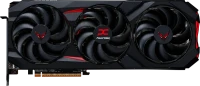
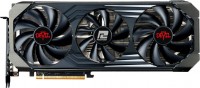
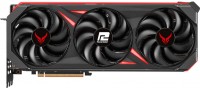
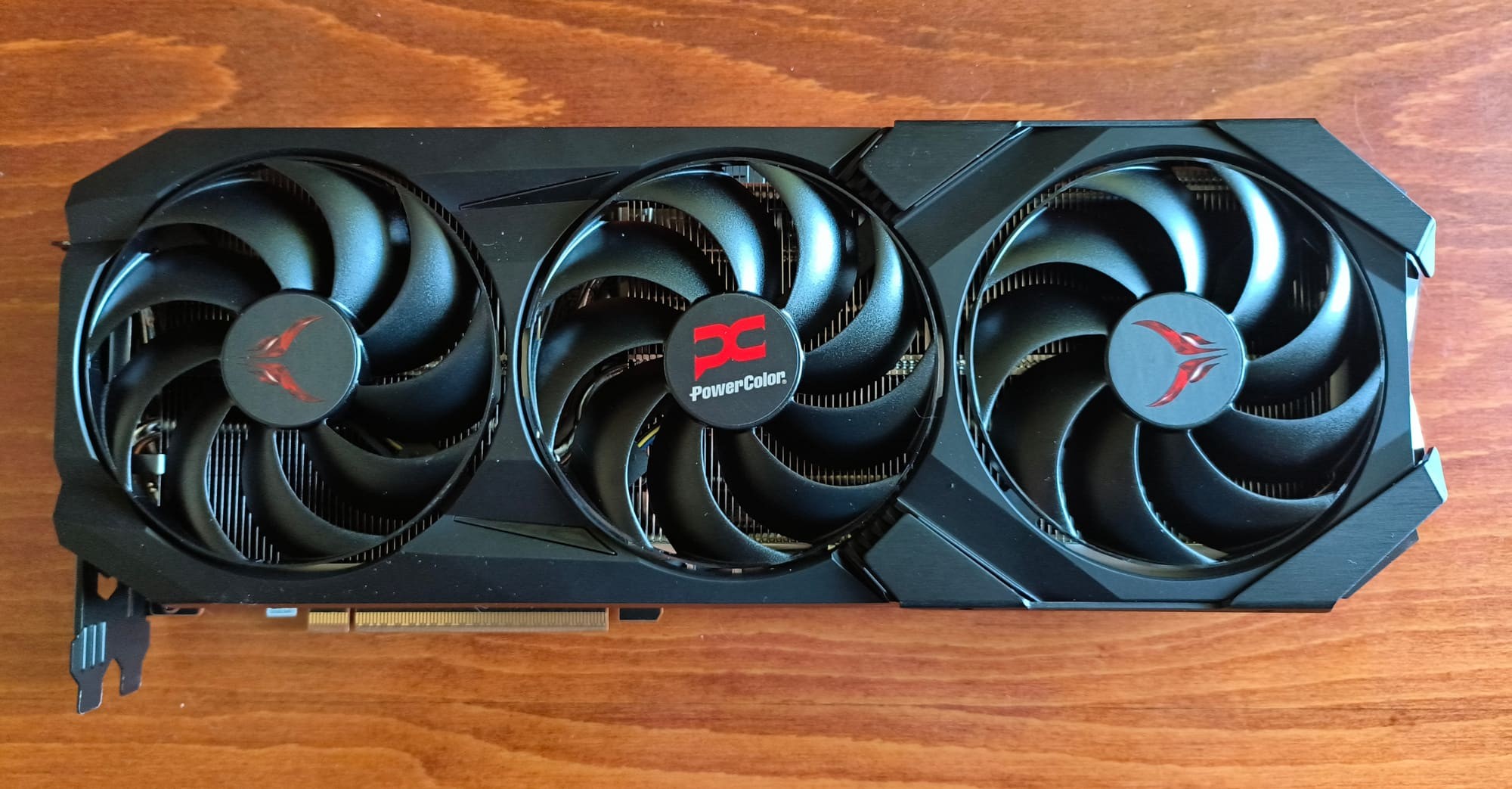
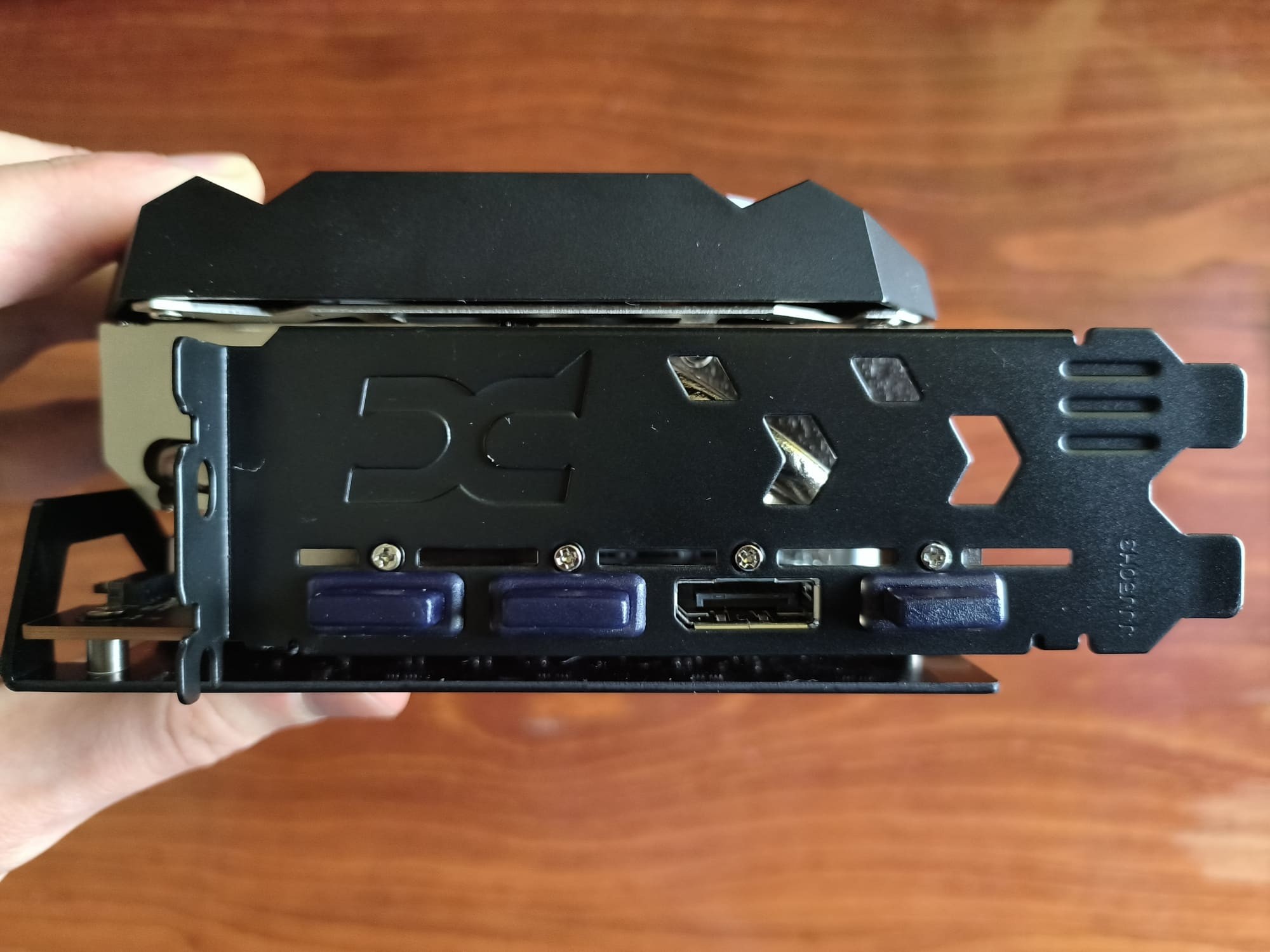
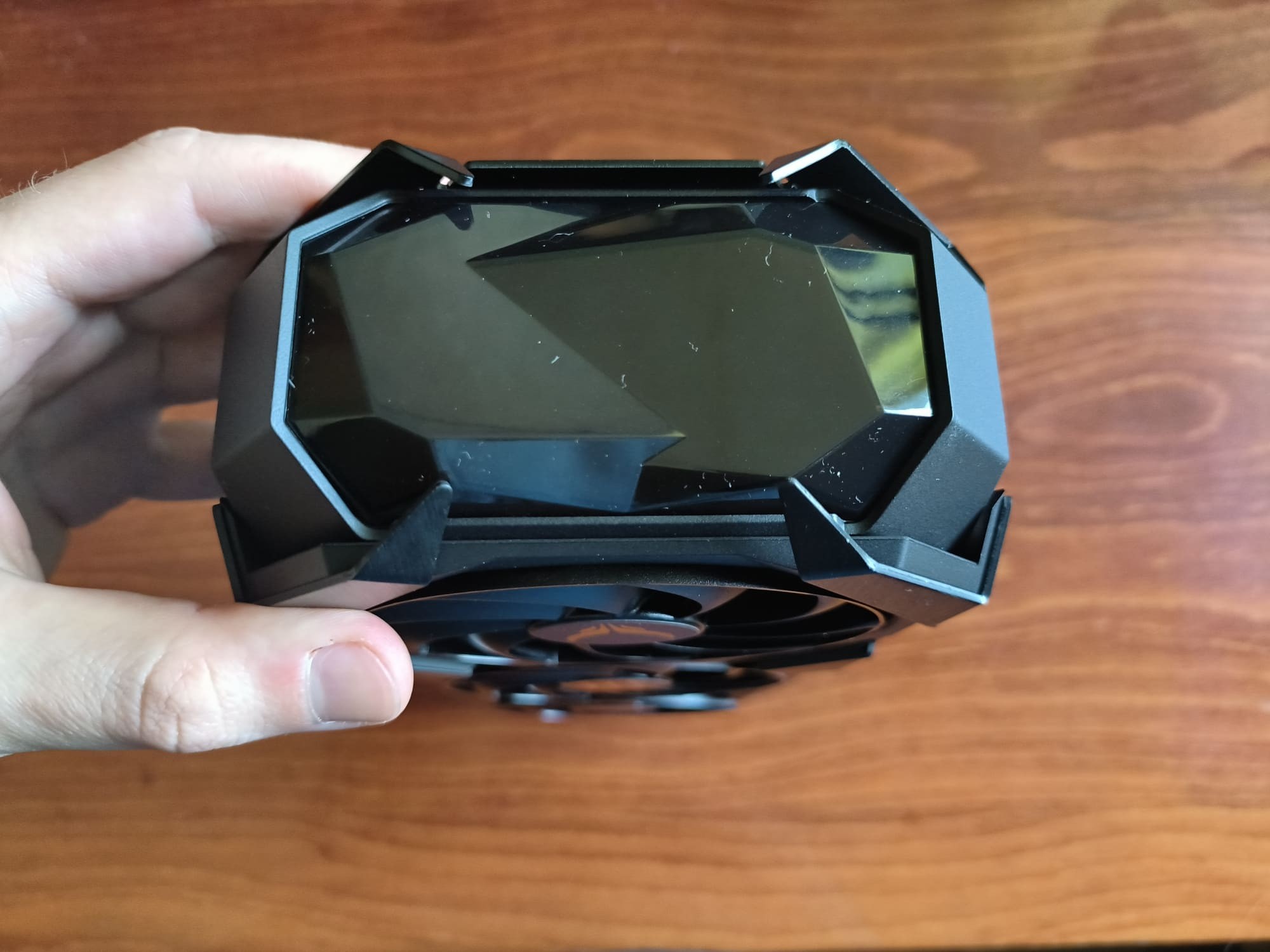
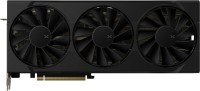
A powerful and massive (340 mm in length, 3 slots thick) modification of the top-tier Radeon RX 9070 XT graphics card, designed for extreme overclocking and maximum performance without compromises. The model belongs to the premium Red Devil lineup, which traditionally offers the most powerful and technologically advanced solutions in PowerColor's portfolio, focusing on stability under extreme loads.
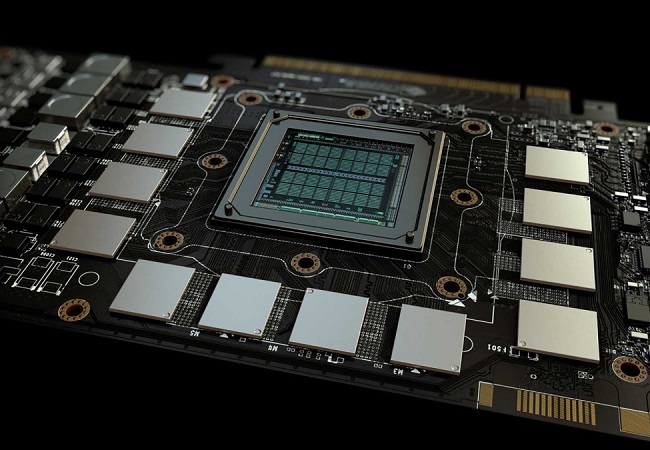
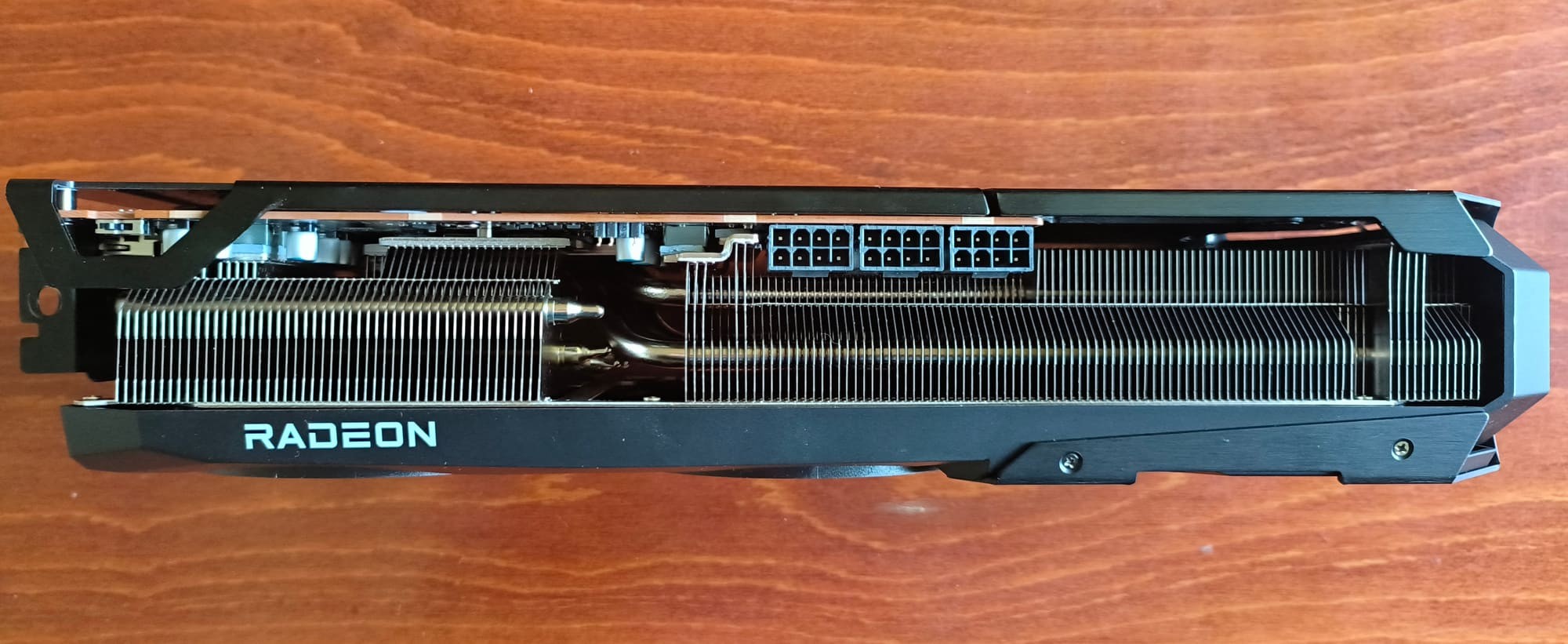
The device is based on an overclocked 3060 MHz Navi 48 GPU (RDNA 4 architecture) featuring 4096 stream processors, 128 tensor, and 64 RT cores. Combined with 16 GB of GDDR6 video memory, this configuration delivers superior performance in ray-tracing and AI-accelerated games, as well as in professional content creation tasks. The power system is built on highly efficient DrMOS modules with three 8-pin PCIe connectors, ensuring stable power supply even during aggressive overclocking.
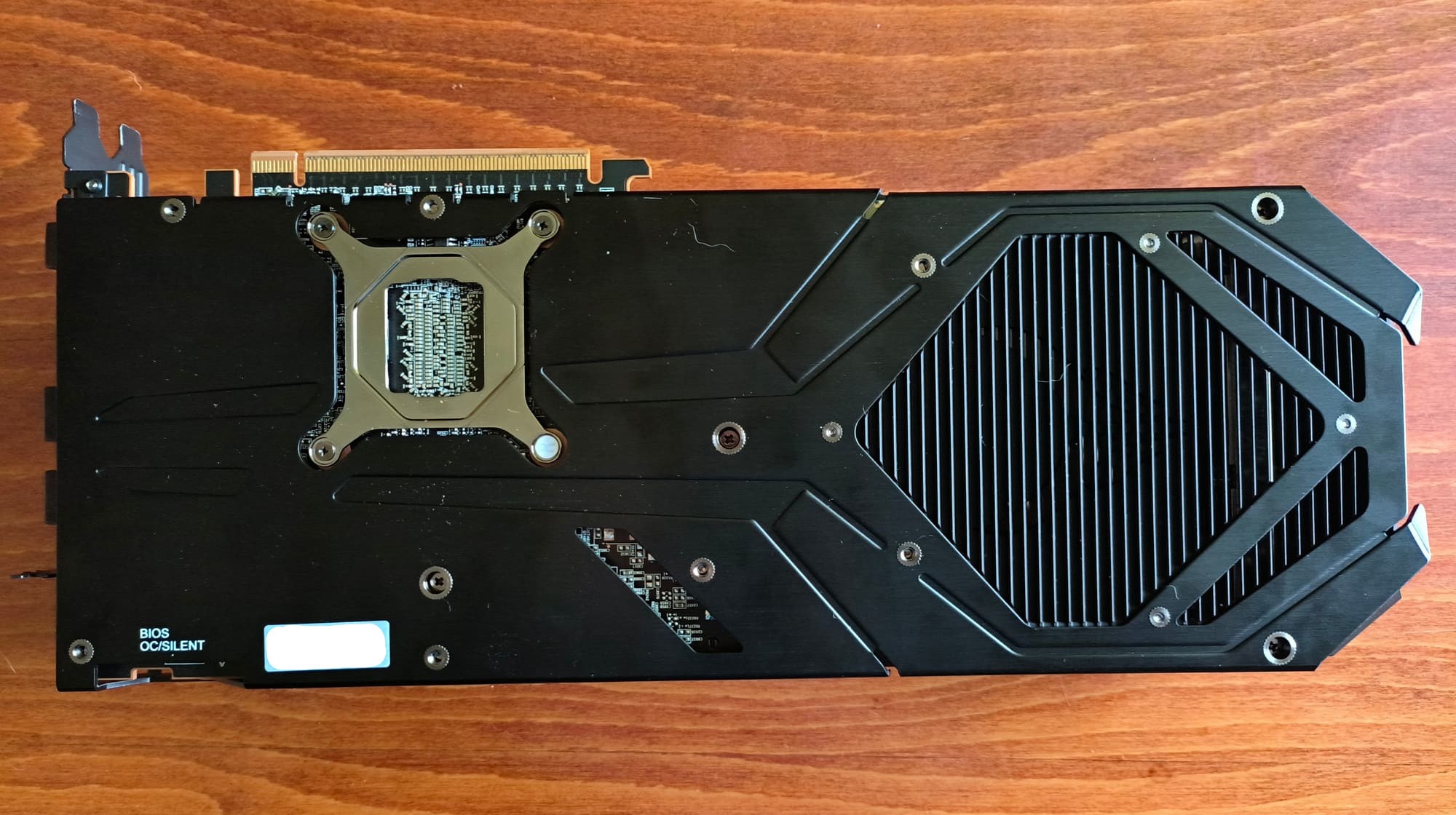
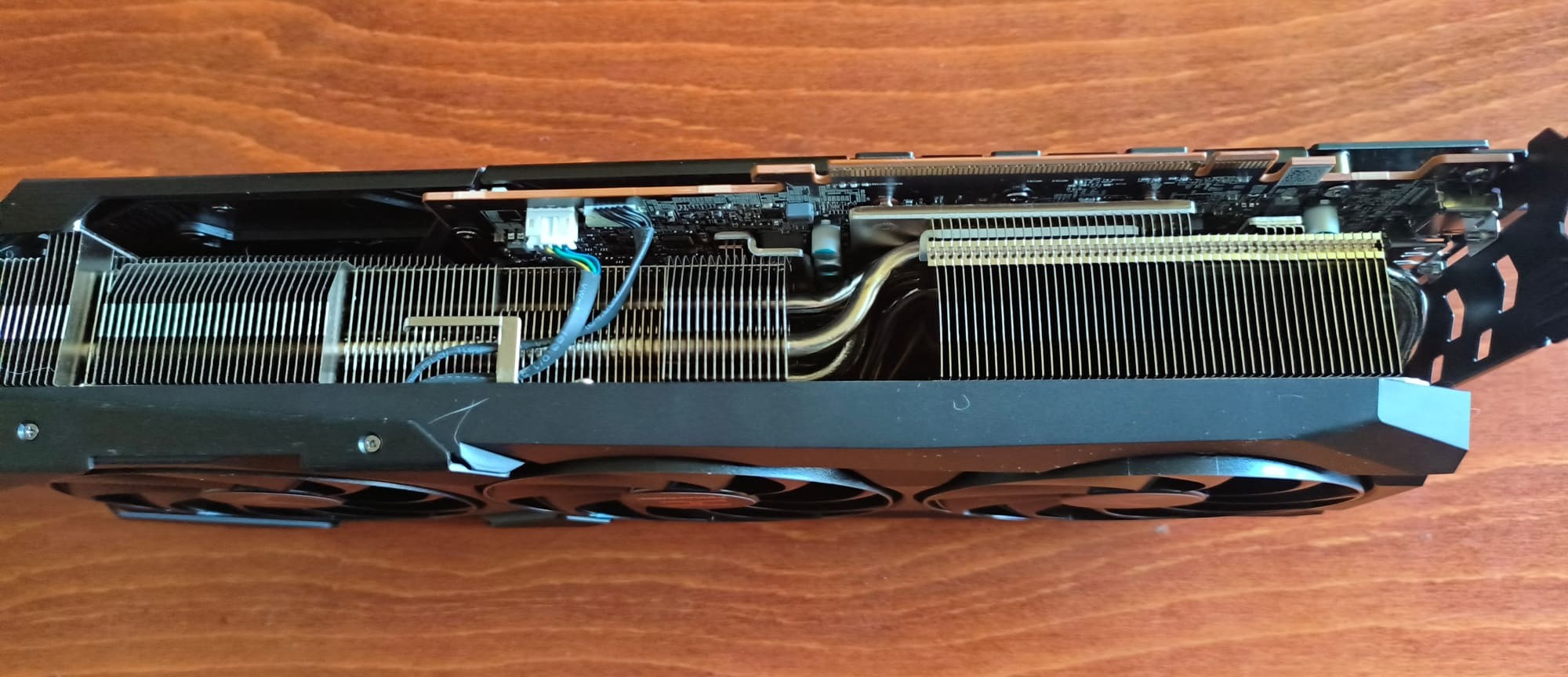
The PCB is manufactured according to high-tech standards with a reinforced metal backplate to prevent deformation of the massive structure. The dual BIOS allows switching between extreme and balanced operating modes. The cooling system employs optimized placement of heat pipes and highly efficient Ring Blade fans for maximum heat dissipation. The use of Honeywell PTM7950 thermal interface ensures excellent heat transfer, while built-in TBP monitoring allows real-time power consumption control. The Radeon RX 9070 XT stands out due to its top-tier overclocking capacity, 16 GB of GDDR6 memory for superior gaming and professional performance, advanced cooling system for optimal heat management, and premium Red Devil design ensures stability and durability under extreme conditions.
Always clarify the specifications and configuration of the product with the online store manager before purchasing.
Catalog PowerColor 2026 - new arrivals, bestsellers, and the most relevant models PowerColor.
Buy PowerColor Radeon RX 9070 XT Red Devil 16GB
| £739.99 |  | ||||
Powercolor PowerColor Radeon RX 9070 XT Red Devil 16GB GDDR6 PCI-Express Graphics Card RX9070XT 16G-E/OC | £799.99 |  | |||
PowerColor RX 9070 XT OC 16GB Red Devil GDDR6 Graphics Card - RX9070XT 16G-E/OC RX9070XT 16G-E/OC | £816.99 |  | |||
PowerColor Red Devil Radeon RX 9070 XT AMD 16 GB GDDR6 RX9070XT 16G-E/OC | £839.57 |  | |||














+ Very quiet, even after manually adjusting the fan speed. + Uses standard 8 pin connectors, which personally gives me peace of mind. + Very cool at low fan speeds and noise, although you need to slightly adjust the fan curve for this. + If I'm not mistaken, this version has the "beefiest" power system. Although, overall, the power system is good in all cards. - This is already the third 9070xt and again the whine of the coils. Yes, it's random; this one turned out quieter than the others, and you can somehow come to terms with it. If you're planning to get the 9070xt, it seems you just need to be prepared for this in advance. Or be luckier. - One of the fans makes a slightly rattling noise, so there are some questions about quality. - Personally, I'm uncomfortable with the default temperature settings, where a hotspot of 87-88 is considered normal.  Dmytro Prokopenko: use PowerColor Radeon RX 9070 XT Red Devil 16GB less than month Dmytro Prokopenko: use PowerColor Radeon RX 9070 XT Red Devil 16GB less than month |


Performance upgrade
The PowerColor Radeon RX 9070 XT Red Devil 16GB graphics card is built on the AMD RDNA 4 architecture and includes a range of technologies to enhance gaming efficiency. Among them are Super Resolution, Fluid Motion Frames 2, Smart Access Memory, Anti-Lag, and Boost. Thanks to these, the device confidently handles 4K gaming at high settings, performs upscaling and real-time rendering, and improves detail, shadow quality, and color reproduction. The model offers a successful balance of price and performance, suits a PC upgrade without overspending, and opens up new experiences for big-screen gaming. The card features a PCIe 5.0 x16 interface and enough cores for ray tracing and AI algorithms. However, the use of GDDR6 memory with a limited frequency may seem like a compromise. Another debatable point is the power delivery system, which requires a high-wattage PSU with three 8-pin connectors—more than some NVIDIA flagships.
Stylish cooling
The Red Devil series underscores the chip’s power with a signature design featuring striking Hellstone lighting that evokes the atmosphere of a mythic underworld. The pulsating RGB lighting can be customized to match your system’s style. Cooling is handled by ring-design fans on dual ball bearings, controlled by a built-in PWM controller. Below 50°C, they stop completely, ensuring silent operation. Heat is drawn away from the GPU and key components through a copper nickel-plated direct-contact plate and Honeywell PTM7950 phase-change thermal paste. Further heat distribution is provided by copper heatpipes and a massive heatsink. Additionally, the card is reinforced with a metal backplate to prevent deformation, and an OC / Silent switch lets you choose the appropriate operating mode.


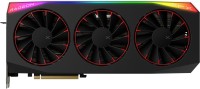
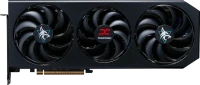
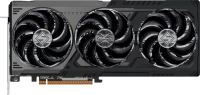

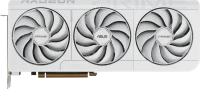


However, when it comes to temperatures, there are a few hiccups that turned out to be easy to fix:
- To start, the difference between the GPU and GPU Hotspot is 30 degrees on default settings (57-58 and 87-88).
- If you increase the power consumption by +10%, the difference becomes 40 (!!!) degrees (53 and 92). I had the aforementioned NITRO+ and XFX Mercury, and the difference there was around 18-22 degrees.
- At -10%, it holds 60 and 86 respectively.
With all this, the fan speeds are extremely low, normally up to 1300 RPM, and drop below 900 with -10%. So the factory setting is for maximum quietness, and the manufacturer deems a hotspot of about 90 normal, but for me, the psychological limit is around 80.
Overall, my recommendation is to tweak the settings a bit manually. I set power consumption at -8% (304W, like the non-overclocked ones), which reduces performance by about 2% and increased the fan speeds a little. As a result, the card keeps the GPU around 53-55, hotspot at 81, and speeds up to 1100-1300 RPM. If you think about it, the big difference is likely due to the GPU temperature being very low, lower than other versions, rather than the hotspot being too hot (though out of the box it seems otherwise).
Memory temperatures are in the low 70s (Samsung), so no issues there.
The appearance is subjective, but I'll just say it feels quite solid and monolithic.