
Nokia N900 32 GB
 | Outdated Product ОС: proprietary; Main display: display ("): 3.5; screen resolution: 800x480; CPU (GHz): 0.6; RAM (GB): 0.2; Memory storage (GB): 32; Memory card slot: microSD; Main lens (MP): 5; Flash; Cellular technology: 3G; mini-Jack (3.5 mm): mini-jack (3.5 mm); FM receiver; aGPS; GPS module; digital compass |


Nokia N900 32 GB
Screen:3.5 ", 800x480, 267 ppi
Memory size:32 GB, + memory card slot, RAM 0.2 GB
Camera:5 MP
Battery:1320 mAh
All specifications
Specifications N900
|
| |||||||||||||||||||||||||||||||||||||||||||||||||||||||||||||||||||||||||||||||


The information in the model description is for reference purposes.
Always clarify the specifications and configuration of the product with the online store manager before purchasing.
Catalog Nokia 2026 - new arrivals, bestsellers, and the most relevant models Nokia.
Always clarify the specifications and configuration of the product with the online store manager before purchasing.
Catalog Nokia 2026 - new arrivals, bestsellers, and the most relevant models Nokia.
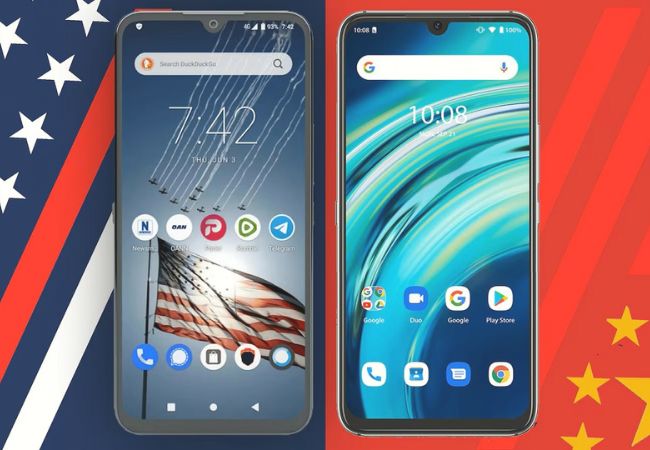
Chinese vs Global Smartphone Versions: What’s the Difference?We'll explore the dangers of skimping on a Chinese smartphone and whether it makes sense.

Why do smartphones start to slow down and what amount of RAM is now considered optimal?Let's explore the reasons for the slowdown and the optimal amount of RAM for smartphones
Series Nokia feature phonesCompare using chart →

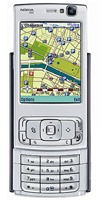
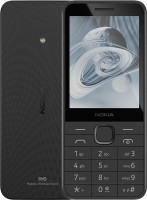
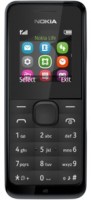
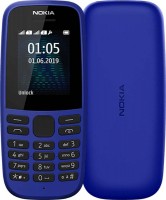
1SIM, 2.8 ", 143 ppi, proprietary, 0.1 GB, RAM 0.04 GB, camera: 0.3 MP, charger: 1450 mAh, removable battery, 107 g
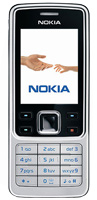
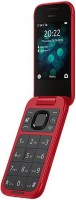
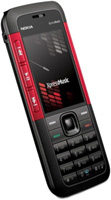
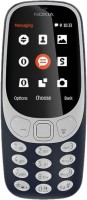
grandmother's phone, 1SIM, 2.8 ", 143 ppi, proprietary, camera: 0.3 MP, emergency button, charger: 1450 mAh, removable battery, 123 g
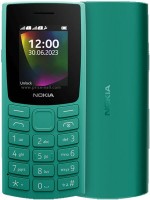
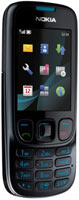
1.8 ", 111 ppi, proprietary, protection IP52, charger: 1000 mAh, removable battery, 79 g
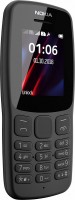
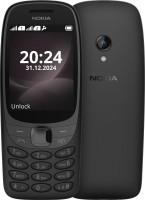
1SIM, 1.8 ", 111 ppi, proprietary, RAM 0.04 GB, no microSD, charger: 800 mAh, removable battery, 70 g
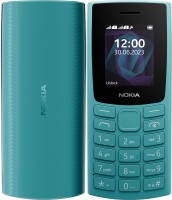
1.8 ", 111 ppi, proprietary, no microSD, protection IP52, charger: 1000 mAh, removable battery, 79 g
AccessoriesAll accessories for Nokia N900 →





Nokia N900 is a powerful and versatile communicator in a compact size. The first phone equipped with Maemo OS. On the other hand, the functionality of the N900 is such that it can be called the first Internet tablet with phone functions.
The phone is made in the form factor of a side slider with a QWERTY keyboard. The main material is high quality plastic, on the sides of the case there is a thick metal edging. The device is quite weighty (181 g), but it lies quite comfortably in the hand, including in the open state for typing with two hands.
There are no buttons on the front panel at all — only a touch screen. On the right side of the device there are buttons for volume, camera and power controls, and an infrared port. There are no buttons on the left side. On the top end there is a USB input (it is also a charging connector), a slot for a loop handle and one of the stereo speakers, on the bottom there is a standard 3.5 mm jack and a second stereo speaker. There are no separate keys for receiving and rejecting a call, there are also no buttons for returning and switching between applications.
The stylus slot is in the lower left corner. The pen is plastic and quite comfortable. At the same time, the phone interface is designed mainly for finger control. Supports handwriting, drawing.
On the back cover are the lens of the main camera with a protective shutter and a stand for the phone. The stand has one working position — 90 degrees — and is intended primarily for watching videos, typing when using it is difficult. Under the back cover there is a slot for memory cards (hot-swappable), the SIM-card is placed under the battery.
The hardware keyboard slides out on the left side. Contains three rows of keys, in general, it is quite convenient. Auto-finishing when opening is minimal.
The screen is based on a TFT-matrix, touch-sensitive, resistive, for its class it is quite responsive with finger control. There is a light sensor and a proximity sensor. In the bright sun, the contents are visible, but the colours fade a lot.
The main feature of the Nokia N900 is the Maemo 5 operating system, previously used only in Internet tablets. It supports full multitasking (to the point that minimized applications also continue to work). The external implementation of the interface is quite worthy.
Of the unpleasant moments, it is worth noting the relative complexity of the system. With numerous functions, Maemo is also fundamentally different from its predecessor, relatively simple Symbian. Getting used to a new shell at first can be difficult.
In addition, Maemo 5 is not well adapted to the role of the operating system of the phone as such. Calls and mobile messages are far from being the highest priority functions in the N900, many familiar functions have simply disappeared. Thus, the communicator does not provide sending MMS, there are no groups in the phone book, it is impossible to assign a melody to an individual subscriber. There is no support for USSD codes, that is, it will not work to check the account without calling the answering machine. It is impossible to see the duration of calls, the same applies to GPRS (and WLAN) sessions — they are not fixed. There are only two sound profiles — standard and silent, no options. In principle, all this is completely solved by installing additional applications (usually, they are written by third-party developers); nevertheless, the trend is characteristic.
On the other hand, the software provides working with calls over the network, through programs such as Skype and Google Talk, with the integration of contact information into the phone book. However, this function is also far from perfect.
There is no JAVA support, such applications can only be run on the N900 through an emulator.
The phone has a separate music chip that provides high quality sound. The audio player is simple, with a minimum of functions and settings — so, it does not have an equalizer. The video player allows you to play unconverted video (except Full HD) without any problems thanks to a powerful hardware base, there is a TV-out. A dedicated app allows you to share content for playback with other compatible home media devices. Bluetooth stereo headsets are supported.
There is an FM receiver, but it requires the installation of a separate application to work. There is an FM transmitter.
The main camera with a resolution of 5 megapixels is equipped with a flash and optics from Carl Zeiss. The flash is diode, it lasts for a distance of one and a half metres, with a special application it can be used as a flashlight. There are only two modes for shooting photos (3.5 MP and 5 MP), for shooting video — one (mpeg4, 848x480, 25fps + AAC, 48 kHz). The front camera is standard, 0.3 MP.
The battery of the phone has a capacity of 1320 mAh, which is enough for one day with active use. In the player mode, the N900 can work for about 15 hours, while playing video — about 3 hours. Charging is done only through the USB port, the charger is equipped with a corresponding connector. Full charge time is about 4 hours.
The package includes a battery, charger, wired stereo headset, Video-out cable, charger adapter that allows you to use other Nokia chargers, and a cleaning cloth.
In general, the N900 is actually a pocket computer with a call function and is designed for a small audience of people with high requirements for the functionality of handheld technology.
The phone is made in the form factor of a side slider with a QWERTY keyboard. The main material is high quality plastic, on the sides of the case there is a thick metal edging. The device is quite weighty (181 g), but it lies quite comfortably in the hand, including in the open state for typing with two hands.
There are no buttons on the front panel at all — only a touch screen. On the right side of the device there are buttons for volume, camera and power controls, and an infrared port. There are no buttons on the left side. On the top end there is a USB input (it is also a charging connector), a slot for a loop handle and one of the stereo speakers, on the bottom there is a standard 3.5 mm jack and a second stereo speaker. There are no separate keys for receiving and rejecting a call, there are also no buttons for returning and switching between applications.
The stylus slot is in the lower left corner. The pen is plastic and quite comfortable. At the same time, the phone interface is designed mainly for finger control. Supports handwriting, drawing.
On the back cover are the lens of the main camera with a protective shutter and a stand for the phone. The stand has one working position — 90 degrees — and is intended primarily for watching videos, typing when using it is difficult. Under the back cover there is a slot for memory cards (hot-swappable), the SIM-card is placed under the battery.
The hardware keyboard slides out on the left side. Contains three rows of keys, in general, it is quite convenient. Auto-finishing when opening is minimal.
The screen is based on a TFT-matrix, touch-sensitive, resistive, for its class it is quite responsive with finger control. There is a light sensor and a proximity sensor. In the bright sun, the contents are visible, but the colours fade a lot.
The main feature of the Nokia N900 is the Maemo 5 operating system, previously used only in Internet tablets. It supports full multitasking (to the point that minimized applications also continue to work). The external implementation of the interface is quite worthy.
Of the unpleasant moments, it is worth noting the relative complexity of the system. With numerous functions, Maemo is also fundamentally different from its predecessor, relatively simple Symbian. Getting used to a new shell at first can be difficult.
In addition, Maemo 5 is not well adapted to the role of the operating system of the phone as such. Calls and mobile messages are far from being the highest priority functions in the N900, many familiar functions have simply disappeared. Thus, the communicator does not provide sending MMS, there are no groups in the phone book, it is impossible to assign a melody to an individual subscriber. There is no support for USSD codes, that is, it will not work to check the account without calling the answering machine. It is impossible to see the duration of calls, the same applies to GPRS (and WLAN) sessions — they are not fixed. There are only two sound profiles — standard and silent, no options. In principle, all this is completely solved by installing additional applications (usually, they are written by third-party developers); nevertheless, the trend is characteristic.
On the other hand, the software provides working with calls over the network, through programs such as Skype and Google Talk, with the integration of contact information into the phone book. However, this function is also far from perfect.
There is no JAVA support, such applications can only be run on the N900 through an emulator.
The phone has a separate music chip that provides high quality sound. The audio player is simple, with a minimum of functions and settings — so, it does not have an equalizer. The video player allows you to play unconverted video (except Full HD) without any problems thanks to a powerful hardware base, there is a TV-out. A dedicated app allows you to share content for playback with other compatible home media devices. Bluetooth stereo headsets are supported.
There is an FM receiver, but it requires the installation of a separate application to work. There is an FM transmitter.
The main camera with a resolution of 5 megapixels is equipped with a flash and optics from Carl Zeiss. The flash is diode, it lasts for a distance of one and a half metres, with a special application it can be used as a flashlight. There are only two modes for shooting photos (3.5 MP and 5 MP), for shooting video — one (mpeg4, 848x480, 25fps + AAC, 48 kHz). The front camera is standard, 0.3 MP.
The battery of the phone has a capacity of 1320 mAh, which is enough for one day with active use. In the player mode, the N900 can work for about 15 hours, while playing video — about 3 hours. Charging is done only through the USB port, the charger is equipped with a corresponding connector. Full charge time is about 4 hours.
The package includes a battery, charger, wired stereo headset, Video-out cable, charger adapter that allows you to use other Nokia chargers, and a cleaning cloth.
In general, the N900 is actually a pocket computer with a call function and is designed for a small audience of people with high requirements for the functionality of handheld technology.
We recommendCompare using chart →
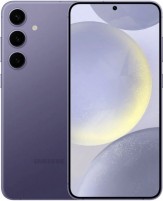
good sound, 5G, 6.7 ", AMOLED (LTPO), 509 ppi, 120 Hz, LTPO, Android 14, 256 GB, UFS 4.0, RAM 12 GB, LPDDR5X, powerful processor, Exynos 2400 (Xclipse 940), camera: 3 modules, 50 MP, + 10 MP, + 12 MP, filming 4K, stabilization, slow motion, Wi-Fi 6E, no microSD, NFC, stereo speakers, protection IP68, no 3.5 mm, charger: wireless, fast charge, bypass charge, 4900 mAh, 196 g, no charger

flagship smartphones, camera phone, 5G, satellite connection, 6.3 ", OLED (LTPO), 458 ppi, 120 Hz, LTPO, Dolby Vision, iOS, 256 GB, RAM 12 GB, LPDDR5, powerful processor, Apple A19 Pro (Apple GPU), camera: 3 modules, 48 MP, + 48 MP, filming 4K, stabilization, slow motion, DisplayPort, Wi-Fi 7, no microSD, FaceID, NFC, stereo speakers, Dolby Atmos, protection IP68, no 3.5 mm, charger: wireless, fast charge, 3988 mAh, 206 g, no charger

flagship smartphones, 5G, satellite connection, 6.9 ", OLED (LTPO), 458 ppi, 120 Hz, LTPO, Dolby Vision, iOS, 256 GB, RAM 12 GB, LPDDR5, powerful processor, Apple A19 Pro (Apple GPU), camera: 3 modules, 48 MP, + 48 MP, filming 4K, stabilization, slow motion, DisplayPort, Wi-Fi 7, no microSD, FaceID, NFC, stereo speakers, Dolby Atmos, protection IP68, no 3.5 mm, charger: wireless, fast charge, 4823 mAh, 233 g, no charger

5G, satellite connection, 6.3 ", OLED (polymer), 421 ppi, 120 Hz, Android 16, 128 GB, UFS 3.1, RAM 8 GB, LPDDR5X, Tensor G4 (Mali-G715), camera: 2 modules, 48 MP, + 13 MP, filming 4K, stabilization, Wi-Fi 6E, no microSD, NFC, stereo speakers, protection IP68, no 3.5 mm, charger: wireless, fast charge, bypass charge, 5100 mAh, 183 g, no charger

5G, satellite connection, 6.3 ", OLED, 421 ppi, 120 Hz, Android 16, stock Android, 128 GB, UFS 3.1, RAM 12 GB, LPDDR5X, Tensor G5 (PowerVR DXT-48-1536), camera: 3 modules, 48 MP, + 10.8 MP, + 13 MP, filming 4K, stabilization, slow motion, Wi-Fi 6E, no microSD, NFC, stereo speakers, protection IP68, no 3.5 mm, charger: wireless, fast charge, bypass charge, 4970 mAh, 204 g, no charger

6.88 ", IPS, 260 ppi, 120 Hz, Android 15, 64 GB, UFS 2.1, RAM 4 GB, LPDDR4X, Helio G81 (Mali-G52), camera: 50 MP, Wi-Fi v5, NFC, stereo speakers, Dolby Atmos, protection IP64, charger: 5200 mAh, 194 g, no charger
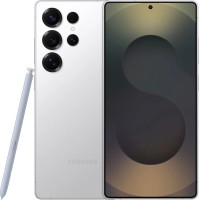
camera phone, 5G, 6.9 ", AMOLED (LTPO), 496 ppi, 120 Hz, LTPO, Android 15, 512 GB, UFS 4.0, RAM 12 GB, LPDDR5X, powerful processor, Snapdragon 8 Elite (Adreno 830), camera: 4 modules, 200 MP, + 10 MP, + 50 MP, filming 4K, stabilization, slow motion, Wi-Fi 7, no microSD, NFC, stereo speakers, Dolby Atmos, Hi-Res, protection IP68, no 3.5 mm, charger: wireless, fast charge, bypass charge, 5000 mAh, 218 g, no charger
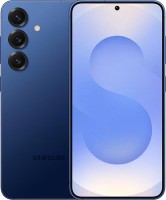
5G, 6.2 ", AMOLED (LTPO), 416 ppi, 120 Hz, LTPO, Android 15, 128 GB, UFS 4.0, RAM 12 GB, LPDDR5X, powerful processor, Snapdragon 8 Elite (Adreno 830), camera: 3 modules, 50 MP, + 10 MP, + 12 MP, filming 4K, stabilization, slow motion, Wi-Fi 7, no microSD, NFC, stereo speakers, Dolby Atmos, Hi-Res, protection IP68, no 3.5 mm, charger: wireless, fast charge, bypass charge, 4000 mAh, 162 g, no charger
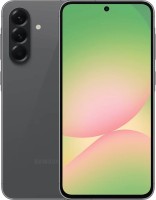
5G, 6.7 ", Super AMOLED, 385 ppi, 120 Hz, Android 15, 256 GB, UFS 3.1, RAM 8 GB, LPDDR5, Exynos 1580 (Xclipse 540), camera: 3 modules, 50 MP, + 12 MP, filming 4K, stabilization, slow motion, Wi-Fi v6, no microSD, NFC, stereo speakers, protection IP67, no 3.5 mm, charger: fast charge, 5000 mAh, 198 g, no charger

flagship smartphones, camera phone, 5G, 6.9 ", AMOLED (LTPO), 498 ppi, 120 Hz, LTPO, Android 16, 512 GB, UFS 4.0, RAM 12 GB, LPDDR5X, powerful processor, Snapdragon 8 Elite Gen 5 (Adreno 840), camera: 4 modules, 200 MP, + 10 MP, + 50 MP, filming 4K, stabilization, slow motion, Wi-Fi 7, no microSD, stereo speakers, Dolby Atmos, Hi-Res, protection IP68, no 3.5 mm, charger: wireless, fast charge, bypass charge, 5000 mAh, 214 g, no charger

for military, 5G, waterfall screen, 6.7 ", OLED, 444 ppi, 120 Hz, Android 15, 512 GB, UFS 4.0, RAM 12 GB, LPDDR5X, Dimensity 8350 Extreme (Mali-G615), camera: 3 modules, 50 MP, + 10 MP, + 50 MP, filming 4K, stabilization, slow motion, Wi-Fi v6, no microSD, NFC, stereo speakers, Dolby Atmos, protection IP68/IP69K, impact resistant, no 3.5 mm, charger: wireless, fast charge, 6000 mAh, 186 g, no charger
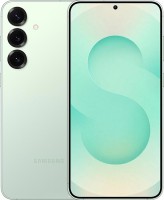
5G, 6.7 ", AMOLED (LTPO), 513 ppi, 120 Hz, LTPO, Android 15, 256 GB, UFS 4.0, RAM 12 GB, LPDDR5X, powerful processor, Snapdragon 8 Elite (Adreno 830), camera: 3 modules, 50 MP, + 10 MP, + 12 MP, filming 4K, stabilization, slow motion, Wi-Fi 7, no microSD, NFC, stereo speakers, Dolby Atmos, Hi-Res, protection IP68, no 3.5 mm, charger: wireless, fast charge, bypass charge, 4900 mAh, 190 g, no charger