Philips 242E1GAJ 24 "
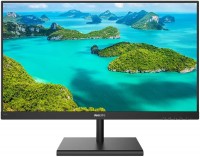
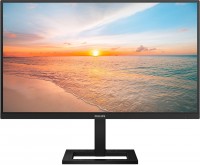
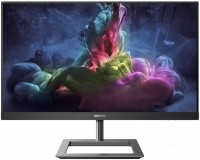 | Outdated Product Affordable FullHD-resolution gaming monitor with a semi-glossy 23.8-inch screen, high refresh rate, wide colour gamut and built-in stereo speakers (2x3W). It belongs to the 2020 Philips E-Line product family, manufactured by the Chinese company TPV Technology. It is an inexpensive universal gaming monitor, which can also be used for processing photo / video content, 3D modeling, working in CAD / CAE packages. The Philips 242E1GAJ monitor delivers sharper action scenes with a faster display and AMD FreeSync Premium technology, with no tearing. Its design is based on an 8-bit VA-matrix (6-bit + FRC) with a W-LED backlight, completely devoid of flicker (Flicker-Free). It provides 96% coverage of the NTSC colour space, increased maximum brightness of 350 cd/m² and excellent static contrast rat...io of 3500:1. A relatively large pixel (0.27 mm) allows you to increase the distance to the screen, which reduces the chronic tension of the lens muscles, reducing overall visual fatigue. Other important advantages of this model include outstanding energy efficiency (typical consumption of only 15 W) and excellent horizontal/vertical viewing angles (178°). Two digital interface ports are provided for connection: HDMI and DisplayPort. |


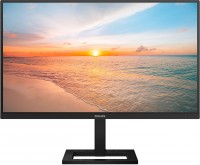
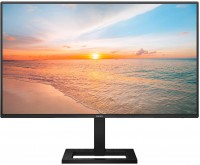
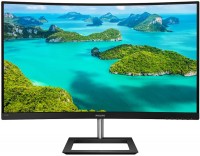
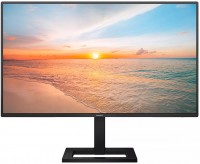
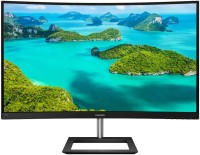
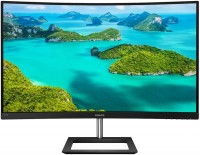
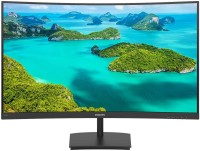
Affordable FullHD-resolution gaming monitor with a semi-glossy 23.8-inch screen, high refresh rate, wide colour gamut and built-in stereo speakers (2x3W). It belongs to the 2020 Philips E-Line product family, manufactured by the Chinese company TPV Technology. It is an inexpensive universal gaming monitor, which can also be used for processing photo / video content, 3D modeling, working in CAD / CAE packages.
The Philips 242E1GAJ monitor delivers sharper action scenes with a faster display and AMD FreeSync Premium technology, with no tearing. Its design is based on an 8-bit VA-matrix (6-bit + FRC) with a W-LED backlight, completely devoid of flicker (Flicker-Free). It provides 96% coverage of the NTSC colour space, increased maximum brightness of 350 cd/m² and excellent static contrast ratio of 3500:1.
A relatively large pixel (0.27 mm) allows you to increase the distance to the screen, which reduces the chronic tension of the lens muscles, reducing overall visual fatigue. Other important advantages of this model include outstanding energy efficiency (typical consumption of only 15 W) and excellent horizontal/vertical viewing angles (178°). Two digital interface ports are provided for connection: HDMI and DisplayPort.
|
| ||||||||||||||||||||||||||||||||||||||||||||||||||||||||||||||||||||||||||||||


Always clarify the specifications and configuration of the product with the online store manager before purchasing.
Catalog Philips 2026 - new arrivals, bestsellers, and the most relevant models Philips.







0 2 1 10 |
A beautiful monitor at an adequate price, the monitor assembly is normal, the viewing angles are wide, the screen is the optimal size, there is enough contrast, it is set up well from the factory, and is stable. Beautiful design. narrow frames around the screen. Yes, no problem yet.  Rurik: use Philips 242E1GAJ few months Rurik: use Philips 242E1GAJ few months |
Freesync helps a lot in games, the frequency is 144 Hz - and you definitely need your computer to give out so many FPS in games, better more .. I like the quality of the picture, the colors are juicy. The screen does not glare. Needs contrast. Stable. The menu is convenient. No, I think everything is fine Bena: use Philips 272E1GAJ few months |
27ka at a distance of 1m just right. 4K is the technology of the future for graphics cards of the distant future. Purchased Philips 272E1GAJ/00 1. Expanded color gamut - the reason to buy new monitors 2. Good black even in darkness (IPS are only suitable for well-lit rooms) 3. High contrast makes black-gray shades easily distinguishable 4. High refresh rate 5. Brightness 350 cd/m² 6. AMD FreeSync 7. MPRT, its availability should be accessible for all LCD displays showing dynamic scenes at 60 frames/s and above (significantly reduces motion blurring). At 100 frames/s and above, backlight flicker is not noticeable at all, at 75 it becomes visible. 1. Slow matrix, 4ms is apparently specified for maximum acceleration, which is not applicable even at 144Hz as it is excessive, there's room for growth. 2. The inability to adjust display brightness when MPRT is on wouldn't be a disadvantage, since MPRT itself changes the brightness within the range of 70%-0%. However, MPRT works acceptably only at low values. There are no technical means to verify this, and it's not particularly necessary. What I see with my own eyes cannot be interpreted otherwise. The strobe backlight, which is supposed to illuminate a fully formed frame, additionally strobes the transition process - the not yet dimmed old frame with the simultaneous formation of a new one. With increasing MPRT intensity closer to 20, this creates a distinct double image which is not visible at MPRT 1 and MPRT OFF. Grigoriy Svirgunenko: use Philips 272E1GAJ less than month |