
Pentax K-1 body
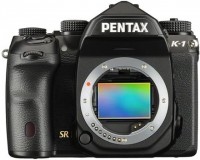 | Outdated Product Rating: 96; Sensor size: full frame; Effective MP number: 36; Manual focus; Image stabilization: with matrix shift; White balance measuring; Auto bracketing; Viewfinder: optical (pentaprism); Continuous shooting (fps): 4.4; Screen ("): 3.2; Rotary display; 2 card slots; Memory cards types: SD, SDHC, SDXC |


We recommend products in stockDigital Cameras Pentax →
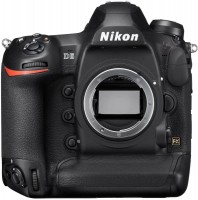
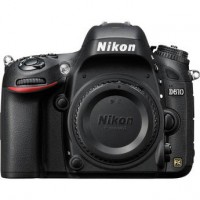
dSLR, only body, 46 MP, screen: 3.2 '', oscillating, touch, ultra HD (4K) video, 1005 g
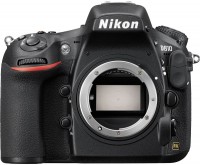
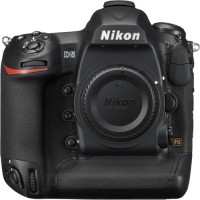
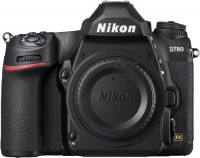
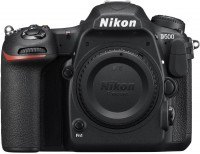
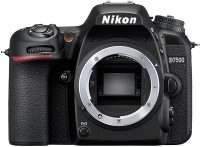
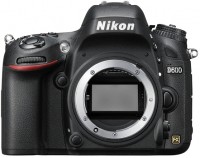
dSLR, only body, 20.9 MP, screen: 3.2 '', oscillating, touch, ultra HD (4K) video, 640 g
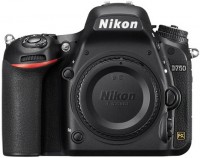
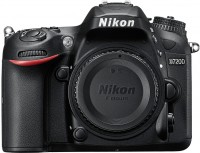
Pentax K-1 body
Panel:full frame, 36 MPix
Video:Full HD (1080p)
Snapshot size:7360x4912 px
ISO range:100-204800
Burst shooting:4.4 fps
Screen:3.2 '', oscillating
All specifications
Specifications K-1 body
|
| |||||||||||||||||||||||||||||||||||||||||||||||||||||||||||||||||||||||||||||||||||||||||||||||||||||||||||||||||||||||||||||||||||||||||||||||||||||||||||||||||||||||||||||


E-Catalog UK editor, Digital Cameras
Anton Chijik, edited 19.10.2023
The information in the model description is for reference purposes.
Always clarify the specifications and configuration of the product with the online store manager before purchasing.
Catalog Pentax 2026 - new arrivals, bestsellers, and the most relevant models Pentax.
Always clarify the specifications and configuration of the product with the online store manager before purchasing.
Catalog Pentax 2026 - new arrivals, bestsellers, and the most relevant models Pentax.

Series Pentax K (SLR)Compare using chart →
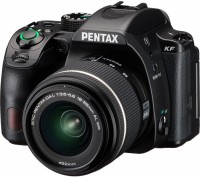
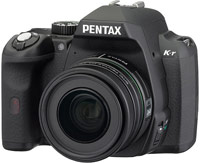
dSLR, lens kits, 25 MP, screen: 3 '', oscillating, touch, lens: 3 x, focal: 18 - 55 mm, 688 g
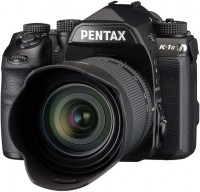
dSLR, lens kits, 36 MP, screen: 3.2 '', oscillating, lens: 3 x, focal: 18 - 55 mm, 1010 g
AccessoriesAll accessories for Pentax K-1 body →








Second feature. Stabilizer: Located in the camera body on the sensor, optical, 5-axis, stabilization range up to 5 stops. The stabilizer allows reducing the weight and dimensions of the lenses and shooting with a faceted glass. Third. Exposure metering: Works with any lenses in any photography mode. However, with some competitors, cameras do not work this way. Fourth. All-weather construction. The camera has a metal chassis, over a hundred rubber seals. Weather-sealed lenses are available for sale. The manufacturer claims dust and moisture protection, guarantees operation at -10°C. There are numerous videos online showing a Pentax DSLR being washed under running water. Other features, qualities, and utilities: Clearly structured menu. Correctly positioned buttons. Good grip. Over 10 presets and approximately the same number of filters. Focus peaking. Pixel shift. Articulated display. GPS and the ability to shoot stars with a simple tripod. Wi-Fi. Two memory cards. Standard RAW file format is DNG. Software for camera control via USB is included. Wi-Fi control. Battery is non-chipped. Carcass weight - 1 kg. Continuous shooting speed - 4.5 fps. Not fast and noisy autofocus drive.  Stepan: use Pentax K-1 body few months Stepan: use Pentax K-1 body few months |
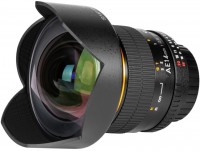
Practically an ideal body for landscape photographers, possibly macro photographers, travelers, for product photography, and for not too intensive studio work. Thanks to pixel shift, the camera can provide impeccable image quality in static scenes. The camera is very convenient, has many different unique features onboard, and is focused on image quality. However, in terms of speed, it's really poor. For intensive work with people, for dynamics, it’s worse than any FF DSLR that has come out in the last 8 years. In general, despite some innovations and the fact that this is the first FF from the company, it’s the most typical Pentax. Consider that modern lenses for it are few and far between. Among the truly decent ones, there’s only the 15-30 2.8. The 70-200 they released is frankly bad. The 24-70 is not bad, but not perfect; it’s more of a "workhorse" than a lens meant to provide maximum quality. So it’s worth looking at Sigmas, at manual Samyangs, and patiently awaiting breakthroughs from Pentax. There’s also a generally good macro lens 100 2.8. It’s protected, but has an old "vacuum cleaner" design and screwdriver AF. So if you’re a "slow" photographer, if you can always tame the subject of shooting, or if it doesn’t move at all, if the number of takes per shooting day doesn’t number in the thousands, then this is your camera; it’s one of the most convenient and yet inexpensive bodies, and as a bonus, it offers a top-tier image for 35mm. - Convenience: screen, controls, backlight bulbs, gripability - Image quality and pixel shift, which, in addition to honest detailing, adds another 1.5 stops of dynamic range and makes RAW files exceptionally flexible. Possibly only a 100-megapixel Phase One and a Hasselblad with a 53 *40 mm sensor have a greater dynamic range. - Price - The Tamron-Pentax 15-30 2.8 is very good. It's the best thing that could happen to fill the wide-angle vacancy in this system. And since the camera is tailored for landscapes, it’s a definite advantage. - There's very little optics. Guys, I'm talking about truly decent modern optics, not about those manual "legends" from the 70s and overrated screwdrive lenses from the 90s. use Pentax K-1 body few months |
Add Review
Ask Question
Video reviews

BLACK & WHITE Architectural Photography | Pentax K1
11 August 20231 563 view

Blue Jay - Pentax k1 + Super Takumar 6x7 400mm F4
18 February 20201 143 view

Amazing Pentax K1 Review
10 October 2017867 view
First. Lenses:
Since the mid-1970s, Pentax has been using the same "K" mount with modifications, which allows any Pentax camera to be fitted with lenses using the "K" mount produced from 1975 to 2019. In total, Pentax has released over 150 lenses with the "K" mount, and several dozen more lenses have been produced and are being produced by third-party manufacturers like Tokina, Tamron, and Sigma. Soviet and Russian manual lenses like Helios-44K and Zenitar-K can be used on Pentax without any adapters. Other lenses can also be used with cheap mechanical adapters and manual aperture control, such as Helios-40-2 or Jupiter-37A. If a user finds a way to affix a faceted glass to the mount, the camera will shoot with the faceted glass as well. The vast majority of Pentax lenses are simple in design because they do not have built-in stabilizers and autofocus drives. The autofocus drive is achieved by the camera's motor through a shaft in the form of a cross screwdriver. For this reason, the lenses are relatively light and compact. In recent years, lenses with built-in ultrasonic focus motors as well as the screwdriver mechanism have appeared.