What should be your bike?

We independently test the products and technologies that we recommend.
A bicycle should look good, be affordable, and ideally have a brand name that's recognizable—so you can brag to friends and neighbors. These are the three criteria most buyers around the world base their first bicycle purchase on. I won't claim that the above factors aren't important. But now we will try to make the choice more thoughtful than just "by taste, color, or to be cheaper."
First and foremost, this material is intended for those for whom a bicycle is still new and who aren't ready to dive into complex technical specifications like the "crank length" or the "number of teeth on each of the rear cogs." To simplify the choice and immediately narrow down the overwhelming number of options on the modern market, you first need to answer: "Why am I buying a bicycle?" Everything else depends on this.
 |
|
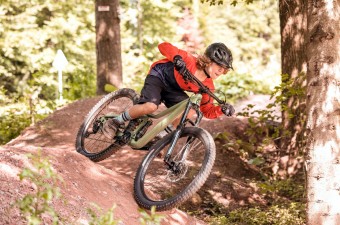
"Dual Suspension Bikes" are popular among teenagers, but have a low efficiency and are not very comfortable for riding on flat roads |
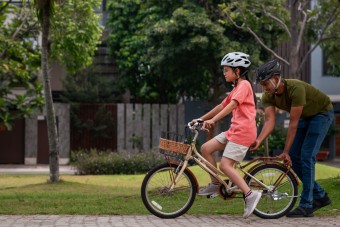
Bicycle for a Teenage Son
As a teenager, I rode a bicycle similar to the Soviet "Salute," as did most of my generation. I still believe that not much more is needed for a teenager, although modern kids don't completely agree with me. They currently favor "mountain dual suspensions". If your boy needs a bike simply to visit friends on the next street or to scare away grandma’s chickens in the village, a regular "market dual suspension," as cycling enthusiasts say, might be a perfect choice. It will also be a good option for getting acquainted with cycling in general.
"Dual suspension" means the bicycle has shock absorbers both under the seat and on the front fork. This should cushion the shocks when jumping over ditches and reduce hand strain during jumps on bricks. Generally, the reliability of such models is sufficient for a few seasons—during which time the boy should figure out which type of bicycle interests him in the future and if this mode of transport interests him at all. The cost of these models is not high, just right so it won't be "agonizingly painful" if it's stolen or if after the first season it ends up stuck on the balcony close to the same Soviet skis.
A key tip—try to convince your son to buy a bicycle without disc brakes. V-brakes, though not considered cool among teenagers, are more reliable. Plus, if disc brakes are damaged, the bike will likely have to go to a bike workshop, whereas V-brakes can be repaired the old-fashioned way—with a hammer and some strong language.
 |
|
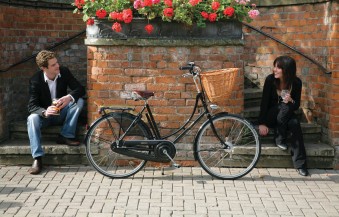
Carrier, handlebar basket or mudguards increase the convenience of using a city bike |
City or Office Bicycle
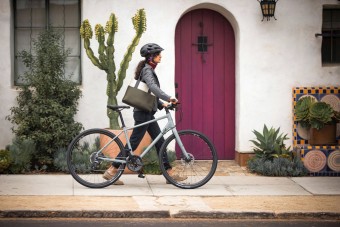
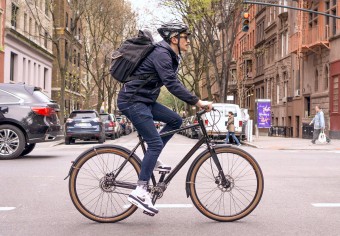
This type of transport is the ideal option for short-distance travel within the city. In Germany, for example, office workers use them en masse: wearing blazers, white shirts, and pressed trousers, they pedal cheerfully on their way from home to work, placing their briefcases on the rack or in the basket. The low frame gives a sense of safety in heavy traffic and frequent turns with traffic lights when you often have to stop and put a foot on the ground.
Additional equipment like mudguards, lights, a rack, and a basket significantly increases comfort during rides. Most working mechanisms are concealed, making getting greasy almost impossible. Moreover, these bicycles are usually very light—lifting them over a curb or carrying them onto a landing is not particularly difficult. However, their characteristics won't allow for comfortable riding off-road or covering long distances on highways.
Riding in the Forest at Weekends
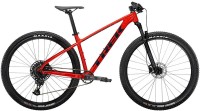
If your interests go beyond the city and you want to feel comfortable off-road, a classic mountain bike is what you need. Its main features are a powerful fork and smaller 26-inch wheels. They often have rough, "toothy" tires. These models are very popular among buyers, which is understandable given the road conditions in post-Soviet cities—a mountain bike seems to be made for them.
This transport is soft and maneuverable, enduring harsh riding conditions—it’s not called "mountain" for nothing. But precisely because of its advantages, it won't be a good servant for covering long distances on asphalt—small wheels and rough tires require considerable effort to maintain speed. Moreover, mountain bikes rarely have mudguards—they quickly get clogged and add extra noise when riding through mud. So it’s not the best choice for “official” city riding either.
 |
|
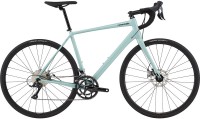
A road bike can reach speeds of 60 km/h but is quite questionable as a city solution |
Riding the Hot Air of the Road
Do you love watching the "Tour de France"? Are you interested in setting your own speed and endurance records on the track, and is there actually a roughly pothole-free track near your home? If the answer to all these questions is yes—go ahead and check out the "road bikes" section. These are the ones with the thin wheels and handlebars curled like ram’s horns. On this type of transport, you can reach speeds of 60 kilometers per hour without coming down from a huge hill. Light as a feather and slender as a deer—it sounds good, right?
But if you choose this type, don't forget that a ride down worn-out side alleys or a cobblestone street will become a real test. And on such a bike, it's not very convenient to ride where there are many turns and traffic lights. It wasn’t created for this.
An All-Terrain Bike for City, Forest, and Road
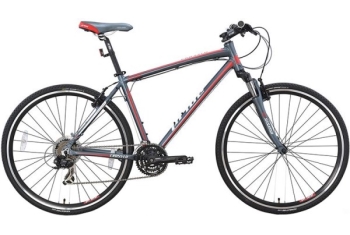
Another popular request. Not everyone can afford three bikes: mountain, city, and road all at once. The bicycle industry has understood this for a long time and set about solving the problem. Nowadays, in almost every store, you can find a hybrid bicycle. Large 28-inch wheels provide speed, while a shock-absorbed fork and medium-thick tires offer relative softness when riding off-road.
 |
|
Pride Cross 1.0 2015 can be called a classic example of a mid-level all-purpose bicycle |
As a rule, such solutions lag in cross-country ability to mountain bikes, in speed to road bikes, and cannot provide 100% comfort in urban conditions. But they are universal, for which they are valued. Bikes of this type are often referred to with the term "cross-country." Sometimes they are equipped with a rigid fork rather than a shock-absorbed one, which reduces the overall weight but increases the strain on the hands.
Besides the ones mentioned above, there are also mountain dual suspensions, reinforced models for downhill, special designs for trials and BMX, as well as plenty of vintage models, tandems, and the same “recumbent bikes.” But these are not the best candidates for a first independently chosen bike.
In conclusion, the main thing about a bike isn't the price or even the category or model. The most important is the attitude and desire of the owner. Back in the day, I managed to ride a mountain bike over 100 kilometers on the highway in a single day. I've seen guys on road bikes conquer the Carpathian off-road, and people traveling along the Spanish coast on city bikes. I've read about Soviet travelers who ventured into the winter taiga on "Tourists"—that's almost hard to imagine.
Considering all this, instead of the traditional “Happy shopping!”, it's probably better to write: “Have great inspiration for riding!” Because no matter which type of bike you choose—you'll make a good purchase.


Articles, reviews, useful tips
All materials