
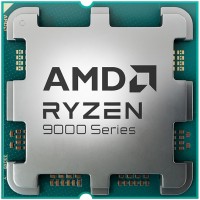
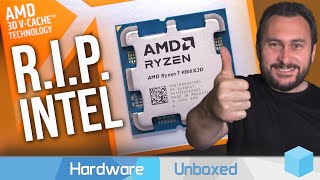
AMD Ryzen 7 Granite Ridge 9800X3D BOX (100-1000001084WOF)
 |

AMD Ryzen 7 Granite Ridge 9800X3D BOX | ||||||||||||||||||||||||||||||||||||||||||||||||||||||||||||||||||||||||||||||||
|
| |||||||||||||||||||||||||||||||||||||||||||||||||||||||||||||||||||||||||||||||


A range of 8-core processors of nearly top-tier level, based on the latest Zen 5 microarchitecture, introduced by AMD in 2024. These models fall into the high-priced segment, only second to the flagship Ryzen 9 chips in terms of power. They are positioned as a high-performance solution for gamers, enthusiasts, and workstation owners designed for content processing, video rendering, engineering calculations, complex code compilation, and tasks related to artificial intelligence.
The Ryzen 7 Granite Ridge processors combine computational power with advanced technologies, including a 4-nanometer process and chiplet design. This allowed for increased per-core performance, reduced power consumption, and improved production yield of viable chips. The models are designed for installation in the current generation motherboards with an AM5 socket and support the PCIe 5.0 interface.
Compared to previous Ryzen series processors, the new models are compatible with DDR5 memory at frequencies up to 5600 MHz. According to the manufacturer, the Ryzen 7 Granite Ridge delivers a single-core performance boost of 15 to 20% compared to Ryzen 8000. An unlocked multiplier and enhanced Zen 5 architecture capabilities make the processors suitable for manual overclocking.
Simultaneous Multithreading (SMT) technology allows each of the 8 physical cores to handle two computation threads, providing 16 threads for complex tasks. The series includes several models which differ in base and maximum frequencies, presence of an integrated GPU, and support for three-dimensional cache technology. The latter is implemented only in versions with the X3D suffix.

Always clarify the specifications and configuration of the product with the online store manager before purchasing.
Catalog AMD 2026 - new arrivals, bestsellers, and the most relevant models AMD.
Buy AMD Ryzen 7 Granite Ridge 9800X3D BOX
All prices 32 →| £185.00 |  | ||||
| £339.99 | | ||||
| £350.00 | | ||||
| £355.89 |  | ||||
| £359.00 | | ||||









- Unrealistically low temperatures under air cooling (30-50 degrees for me) - Consistently holds -35 on the curve and frequency of 5200 MHz - Perfectly reveals the potential of the new RTX 5080 - Excellent memory controller performance (stable at 6200 CL28) - Energy efficiency is top-notch - High price (19,000 UAH) - For perfect operation, it is advisable to spend time on settings in the BIOS  Vlad: use AMD 9800X3D BOX few months Vlad: use AMD 9800X3D BOX few months |
amUde made a mess with the 9000 generation. The lids are several mm thicker than their predecessors so that coolers can move from am4 to am5. Consequently, heat just doesn't dissipate properly onto the CPU lids. In stock, these things are simply unusable; when you remove limits, it heats up to 95 even in games. The boost jumps as it wishes, gives 5500 MHz for 2 seconds, the temperature goes over 90+, and it drops again. Being in a room with such a "plane" is simply impossible. In games, this monster doesn't know how to boost properly and can't choose at least an average frequency across all cores for continuous load in a program or game. You will always see what seems like constant 5300-5500, then suddenly it drops to 4400-4700 across all cores for a few seconds as if the CPU doesn't care what you're doing; the frequency fluctuates even if you're not hitting temperature limits. In stock, my curve works at -30. This doesn't help maintain the claimed frequencies consistently in demanding applications. The CPU sometimes forgets who and what it is and just drops them without hitting wattage or temperature limits. With PBO +200, in my case, it only holds at -20, which is even worse, as these "computer howls" every 5 minutes are just unbearable. And it adds no stability to the frequency either. Sometimes it hits 5750 MHz for 5 seconds, goes over 90+ degrees, and then drops again to 4400-4700. The best option is good old manual overclocking through locked frequency and voltage. This is a problem with all CPUs of these generations; there are similar examples on Overclockers and Reddit. - New architecture - better controller, but still bad - heat dissipation from the crystal lid - does not maintain frequencies - poor controller, cannot take memory above 6200, even though my memory is capable of much more Maksim Skvorcov: use AMD 9700X OEM few months |
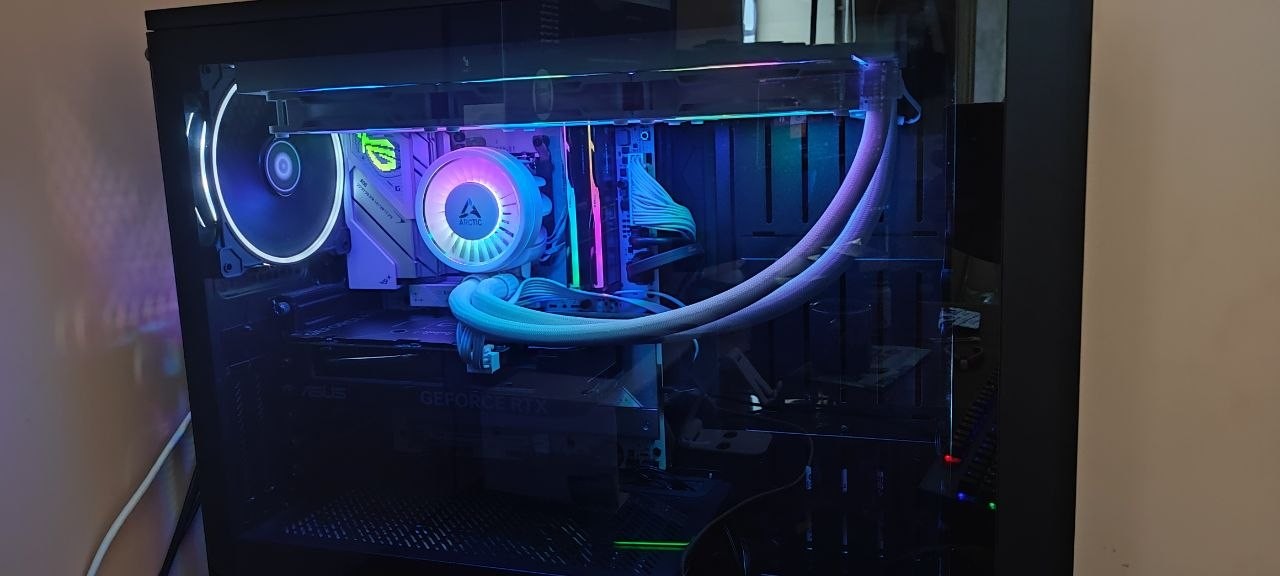
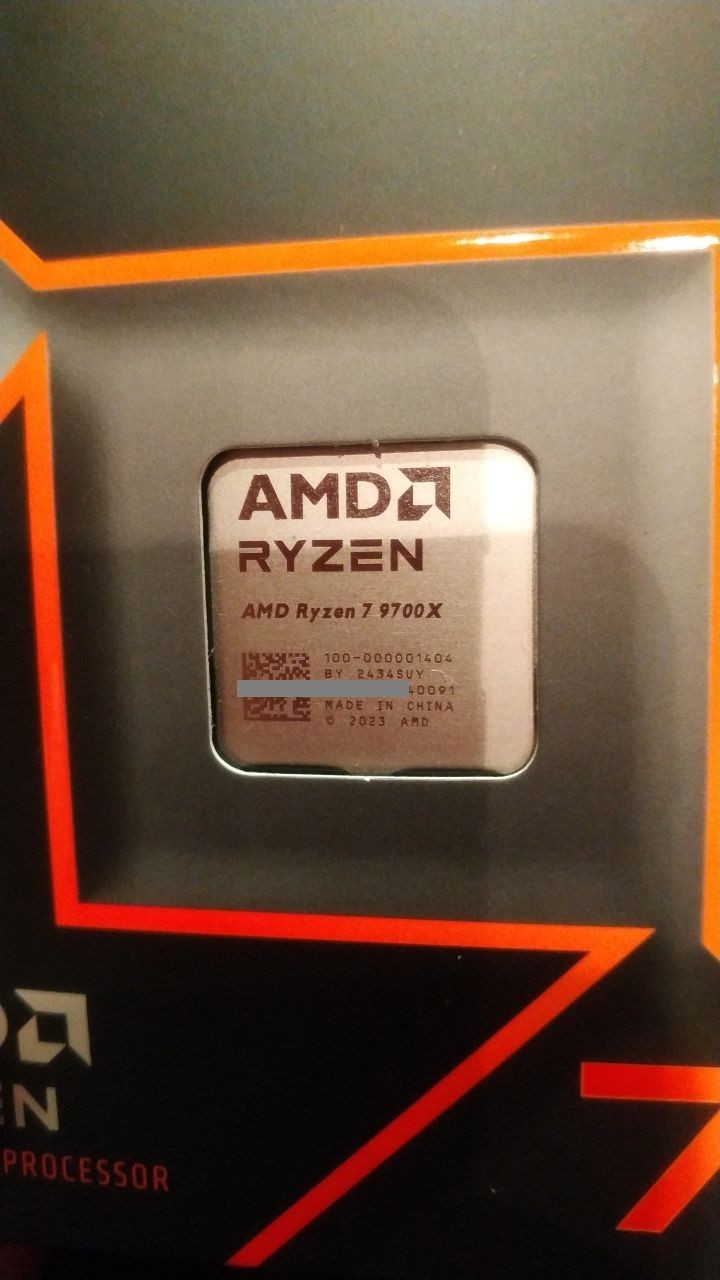
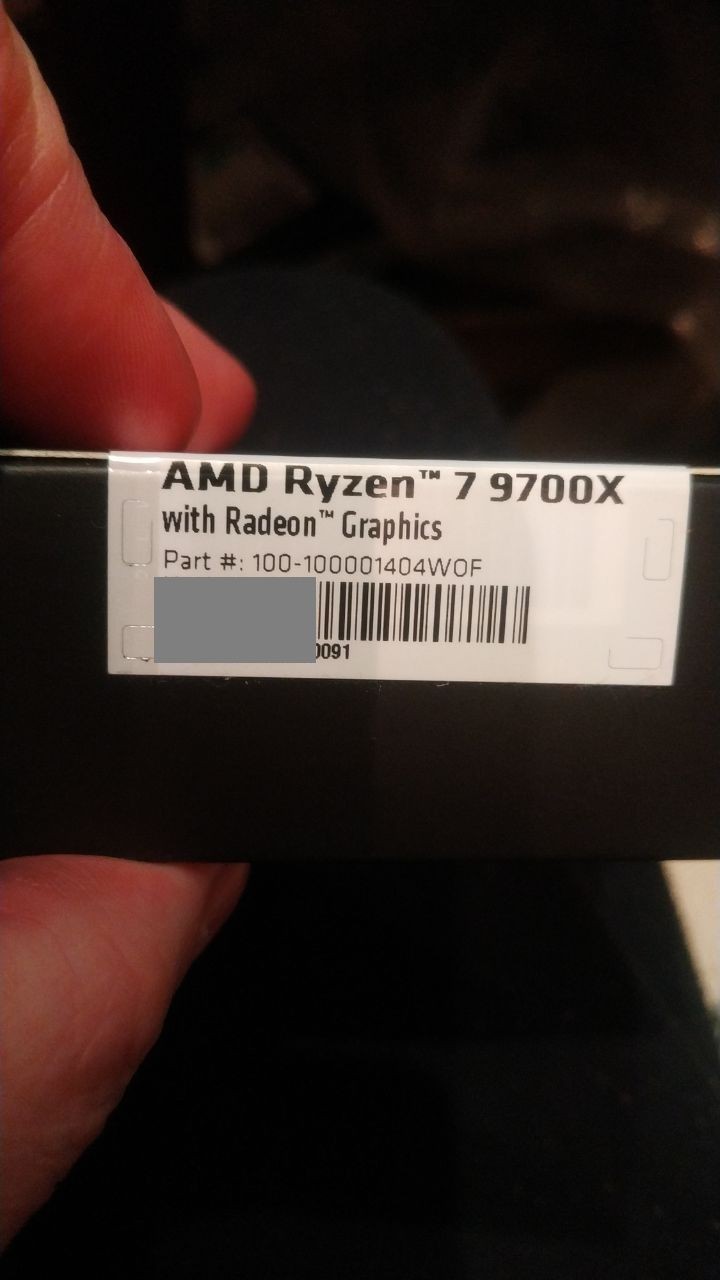
First of all, I want to highlight energy efficiency. The 9700X BOX (100-100001404WOF) consumes little energy and performs as well or better than the 7700X. For me, as a person who works a lot with code and engages in programming, this processor is the ideal option. For tasks of this type, it's simply superb, and the ratings confirm it. The new 4 nm tech process is a nice touch. It feels like working on modern hardware that will remain relevant for a long time. The memory controller here is clearly better than in the 7000 series, and this is noticeable in the stable operation. Although, I don’t push beyond 6000 MHz, everything works perfectly at this level. When I bought it, there was a promotion plus I had bonuses from previous purchases, so it came out priced like the 7700X. The only nuance was that I had to update the BIOS on the motherboard, but that's a minor issue; it needed updating anyway to ensure everything worked at full capacity. I cool it with a cooler because I don't like water. Water in a computer is a nightmare. 8 cores, new 4nm technology, doesn't consume much energy and doesn't overheat by December 24, the BIOS are still not polished, updates every month. use AMD 9700X BOX less than month |

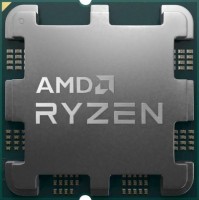
Processor: AMD Ryzen 7 9800X3D
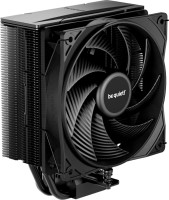
Cooling: Be quiet! Dark Rock Elite (air)
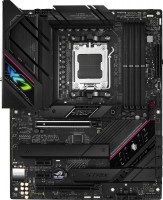
Motherboard: ASUS ROG Crosshair X670E Hero
Memory: 64 GB Kingbank DDR5 6200 MHz (timings 30-38-32-50 CR1, screenshot added)
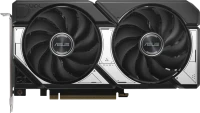
Graphics Card: RTX 5080 Gigabyte Gaming OC
Memory is stable at 6200 MHz, ran tests with no errors. My main concern was the temperatures, but I didn't need to worry. Thanks to the cache being under the die now, heat dissipation is perfect even with an air cooler. Did proper undervolting (Curve Optimizer -35).
At idle: 30°C (fans at 850 RPM, silent).
In games: doesn't go above 50–52°C.
Maximum load: CPU doesn’t go above 70°C.
Holds a steady frequency of 5200 MHz at a voltage of ~1.1V (visible on the CPUID screenshot). The system turned out very cool, quiet, and productive.