
Cyanoacrylate adhesives
prices on 5 modelsCyanoacrylate
— an "instant" one-component composition that polymerizes with moisture from the air, forming a strong, rigid joint in seconds without heating. It is ideal for precise joins without gaps and minor repairs: rubber and leather, wood and paper, ceramics and most "common" plastics, small electronics parts, and model making. It's important to know the limitations: the joint is brittle against impact and bending, holds water and temperature moderately, and it barely adheres to polyethylene, polypropylene, Teflon, and silicone without a primer. Compared to epoxy and polyurethane, it works immeasurably faster but doesn't fill gaps as well; against hot glue, it wins in thinness and precision, but lacks in elasticity. Practical nuances: the gel version doesn't run and is suitable for vertical surfaces, "rubber-modified" brands are less crumbly upon impact, an activator speeds up the bonding, and a debonder helps carefully separate and remove the white residue. Briefly on differences from acrylic: acrylic glues (water-dispersed or structural) cure slower but fill gaps better, provide more viscoelastic and thermal/moisture-resistant joints, and are suitable for large areas and outdoor connections, whereas cyanoacrylate is about fast, precise bonds on clean edges without visible gaps.When you make a purchase through links on our site, we may receive a affiliate commission.
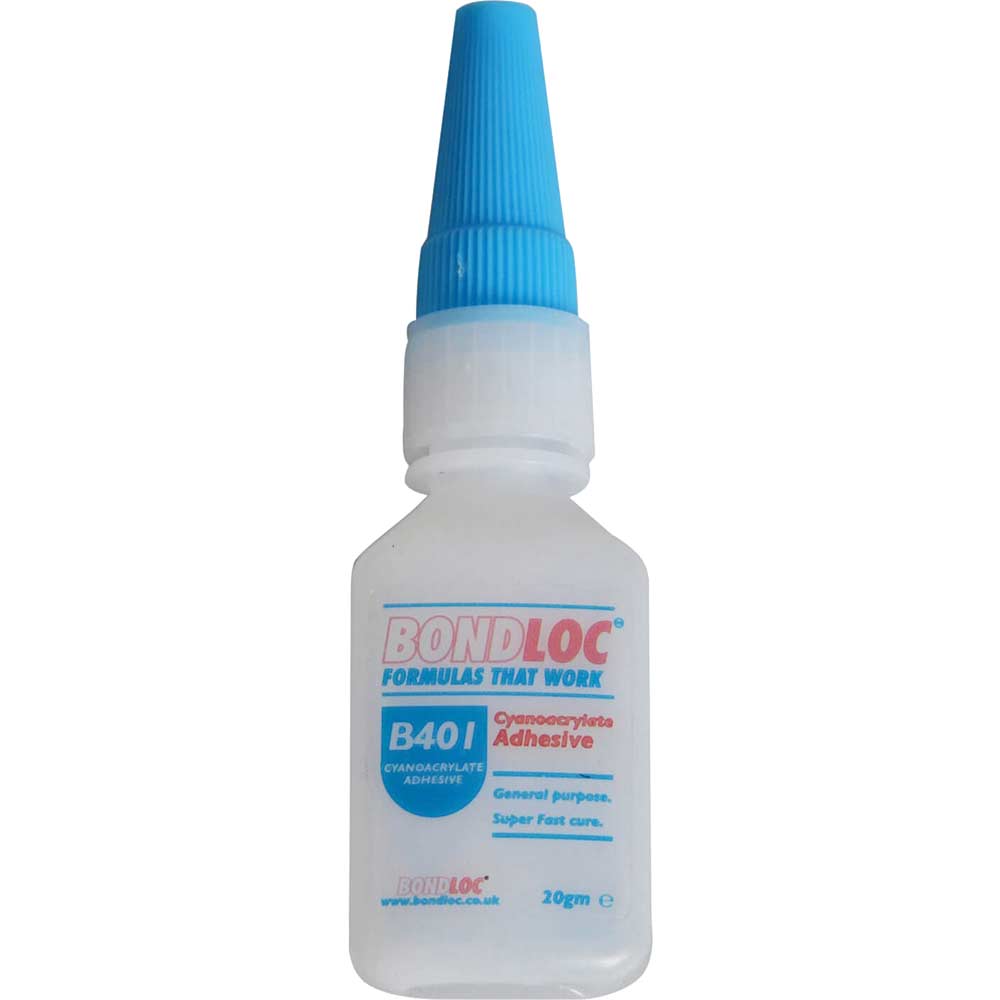 |
The Bondloc B401 is a medium viscosity cyanoacrylate adhesive that bonds metals, plastics, wood, ceramics, rubber, leather, card, glass and many other materials. Designed for applications requiring cl more→ose-fitting joints, this ethyl cyanoacrylate formula cures rapidly through reaction with surface moisture, typically solidifying in seconds to provide fast, reliable bonds. This professional-gr
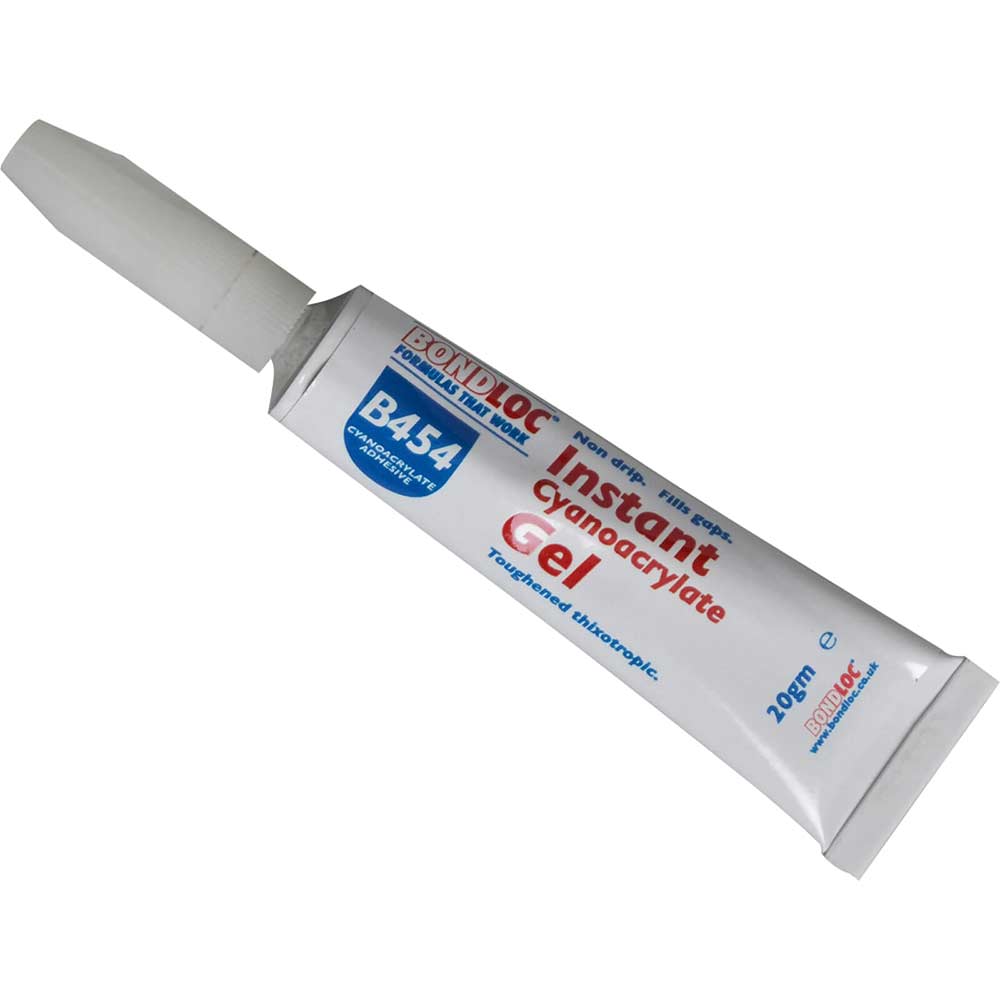 |
The Bondloc B454 is a thixotropic non-drip gel cyanoacrylate adhesive designed for bonding a wide range of materials with excellent gap-filling properties. This professional-gr
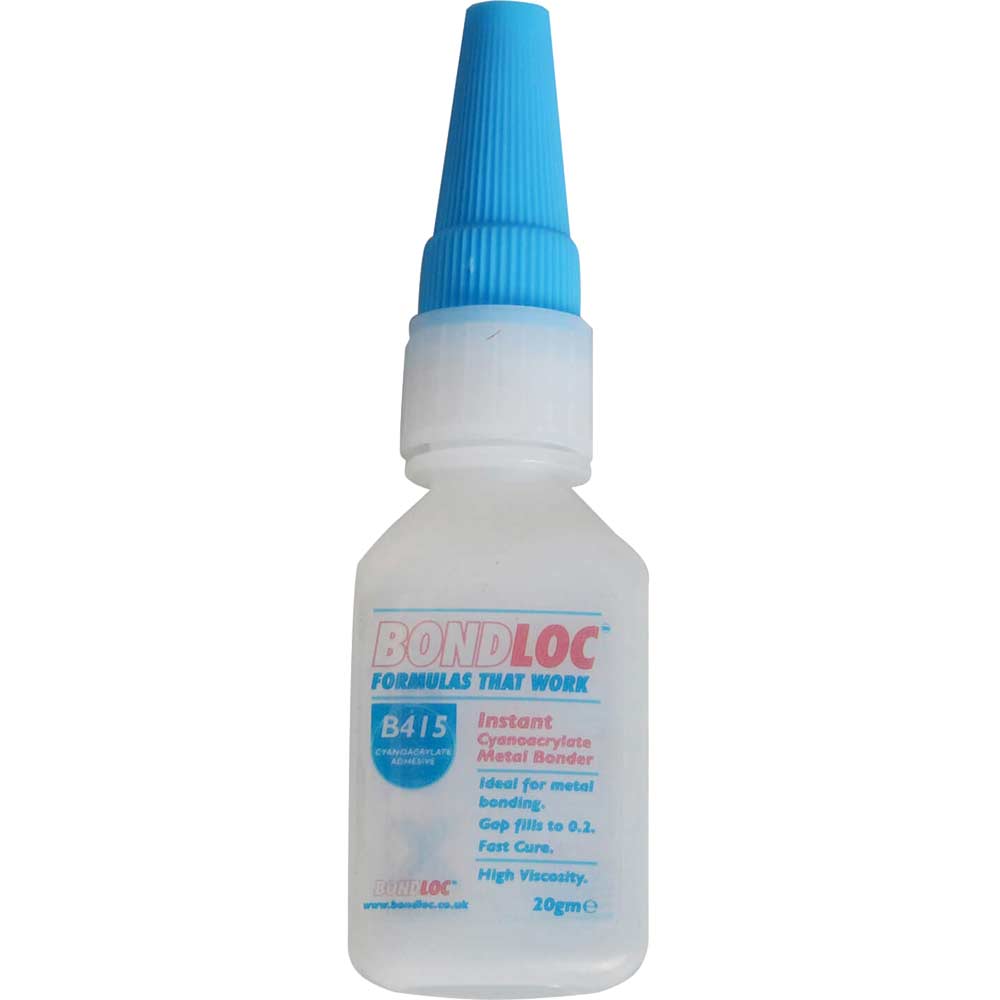 |
The Bondloc B415 is a high viscosity cyanoacrylate adhesive designed for professional bonding of metals, plastics, wood, ceramics, rubber, leather, card, glass and many other materials. This ethyl cya more→noacrylate-base
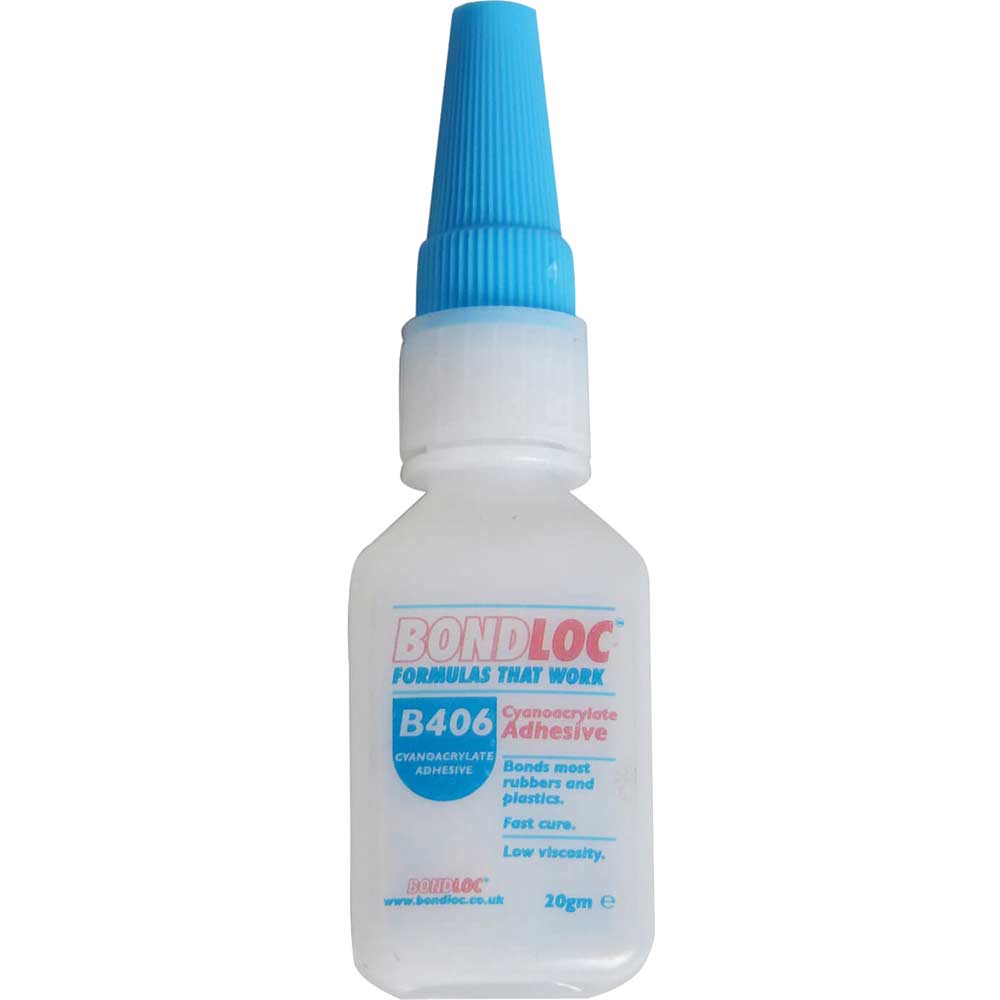 |
The Bondloc B406 is a low viscosity cyanoacrylate adhesive designed for fast, reliable bonding across a wide range of materials. This professional-gr
 |
Bondloc B480 is a black rubber toughened Cyanoacrylate that bonds metals plastics wood ceramics rubber leather card glass and many other materials. Cyanoacrylate adhesives cure through reactio more→n with moisture held on the surface to be bonded. They need close fitting joints and usually solidify in seconds which has resulted in the universal generic name of 'Superglues'. Curing is started by the film of moisture found on most surfaces which is usually slightly alkaline and it is this alkalinity which causes the polymerisation. Most grades have varying viscosities and therefore they need close fitting joints. Newer developments of gelled variants allow cure in wider gaps and application …