
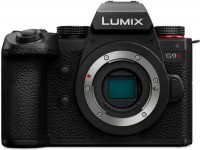
Panasonic DC-GX9 body
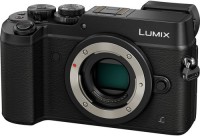 | Outdated Product Sensor size: 4/3" (17.3х13 mm); Effective MP number: 20; Manual focus; Image stabilization: with matrix shift; White balance measuring; Auto bracketing; Viewfinder: electronic; Continuous shooting (fps): 9; Screen ("): 3; Touch screen; Rotary display; Memory cards types: SD, SDHC, SDXC |


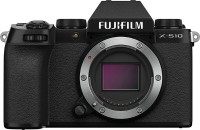
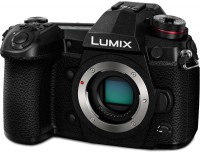
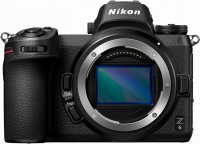

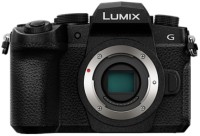

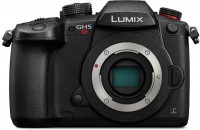
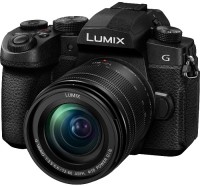
A compact tool with remarkable photographic abilities, aimed primarily at travel photographers. The whole point is that you can squeeze the highest quality result out of the “baby” without burdening yourself with excess weight - both the “carcass” of the camera and the set of optics for it are almost weightless. Panasonic DC-GX9 kit 12-60 is classified as a Micro 4/3 mirrorless camera - with a matrix half as large as that of full-frame cameras.
The resolution of the image sensor installed on board the camera is 20 MP. A matrix stabilization system “lives” directly in it, the effectiveness of which is assessed by the ability to compensate up to 4 levels of exposure. The camera's 49-point autofocus uses Depth from Defocus technology. One of its “tricks” is support for selecting the zone of focus on the finished image (post-focus function). External notable features of the model: a 90° rotating viewfinder and a 3-inch diagonal tilting touch display. As usual, the camera can and can record videos in 4K resolution with a frame rate of up to 30 fps and a bitrate of up to 100 MB/s. This configuration of the mirrorless camera includes the universal zoom lens Panasonic Lumix G Vario 12-60mm f/3.5-5.6 ASPH POWER O.I.S.
|
| ||||||||||||||||||||||||||||||||||||||||||||||||||||||||||||||||||||||||||||||||||||||||||||||||||||||||||||||||||||||||||||||||||||||||||||||||||||||||||||||


Always clarify the specifications and configuration of the product with the online store manager before purchasing.
Catalog Panasonic 2026 - new arrivals, bestsellers, and the most relevant models Panasonic.


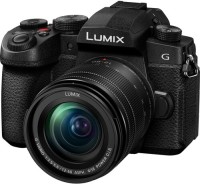
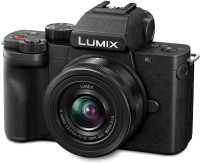

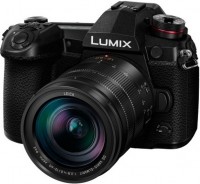
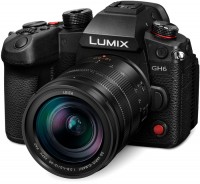
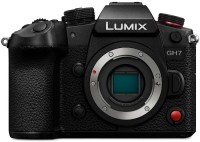
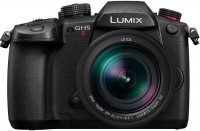

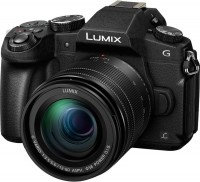
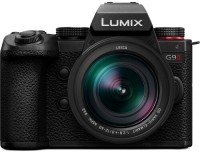
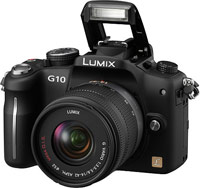
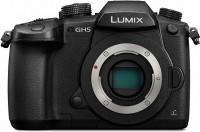






I've been using it for a couple of years. I like it. The viewfinder is very convenient. It's easy to control from the screen. The dynamic range is excellent. I have a few suggestions. Change the approach in the menu. If I enable a certain function, the camera doesn't allow it. I have to manually go to another section, switch the camera from RAW to JPEG, or perform another action. It would be more convenient for the user if it worked like this: I want focus bracketing, I set it, and the camera takes care of all other settings itself. Good DD. Fits comfortably in the hand. Lacks dust and moisture protection. The menu is somewhat complicated.  Sergey Petrovitsch: use Panasonic DC-GX9 kit 12-60 more than year Sergey Petrovitsch: use Panasonic DC-GX9 kit 12-60 more than year |











The Japanese company Panasonic timed the announcement of a mirrorless camera named GX9 to an outstanding date — the 100th anniversary of its founding. The model is aimed at advanced amateur photographers and for its money it is ready to provide really a lot.
Relation degree
Inside the camera, the same matrix is installed as in the flagship Panasonic Lumix DC-G9 — a 20 MP Micro 4/3 format sensor without an anti-moire filter. Its absence has a positive effect on increasing the level of sharpness of the picture, however, moire as a phenomenon has not been canceled. From there, the model borrowed a nimble Depth from Defocus autofocus system, which clings to the subject in just 0.04 s and reliably guides it in tracking mode.
Matrix stabilization
The light sensitivity of the camera's matrix varies in the range from 200 to 25600 ISO units (expandable to ISO 100). By the way, the camera sensor is mounted on a movable stabilizing platform, due to the displacement of which along 5 axes, vibration and hand shaking are suppressed, and up to 4 exposure stops are compensated. Matrix stabilization can be paired with optical stabilization on board a wide range of compatible lenses, which allows you to achieve even smoother images when recording videos (up to 4K resolution with a frame rate of 30 fps) and eliminate image blur when taking photos.
Key features
The "chip" of the model in appearance is a rotary viewfinder with a resolution of 1024x900 pixels. A 3-inch display is also mounted on a flexible hinge, however, it can only tilt up and down in a small range. In addition, the Panasonic Lumix DC-GX9 boasts some interesting software features: Auto Marking (detection of movement in a clip and setting a marker to quickly jump to its beginning) and Sequence Composition (in-camera stitching of several frames with movement into one shot). A pleasant impression of the model can be slightly marred only by the lack of a microphone connector and short battery life — one battery charge is enough to “shoot” about 260 shots, which is partly offset by the ability to charge the camera “on the go” via Power Bank.
Reference. Visually, the moire effect is a wavy pattern that appears on objects with a fine structure (a brick wall taken from afar, clothes in a small cell, etc.).