How to distinguish the original Apple AirPods from a fake?

We independently test the products and technologies that we recommend.
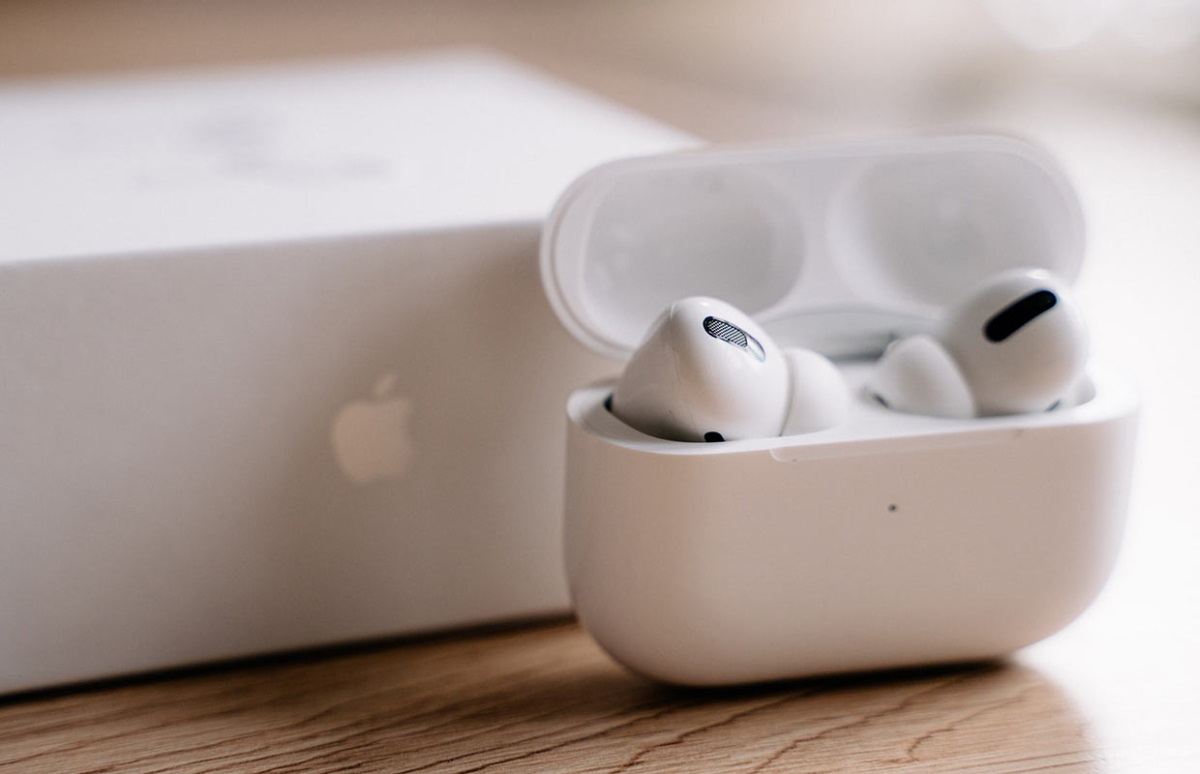
The brand with the bitten apple logo holds a large part of the TWS headphones market. In 2019, over 60 million Apple wireless headphones were sold worldwide. And this is thanks to just two models, while competitors have dozens of them.
The more popular a product is, the more counterfeits there are. Unfortunately, this practice has become widespread in today's world. It's sometimes very difficult to distinguish genuine Apple AirPods from fake ones. But fake signs do come through, no matter how well they are hidden.
Exposing fakes
1) Low cost. A price tag much lower than the market rate is a reason to doubt the authenticity of the headphones. The cost of the original Apple headset starts at $150 for the regular version and $300 for the Pro version.
2) Sound quality. Honestly, AirPods are by no means the benchmark of pure and surround sound (the Pro version sounds better than the classic). The headphones attract more with their ease of use. However, Chinese replicas of Apple's headset sound quite flat, often lacking bass and having crackling noises at maximum volume.
3) Serial numbers. It is important that the serial numbers on the box and the devices in the set match. You can verify their authenticity on Apple's official website checkcoverage.apple.com.
4) Materials and build quality. Apple always uses high-quality plastic with a glossy finish. Neither the headphones nor the case slip in hand. The original is also easily recognized by the warm shade of milky white of the case.
Cheap plastic feels different and bends under pressure. Additionally, fakes often have issues with fitting parts and symmetry of cutouts. If you have any doubts about the materials or build quality, look for a more reliable seller.
5) Package contents. Inside the box with the original Apple TWS headphones, there is a brief user guide, the headphones themselves in a case wrapped in film, and a Lightning cable for charging the case.
 |
| This is how an original Apple AirPods 2 box should look. |
The color of all the elements in the set should be milky white without the slightest signs of yellowing. If you are offered black, gray, or colorful AirPods, be sure that they are fake.
6) Synchronization. Real AirPods automatically connect to an iPhone in an instant. During the pairing process, the user sees a menu with the name of each device element and information about the remaining battery life.
 |
| Genuine AirPods pair with the smartphone instantly, just by opening the charging case. |
Third-rate fakes don't bother with this and are recognized as ordinary wireless headsets. Higher-status replicas use analogs of Apple's W1 and H1 chips for pairing.
7) The fit of the headphones in the case. True headphones fit into the case slots like butter, sit snugly, and don't rattle when you shake the case.
8) Charging case. The genuine case is slightly rounded on the sides and has smooth transitions from the front to the back end. Its lid opens easily and fits securely to the bottom of the case, leaving no gaps. Finally, the pairing break button on the case's side is always flush with the body.
 |
| The original charging case for Apple TWS-headphones measures 44.3 x 21.3 x 53.5 mm. |
9) Tap controls. Many AirPods copies support touch controls, but only the most advanced ones (equipped with W1 and H1 chip analogs) allow you to reassign taps from the standard ones to other functions in the settings.
10) Speaker grilles and chrome elements. Original headphones have a metal mesh on the speakers with a weave angle of about 45°. Through them, you can see two round speakers. Fakes, on the other hand, often use fabric covers for the emitters to save money. The chrome elements on counterfeits look rather dubious (dull and lackluster).
 |
| A clear difference between the speaker grille of a clone and original AirPods. |
11) Inscriptions and markings. Carefully read the inscriptions on the box. Letters in the headphones or brand name may be rearranged (an old Chinese "trick") or there may be a lot of spelling errors. There should be minimal hieroglyphs on the box.
Genuine headphones have each earbud marked with L (left) and R (right) symbols. Fakes might neglect these markings. Also, most often, fake Apple AirPods packaging lacks stickers confirming the authenticity of the headphones (3 stickers with data on the place of manufacture, support for operating systems, and the device's serial number).

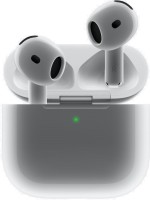
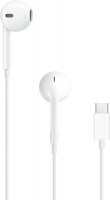
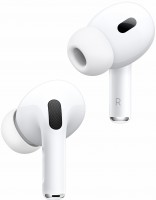
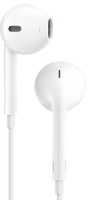

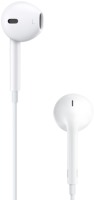
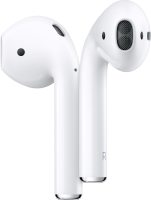
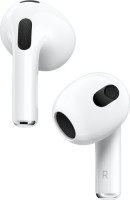
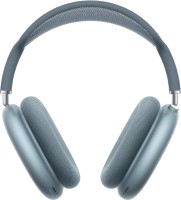
Generational difference
The first iteration
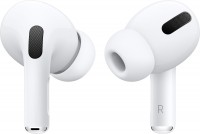
The debut version of AirPods was equipped with Apple's W1 chip for wireless connection of headphones via Bluetooth and optimizing the use of accumulated energy reserves. With each earbud weighing around 4 grams, the user could expect 4-5 hours of autonomy when listening to music. The first generation charging case was charged by wire through a Lightning cable and extended the headphones' lifespan up to 24 hours.
 |
| Neat wireless headphones with a portable charging case made a splash among the public from the moment of their announcement. |
The onboard equipment of the pilot model included a proximity sensor (playback pauses when you remove one earbud), built-in accelerometers, and a microphone duo.
The first generation headset was marked as follows:
- A1523 — right earbud;
- A1722 — left earbud;
- A1602 — case with a Lightning port.
Second generation
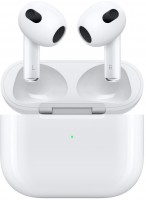
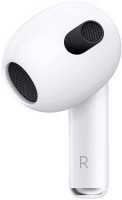
The second iteration of Apple's TWS headphones is essentially indistinguishable from the debut release in appearance. The main innovations affected the internal equipment Apple AirPods 2 with Wireless Charging Case . Thus, they got a more powerful Apple H1 processor that accelerated the headphones' connection time 'over the air' and learned to work with Bluetooth 5 networks.
You can now call the Siri assistant by voice without having to tap on the headphone body. Just say "Hey, Siri!" and it will gladly answer all your questions.
 |
| The second generation AirPods joined the Apple ecosystem in 2019. |
Autonomy for the second-generation AirPods remained at the previous level (4-5 hours of music playback). However, the case for the headphones acquired a Qi wireless charging function. Also, an indicator of battery status was positioned on the front. The case is suitable for charging headphones of both generations.
The second tribe of AirPods is recognizable by the following serial numbers:
- A2031 — second-generation right earbud;
- A2032 — second-generation left earbud;
- A1938 — case with wireless charging capability.
AirPods Pro
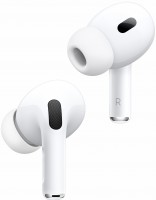
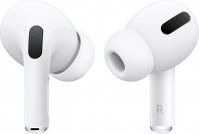
The purely vacuum earbuds with silicone tips stand out in Apple's portfolio Apple AirPods Pro . They are distinct from the classic version by their shortened stems. These 'little ones' are dust and water-resistant according to the IPX4 standard, making them suitable for sports, and deliver richer sound. The overall sound quality and noise cancellation is influenced by the calibration function, during which the earbuds assess how snug the tip fits to the ear canal.
The task of controlling the headset falls on the panels with press sensors, allowing you to pause playback, switch tracks and enable "transparency" mode (allowing sound through with the help of microphones so the user can hear what's going on around them).
 |
| The Pro version of AirPods sounds on a totally different quality level. |
The headphones come with a uniquely designed case that supports wireless charging. Despite its similarity to cases for classic AirPods, it has different slots for the headphones, meaning there's no compatibility between generations. But 5 minutes in the case adds an extra hour of autonomy.
Devices in the AirPods Pro series are marked as follows:
- A2083 — right earbud Pro;
- A2084 — left earbud Pro;
- A2190 — charging case for AirPods Pro.
Popular True wireless headphones
The AirPods phenomenon
The secret of AirPods' success lies in the fact that they appeared at the right time and in the right place. More precisely, Apple's Cupertino engineers themselves nudged users towards buying wireless headsets. The reason was the removed 3.5 mm audio jack from the seventh iPhone. At the time, wireless accessories were the domain of geeks and not used widely.
The new format of wireless earbuds with a charging case was well-received by the public, and AirPods began to fly off store shelves like hotcakes. The demand for them far exceeded the supply, resulting in a global headphone shortage on several occasions over the years before the holiday season.

AirPods headphones are one of the most desired holiday gifts. This is why they literally flew off store shelves before the festive season worldwide. Apple product enthusiasts love the headset for the following reasons:
- Compact form factor. The headphones along with the charging case don't take up much space. For example, they easily fit into a jean or jacket pocket.
- No tangled wires. No further comment. The intricate knots that wired headphones usually twist into will finally stop bothering AirPods users.
- Comfortable and secure fit. The earbuds fit comfortably in the ear canal for the majority of users and do not fall out, no matter how much you shake your head.

Apple TWS headphones fit securely in the ear canal for the overwhelming majority of users. - Charging on the go. The charging case is truly one of the most useful inventions in the realm of audio accessories. With just a 15-minute 'refueling' session, you can extend the headphones' autonomy by 3 hours of 'clean' listening time.
- Intuitive controls. Interaction with AirPods is facilitated through taps on the earbuds. Additionally, they can be controlled through the Siri voice assistant.
- Aesthetic appearance. The headphones look fresh and stylish.
Followers of the "green droid" cult choose Apple headphones for the same reasons as loyal fans of the Cupertino brand. The only difference is that some functionality of the headset is limited for them (for example, displaying the charge level using standard smartphone means). In this case, third-party apps from the Google Play Market come to the rescue.
Stay connected!











Articles, reviews, useful tips
All materials